Rethinking teacher preparation for East Africa’s changing classrooms
DAR ES SALAAM: FOR years, the conversation about education in East Africa has often centred on the need for more teachers. Classrooms need to be staffed, pupil-teacher ratios reduced and growing student populations matched with sufficient numbers of educators.
But as education systems across the region confront rapid technological change, artificial intelligence, climate disruption, growing diversity and new approaches to learning, another question is becoming increasingly important: Are East African countries preparing teachers well enough for the classrooms they are expected to lead? The challenge is no longer simply about having enough teachers.
It is increasingly about ensuring that those entering the profession have the knowledge, practical skills and professional confidence to respond to the realities of today’s learners.
This question is at the centre of a regional debate on the future of teacher preparation, as educators, policymakers, researchers, school leaders, development partners and student teachers come together to examine how teacher education can be strengthened.
The debate takes place at a time when the role of the teacher is changing significantly.
The traditional model in which teachers primarily deliver information to learners is giving way to a more demanding role in which educators are expected to understand individual learning needs, facilitate critical thinking, assess progress, adapt teaching approaches and work closely with communities.
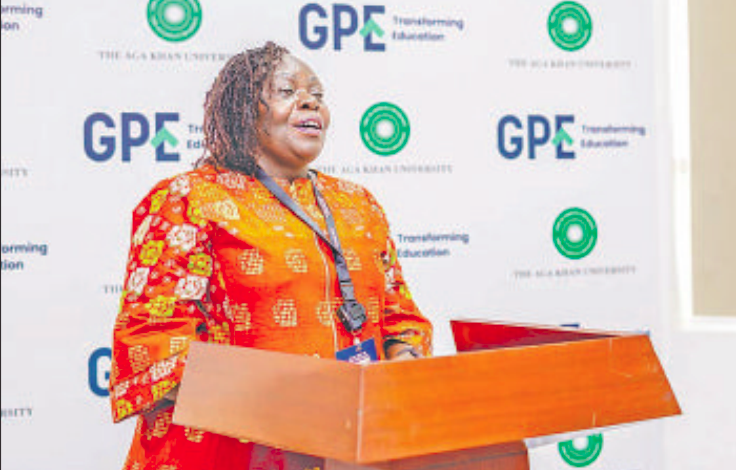
The Aga Khan University Institute for Educational Development, East Africa (IED, EA), has brought together stakeholders from across the region for a Regional Learning Exchange under the theme “Reimagining Teacher Preparation: An East African Learning Exchange on Innovation and Practice.”
The exchange provides a platform for participants to share experiences and consider practical ways of improving teacher preparation.
Prof Jane Rarieya, Interim Dean of IED, EA, says the future of education depends not only on the availability of teachers but also on how they are prepared and supported throughout their careers.
“The future of education in East Africa depends not only on having enough teachers, but on how well we prepare, support and empower them throughout their careers,” she says.
Her observation points to a critical gap in education policy: teacher preparation cannot end when a trainee receives a qualification.
The transition from teacher training into the classroom can be one of the most important stages in an educator’s professional life.
Newly qualified teachers enter classrooms where learners have different abilities, backgrounds and expectations, while schools increasingly demand the use of technology, competency based approaches and new assessment methods.
Without adequate practical preparation and mentorship, the knowledge acquired during teacher training may not easily translate into effective classroom practice.
This makes meaningful classroom experience an important component of teacher preparation.
Teacher-training institutions therefore face the task of ensuring that student teachers do not only understand educational theory but also have opportunities to practise, observe experienced educators, receive feedback and develop the confidence to respond to real classroom challenges.
The challenge continues after graduation. Early-career teachers require professional support as they adjust to the demands of the profession.
Supportive professional learning communities can give young teachers opportunities to exchange experiences, discuss classroom challenges and learn from colleagues.
At the same time, experienced teachers represent an important but sometimes underused resource.
Rather than viewing professional development as something that only involves training younger or newly recruited teachers, education systems can create opportunities for experienced educators to become mentors, researchers and innovators within their schools and communities.
Such an approach could help transform schools into continuous learning environments where teachers learn from one another rather than relying solely on occasional external training.
The changing nature of technology makes this even more urgent. Artificial intelligence and digital technologies are rapidly influencing how information is produced, accessed and used.
Learners can increasingly obtain information outside the classroom, while teachers are expected to integrate technology into teaching without losing sight of the educational needs of their students.
This raises a fundamental question for teacher preparation: How should teachers be trained when the nature of knowledge itself is changing?
Teacher education programmes need to prepare educators not merely to operate digital tools but to make professional judgments about when and how technology can improve learning.
Teachers also need the ability to assess information critically, guide learners in responsible technology use and maintain meaningful human interaction in increasingly digital learning environments. The same principle applies to competency-based education.
As education systems increasingly move away from approaches that focus primarily on memorisation towards competencies and practical skills, teachers need to understand what such reforms mean inside the classroom.
Implementing a competency-based curriculum requires more than changing textbooks or assessment systems.
It requires teachers who can identify learners’ needs, design appropriate learning activities, assess competencies and adapt their approaches when learners struggle.
This places teachers at the centre of education reform. Education policies can provide the framework, curricula can define learning outcomes and institutions can develop training programmes, but teachers ultimately translate those decisions into classroom experiences.
For that reason, strengthening teachers’ professional agency is becoming increasingly important.
Teachers need the capacity to make informed professional decisions rather than simply follow instructions.
They need to understand their learners, assess what works, adjust their teaching and contribute ideas to improve education.
Giving teachers this agency can also make education reforms more responsive to local realities.
A policy designed at national level may encounter very different circumstances in an urban school, a rural community or a school serving learners with particular needs.
ALSO READ: TESP boosts teacher education quality
Teachers who understand their communities are often better placed to identify practical solutions and adapt teaching accordingly.
This makes collaboration between teachers, universities, governments, schools, communities and development partners essential.
The future of teacher preparation, therefore, cannot be the responsibility of teacher-training institutions alone.
Universities and teacher-training colleges need stronger connections with schools.
Schools need to become active partners in teacher preparation. Experienced teachers need opportunities to mentor and conduct classroom-based inquiry.
Policymakers need to listen to educators when designing reforms, while communities need to be recognised as important partners in children’s education.
Such collaboration can help close the gap between what teachers learn during training and what they encounter once they enter the classroom. It can also create a culture in which teachers continue learning throughout their careers.
This is particularly important because the challenges facing education are unlikely to remain static.
A teacher entering the profession today may work for decades during which technology, labour markets, environmental conditions and learners’ expectations continue to change.
Preparing teachers, therefore, cannot be treated as a one-time investment. It must be viewed as a continuous process—from initial training and classroom practice to mentorship, professional development, leadership and research.
For East Africa, the stakes are high. The region’s ambitions for human capital development, economic transformation and sustainable development ultimately depend on the quality of education provided to its young population.
And the quality of that education depends heavily on the people standing at the front of classrooms.
The emerging lesson from the regional teacher education debate is clear: solving teacher shortages is necessary, but it is not sufficient.
East Africa needs teachers who are not only present in classrooms but are prepared to understand learners, use new technologies responsibly, implement curriculum reforms effectively, respond to diversity and continue learning throughout their careers.
The real measure of investment in education, therefore, may not only be how many teachers a country has, but how well it prepares, supports and empowers those teachers to teach.
As the region looks towards the future, rethinking teacher preparation could be just as important as recruiting more educators.
The classroom of tomorrow is already taking shape. The question is whether the teacher standing in it will be ready.