E-mobility framework set to boost EV adoption in Tanzania
DODOMA: WITH the conflict involving the United States, Israel and Iran causing severe disruptions in the Strait of Hormuz and driving up global oil prices, countries heavily dependent on imported petroleum products are increasingly exploring ways to reduce their exposure to global energy shocks.
Tanzania is among the countries exploring alternative energy solutions, with electric mobility emerging as one of the options that could help reduce dependence on imported fossil fuels.
The latest developments have also attracted growing interest among Tanzanians in electric vehicles (EVs), particularly two- and three-wheelers, as the country seeks cleaner and more affordable alternatives to conventional vehicles powered by internal combustion engines (ICEs).
Electric mobility is transforming transportation systems around the world, bringing potential economic, environmental and social benefits. Replacing conventional vehicles with EVs can reduce local air pollution and greenhouse gas emissions, particularly when the electricity used to charge them comes from clean and renewable sources.
For Tanzania, the shift could also contribute to the country’s climate commitments while helping motorists reduce fuel and maintenance costs.
It could further reduce reliance on imported petroleum products and create opportunities for local businesses involved in vehicle assembly, maintenance, charging infrastructure, battery services and other areas of the emerging e-mobility industry.
Growing market
Over the past decade, the global electric vehicle market has expanded rapidly, driven by declining technology costs, growing consumer demand and government support.
The growth has been particularly visible in the two- and three-wheeler segments, which are highly relevant to Tanzania’s transport system.
According to AfEMA Data Portal 2025, Tanzania had more than 10,000 electric two- and three-wheelers, the highest number of combined EVs in East Africa.
The growing market has also attracted at least 10 companies into Tanzania’s e-mobility sector in recent years.
These companies are seeing opportunities in the country’s relatively open market and its large fleet of conventional vehicles that could eventually transition to electric technology.
The development of local technical capacity is also gaining momentum.
Technical training institutions such as Arusha Technical College (ATC) have started playing a role in building expertise through training, research, testing and technology transfer in e-mobility.
ATC has established training programmes in renewable energy and e-mobility, helping to develop local technical capacity for the safe installation, testing and operation of electric mobility systems.
The college has also been recognised as a Centre of Excellence for research and training in renewable energy generation and applications, expertise that could support the wider adoption of electric vehicles in Tanzania.
Regulatory framework
Despite the growing interest, electric mobility remains a relatively new technology in Tanzania and requires appropriate policies, standards and infrastructure to support its safe and sustainable expansion.
The Energy and Water Utilities Regulatory Authority (EWURA) has responded by developing Guidelines for EMobility Charging Stations and Battery Swapping.
The guidelines are intended to provide a regulatory framework for safe, reliable, accessible, interoperable and affordable charging and battery-swapping infrastructure, in line with national energy, transport and climate policies and the Electricity Act.
The regulator says the guidelines are intended to accelerate the adoption of electric mobility by ensuring that EV users have access to charging infrastructure while creating a market for charging and battery-swapping businesses.
They also seek to ensure that electricity distribution network operators are prepared to accommodate EV charging infrastructure.
The guidelines support Tanzania’s broader development targets, including those outlined in the Tanzania Development Vision 2050, the Power System Master Plan 2024, the National Energy Efficiency Strategy 2024–2034 and the anticipated National E-Mobility Policy.
Another important objective is to promote and guide the safe conversion of internal combustion engine vehicles into electric vehicles, potentially creating jobs and increasing local participation in the industry.
Building charging infrastructure
For electric vehicles to become widely adopted, however, having the vehicles alone is not enough. Tanzania will need an extensive and reliable charging network.
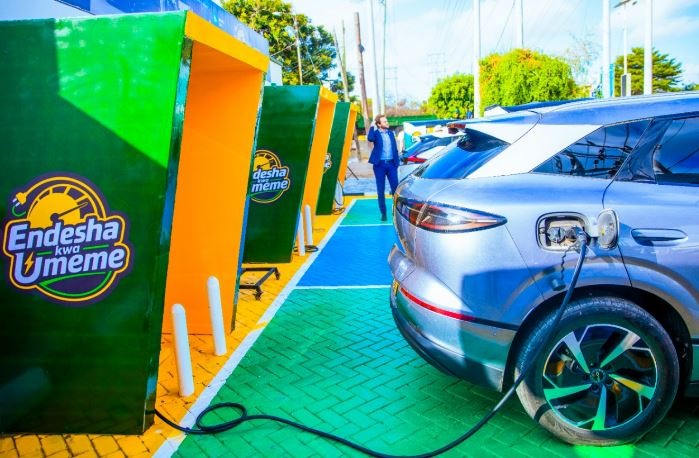
EWURA’s guidelines therefore set out requirements for public charging stations, including appropriate electricity connections, cables and electrical installations that meet safety and grid-stability requirements.
Operators are also required to establish safety procedures, including regular inspection of charging cables and connectors, avoiding the charging of visibly damaged vehicles, prohibiting the use of extension cords and installing automatic shut-off systems where overheating or electrical irregularities occur.
Charging stations must also comply with relevant planning and regulatory requirements, while operators are responsible for securing suitable land, providing access roads and obtaining necessary approvals for construction and installation.
The guidelines recommend approximately 40–60 square metres for small charging stations with two chargers, 100– 200 square metres for medium stations with four to six chargers, and 300–600 square metres for larger DC fast-charging facilities.
Charging facilities are also expected to have appropriate fire protection equipment and comply with internationally recognised safety standards.
Technology and consumer protection
The regulatory framework goes beyond physical infrastructure. EWURA’s guidelines require charging points to communicate securely with charging networks and remain functional even when communication with the network is temporarily interrupted.
Charging networks are expected to securely measure, store and report information such as electricity consumed, chargingport status, prices and historical availability.
The system should also allow interoperability between different charging networks so that EV drivers can use a common identification method when charging at stations operated by different networks.
The guidelines further address customer service, data privacy and cybersecurity.
Charging and battery-swapping operators are required to provide mechanisms through which customers can report outages, equipment failures and other problems.
They must also collect and retain only the personal information necessary to provide charging services, in compliance with relevant personal-data protection legislation.
Opportunity beyond fuel savings
The transition to electric mobility could therefore have implications beyond reducing fuel bills. For Tanzanian motorists, EVs could offer lower operating costs because electric motors generally use energy more efficiently than conventional petrol or diesel engines.
The transition could also create opportunities for local entrepreneurs in charging services, battery swapping, vehicle conversion, repair and maintenance, software development and renewable-energy integration.
At the same time, the country faces challenges, including the relatively high upfront cost of EVs, limited charging infrastructure, the need for technical skills and questions surrounding the safe handling and disposal of batteries at the end of their useful lives.
Battery life is typically estimated at around eight to 10 years, making proper systems for battery management, recycling and disposal increasingly important as the number of EVs grows.
A possible shield against oil shocks
For Tanzania, the current global energy uncertainty has brought renewed attention to the importance of diversifying the transport sector away from petroleum.
Electric mobility alone cannot eliminate the country’s dependence on imported oil, but its growing adoption could gradually reduce demand for petrol and diesel, particularly in the rapidly expanding two and three-wheeler market.
With appropriate regulation, charging infrastructure, technical skills and investment in renewable electricity, e-mobility could become more than an environmental initiative.
For Tanzania, the current global energy uncertainty has brought renewed attention to the importance of diversifying the transport sector away from petroleum.
Electric mobility alone cannot eliminate the country’s dependence on imported oil, but its growing adoption could gradually reduce demand for petrol and diesel, particularly in the rapidly expanding two and three-wheeler market.
ALSO READ: UNESCO hails Cable Car Project for elevating Mt Kilimanjaro’s World Heritage status
With appropriate regulation, charging infrastructure, technical skills and investment in renewable electricity, e-mobility could become more than an environmental initiative.
It could become part of Tanzania’s broader strategy to reduce exposure to international oil-price shocks, lower transport costs, create new industries and jobs and support the country’s transition towards a cleaner and more resilient economy.