PRORota clinical trial tackles child health challenges
DAR ES SALAAM: TANZANIA’S health sector is turning to research and innovation to tackle childhood diarrhoeal diseases and antimicrobial resistance, with the PRORota clinical trial exploring whether probiotics can strengthen the protection provided by rotavirus vaccination while reducing antibiotic use.
The trial brings together researchers and health institutions from Tanzania, Malawi, Ivory Coast and Norway, reflecting growing efforts to find practical solutions to persistent childhood infections while strengthening the country’s capacity to generate evidence for health policy and practice.
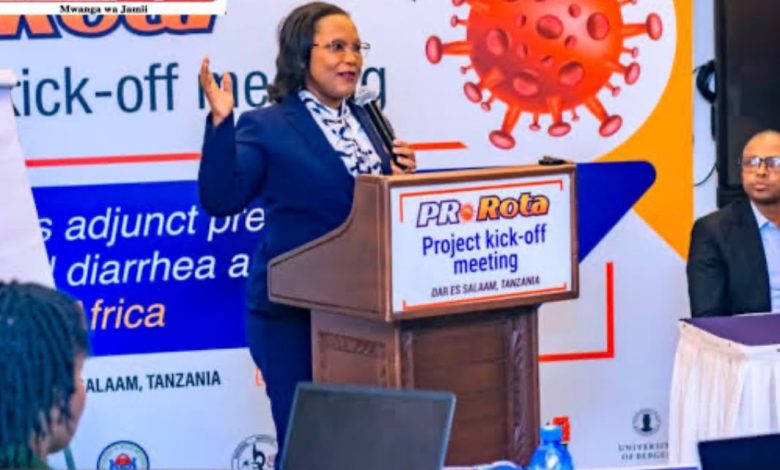
The PRORota Clinical Trial was officially launched in Dar es Salaam, where Deputy Permanent Secretary in the Prime Minister’s Office Regional Administration and Local Government Authority (PMO-RALG) responsible for Health, Professor Tumaini Nagu, described the research as timely for Tanzania and Africa.
Her remarks came as the country continues to record progress in child survival but faces the challenge of sustaining those gains against infectious diseases that remain preventable.
Tanzania has reduced under-five mortality from 65 to 43 deaths per 1,000 live births, according to figures presented at the launch.
The figures point to an important reality: Reducing child mortality requires more than expanding access to existing interventions.
It also requires continued research into why preventable diseases persist and how current interventions can be made more effective.
One of the areas receiving renewed attention is childhood diarrhoeal disease. Diarrhoea remains a significant cause of childhood illness and death, particularly among vulnerable children.
Severe cases can lead to hospitalisation and increased use of medicines, including antibiotics. This creates another challenge for health systems.
While antibiotics are essential for treating bacterial infections, unnecessary or excessive use contributes to antimicrobial resistance, which can make infections increasingly difficult and costly to treat.
The PRORota trial is designed around this connection, investigating whether probiotics can enhance the effectiveness of rotavirus vaccination, reduce diarrhoeal disease and potentially decrease antibiotic exposure among children.
Speaking at the launch, Prof Nagu said the study could generate evidence with direct implications for child survival, immunisation policy, antimicrobial stewardship and primary healthcare.
She said Tanzania’s progress in reducing child mortality should not lead to complacency, particularly because infectious diseases continue to contribute to childhood deaths.
Prof Nagu illustrated the importance of strengthening existing interventions by recalling an experience from her time as Chief Medical Officer.
During a diarrhoeal disease outbreak, she said, her immediate concern was whether affected children had received rotavirus vaccination.
A large proportion had been vaccinated, prompting further questions about how protection against severe diarrhoeal disease could be improved.
The PRORota study seeks to provide evidence around that question. Rather than replacing vaccination, the research is examining whether probiotics could complement rotavirus vaccination and strengthen its effectiveness.
If successful, the approach could have wider benefits. Reducing diarrhoeal disease could lower demand for healthcare services, reduce antibiotic exposure and contribute to broader efforts to address antimicrobial resistance.
However, the value of the trial will depend not only on whether the intervention works, but also on whether it can eventually be accepted and implemented within existing health systems.
That is why the study incorporates social science and implementation research. Director General of the National Institute for Medical Research (NIMR), Prof Said Aboud, said NIMR would contribute to formative research, community and stakeholder engagement, and assessment of the acceptability and feasibility of the intervention.
He said researchers needed to understand not only whether an intervention was safe and effective, but also whether it was acceptable to caregivers and healthcare providers and feasible within existing health systems.
This approach is important because a successful clinical intervention does not automatically become a successful public health intervention.
Caregivers must be willing to use it, health workers must be able to deliver it and health systems must have the capacity to support it. For a trial involving infants across three countries, ethical oversight is equally critical.
NIMR is leading the ethics work package and will coordinate the Data Safety Monitoring Board and independent ethics adviser to ensure that the rights, safety and wellbeing of participants remain protected throughout the study.
Prof Aboud said the institute would work closely with consortium partners to maintain high standards of research integrity and participant protection while supporting the wider implementation of the project.
The trial is also strengthening cooperation between African and international research institutions.
Researchers from Tanzania, Malawi, Ivory Coast and Norway are participating in the consortium, bringing together expertise from different health systems and research environments.
MUHAS Acting Vice-Chancellor, Professor Bruno Sunguya, said the university was honoured to host the kickoff meeting and welcomed collaborators from Norway, Malawi and Ivory Coast .
He said the participation of institutions from different countries demonstrated the importance of international collaboration in addressing health challenges that transcend national borders.
“Impactful research is built on collaboration,” Prof Sunguya said, noting that partnerships between academic institutions, governments, healthcare providers, development partners and communities enable complex health challenges to be addressed more effectively.
According to Prof Sunguya, such collaborations go beyond generating scientific evidence by strengthening institutional capacity, promoting innovation and developing the next generation of African researchers.
He said MUHAS remained committed to advancing health through excellence in teaching, research, innovation and public service, while continuing to strengthen its research infrastructure, laboratory capacity, human resources and national and international partnerships.
Prof Sunguya said the university had more than 200 partnerships with institutions around the world, providing a foundation for expanding research and academic collaboration.
The PRORota trial is part of that broader research agenda, bringing together multidisciplinary expertise to address childhood diarrhoeal diseases and antimicrobial resistance.
ALSO READ: TRAMEPRO urges action on maternal, child health
The collaboration also builds on longstanding academic links between Tanzania and Norway. Previous partnerships have contributed to specialised training programmes in Tanzania, including cardiology, nephrology and neurology, helping to expand the country’s pool of specialised health professionals.
The PRORota trial represents another stage of this cooperation, with the focus shifting towards generating evidence that can directly inform health interventions and policy.
The involvement of Malawi and Ivory Coast further strengthens the study by allowing researchers to work across different African settings and health systems.
Such a multi-country approach can help determine whether findings are relevant beyond one location and identify factors that may influence how interventions are adopted in different communities.
The project is also supported by the European and Developing Countries Clinical Trials Partnership (EDCTP), which was recognised for its contribution to strengthening Africa’s capacity to conduct high-quality clinical research.
For MUHAS, the support demonstrates the value of partnerships that enable African institutions to take part in research addressing challenges affecting African populations. The success of the PRORota trial will ultimately be measured not only by its scientific findings but also by how those findings are translated into practice.