China-Tanzania Friendship: Why youths must build the next chapter
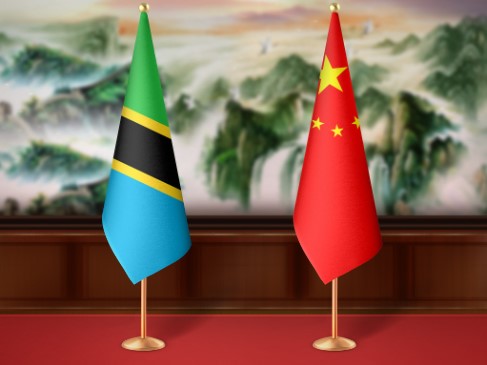
WHEN the first trains rolled along the TAZARA Railway decades ago, they carried more than passengers and cargo. They carried a powerful symbol of friendship between Tanzania and China and that is one built on solidarity, shared development and a common belief that cooperation should improve people’s lives.
Today, as the two countries look towards the next generation of their relationship, a new generation of young Tanzanians and Chinese is being called upon to carry that friendship forward.
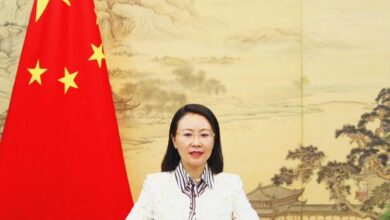
Ambassador of the People’s Republic of China to Tanzania, Chen Mingjian, said young people must be placed at the centre of China-Tanzania cooperation because they hold the key to sustaining and deepening relations between the two countries.
She made the remarks during the China-Tanzania Dialogue on Youth Development and Exchange held in Dar es Salaam on Wednesday. The event brought together nearly 80 representatives from the governments of China and Tanzania, universities, infrastructure companies, the media and student communities.
The Dialogue came in a significant year, as 2026 marks the 70th anniversary of ChinaAfrica diplomatic relations and has been designated the ChinaAfrica Year of People-to-People Exchanges.
Ambassador Chen said the friendship between China and Tanzania had been built over seven decades through practical cooperation and people-to-people connections.
“Over the past seven decades, China and Tanzania have written a remarkable chapter of solidarity and cooperation. Our friendship has been tested by time and proven by action. From the TAZARA Railway to the Nyerere Bridge, our cooperation has always put people at the centre,” she said.
She described young people as an important force in building a new era of the all-weather China-Africa community with a shared future, urging youth from both countries to take a more active role in bilateral relations.
Three hopes for youth
Ambassador Chen outlined three hopes for youth exchanges between the two countries. First, she encouraged young people to become “dream-chasers” who connect their personal ambitions with national development and the broader process of economic and social transformation.
Second, she urged them to become a “bridge of mutual learning” by strengthening friendship through cultural exchange, dialogue and respect for each other’s traditions. Third, she called on youth to become a “vital force” for common development by participating in vocational skills training and emerging fields such as infrastructure, the digital economy and green development.
“Friendship between states lies in people-to-people exchanges, and people-to-people exchanges hinge on youth. May the flower of China-Tanzania friendship bloom even more brilliantly in the new era,” she said.
Ambassador Chen also announced that the Chinese Embassy would work with partners to expand scholarship opportunities and youth exchange programmes in the coming year, creating more opportunities for young Tanzanians to study, train and interact with their Chinese counterparts.
Representing the Government of Tanzania, Dr Fredrick Salukele, Director of Technical and Vocational Education and Training in the Ministry of Education, Science and Technology, said the long-standing friendship between Tanzania and China had successfully stood the test of time.
However, he said the next phase of cooperation should move beyond traditional areas such as infrastructure and trade and place greater emphasis on youth, knowledge, skills and innovation. Dr Salukele said Tanzania was implementing education reforms aimed at strengthening competency development, digital skills and links between education institutions and industry.
“The world of work is changing rapidly because of Artificial Intelligence, automation and new technologies. Our education and training systems must be dynamic. We must prepare young people not only for the jobs that exist today, but also equip them with the adaptability, creativity and technological capabilities required for the jobs and enterprises of tomorrow,” he said.
ALSO READ: Pamba Jiji Extends Contract with Jambo Company
He called for stronger cooperation in higher education, technical and vocational education and training, internships, apprenticeships and joint research. He also urged Chinese companies operating in Tanzania to make structured skills and knowledge transfer part of their investment programmes.
Such cooperation, he said, should include mentorship, apprenticeship training, research, innovation, technology transfer and professional certification.
“The goal is to create more learning opportunities for Tanzanian youth and to extend peopleto-people exchange to ‘skills-toskills’ exchange. Together we can nurture a generation capable of shaping the future and driving shared prosperity,” he said.
According to Dr Salukele, the strongest bridge between Tanzania and China will not be built only with steel and concrete, but also through knowledge, skills, friendships and shared aspirations among young people.
Universities as engines of innovation
Prof Baraka Maiseli, Principal of the College of Information and Communication Technologies at the University of Dar es Salaam, highlighted the important role universities can play in taking Tanzania-China cooperation into a new era.
Drawing on his own experience as a Chinese Government Scholarship student in China between 2012 and 2015, Prof Maiseli said international education had transformed his professional outlook and equipped him with knowledge, networks and research experience.
“That experience gave me new knowledge, professional networks, research experience, and showed me the transforming power of international education. I returned to Tanzania determined to contribute to our country’s development,” he said.
He highlighted three important achievements arising from cooperation between the University of Dar es Salaam and Chinese institutions. One is the establishment and growth of the Huawei ICT Academy at UDSM, where students receive training in areas including cloud computing, artificial intelligence, 5G and cybersecurity.
A CoICT student recently won first place in Tanzania and Africa in the Huawei ICT Competition, demonstrating the potential of such partnerships. Prof Maiseli also highlighted increasing academic mobility between the two countries. More than 60,000 Tanzanians have studied in China over the years, while in 2025 nearly 100 Chinese students travelled to UDSM to study Kiswahili and Tanzanian culture.
“This two-way flow builds understanding and long-term friendship,” he said. He called for the adoption of a Triple-Helix Model bringing together government, universities and industry.
“We need Industry to provide technology, real-world problems and jobs. We need Universities to provide research, talent and innovation. And we need Government to take prototypes to market and create the enabling environment. When these three work together, we create jobs and prosperity,” he said.
Prof Maiseli challenged young people from both countries to work together on practical solutions rather than limiting themselves to academic theory.
“Chinese and Tanzanian youth must sit together and solve practical problems. Don’t just write papers. Build solutions. Start companies. Lead the next 60 years of Tanzania-China friendship,” he said.
Infrastructure must also build people
Mr Jiang Yuntao, Chairman of CRJE (East Africa) Ltd and Chairman of the Chinese Enterprises Association in Tanzania, said the enthusiasm displayed by students demonstrated the importance of the Dialogue.
He said that during CRJE’s long presence in Tanzania, the company had sought to develop local talent alongside infrastructure. “From the construction of the TAZARA Railway to the Nyerere Bridge and the Dodoma High Court, our commitment has remained the same: to build not only infrastructure, but also people,” Mr Jiang said.
He explained that the company had worked with universities, vocational training institutions and professionals to provide Tanzanian youth with practical learning and career opportunities. These initiatives include onthe-job training, master-apprentice mentorship, skills competitions and university-enterprise cooperation.
Mr Jiang said sustainable development could not be measured only by completed roads, bridges and buildings. It must also be measured by the number of skilled young people left behind to maintain, improve and lead such projects.
ALSO READ: GGML donates 1.2bn/- to support children’s cardiac treatment at JKCI
“We believe that sustainable cooperation and development is not only about building projects of steel and concrete. It is also about helping with the growth of young people, because they are the future of one nation,” he said.
He expressed hope that the “Chinese Masters, Tanzanian Heritage” programme would strengthen mutual understanding by connecting experienced Chinese professionals with young Tanzanians.
“When a Chinese engineer mentors a Tanzanian youth, and when a Tanzanian student brings local knowledge to a Chinese project, that is how we build a lasting friendship,” he said.
Mr Jiang reaffirmed CRJE’s commitment to developing local professionals capable of leading major projects in Tanzania in the future. The Dialogue also gave Tanzanian youth an opportunity to share personal experiences of how skills development and mentorship can transform careers.
Eng Titus Lukuwi, a Tanzanian engineer working with CRJE, said he began as a frontline employee in 2022. Through systematic mentorship and training in 2023 and 2025, he gradually developed skills in technical communication, project delivery and quality standards.
“When I was given my first assignment, I was afraid to say I don’t know. But CRJE gave me a welcoming environment. Senior engineers took time to train us on site,” he said.
He has since become part of the company’s core technical team, contributing to the delivery of infrastructure projects.
“Today I am part of a team delivering quality infrastructure for Tanzania. Our hope is that in a few years Tanzanian engineers will have the capacity to deliver for our company and our country,” he said.
His experience offered a practical example of how cooperation between Chinese enterprises and Tanzanian workers can translate into skills, confidence and professional advancement. For students, the Dialogue was not simply an event about diplomatic relation. It was an opportunity to understand how their education and skills could connect them to future careers and national development.
Brian Samuel, a third-year student at CoICT, UDSM, speaking on behalf of students, said the Dialogue had demonstrated that young people’s skills were essential to Tanzania’s development.
“We are very grateful to UDSM, the Government of Tanzania, the Embassy of China, and CRJE for organising this platform. For the first time we are sitting with Ambassadors, Engineers and Company Chairmen to talk about our future,” he said. Brian said students wanted opportunities that went beyond academic certificates.
“We don’t just want certificates. We want to build real projects, learn from engineers on site, and get certified in skills that companies actually need,” he said.
He pledged that Tanzanian youth were ready to contribute to the next chapter of ChinaTanzania relations by using technology and innovation to address challenges in areas such as health, agriculture and infrastructure.
A major outcome of the meeting was the launch of the report, “70 Years of ChinaAfrica Diplomatic Relations: CRJE’s Practice in China-Tanzania Youth Skills Exchange Cooperation.” The report traces skills cooperation between the two countries from the TAZARA Railway to more recent projects such as the Nyerere Bridge, Dodoma High Court and Nyerere Foundation Square. It identifies four major approaches to talent development: On-the-job training, masterapprentice mentorship, skills competitions and universityenterprise collaboration.
The Dialogue also launched the “Chinese Masters, Tanzanian Heritage” Youth Skills Inheritance Programme, designed to institutionalise mentorship and create a long-term pipeline of skilled young Tanzanian professionals, particularly in engineering and construction. Participants further discussed ways to align vocational education with industry needs, expand internships between universities and enterprises, strengthen two-way academic mobility and establish regular platforms for youth dialogue.
The future depends on people
The message emerging from the Dialogue was clear: The future of China-Tanzania relations will increasingly depend on people rather than projects. For seven decades, bridges, railways, buildings and other infrastructure have provided visible symbols of cooperation. But the next generation of the relationship will require something deeper, young people equipped with knowledge, practical skills, creativity, cultural understanding and the confidence to work together.
As Tanzania and China celebrate decades of friendship and look towards the future, investing in youth could prove to be the most enduring infrastructure project of all. The Dialogue was jointly hosted by Xufang International Media of China International Communications Group (CICG), CRJE and the University of Dar es Salaam.