Tanzanian women see challenges in land ownership laws with only 38 percent of them owning it
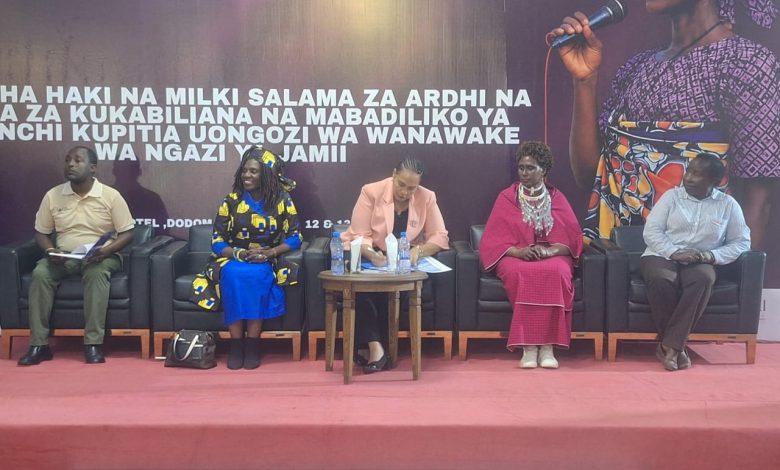
DODOMA: DESPITE having laws that guarantee women’s equal rights to access and own land, translating those rights into actual ownership remains a major challenge in Tanzania, where only 38 per cent of women currently own land.
The gap between legal protection and implementation took centre stage at the first Stand for Her Land Campaign Conference, where stakeholders renewed calls for stronger action to remove social, institutional and cultural barriers that continue to limit women’s access to one of the country’s most important economic assets.
The conference brought together government leaders, civil society organisations and women from different parts of the country to discuss progress, challenges and the way forward in advancing women’s land rights.
Angellah Kairuki, Minister for Information, Communications and Information Technology, said women’s experiences shared during the conference demonstrated the importance of land ownership in building economic independence and improving livelihoods.
She said the government would continue creating an enabling environment to protect women’s rights and promote their participation in decision-making at all levels.
The issues raised at the conference are also expected to reach beyond national discussions, with recommendations set to be presented at three international meetings scheduled for later this year.
Among the areas expected to receive greater attention are the effective implementation of land laws and increased participation of women in decision-making processes.
Representing the Chairperson of the Stand for Her Land Campaign, Dr Monica Mboja said the conference was established as an annual platform to assess progress and address persistent challenges affecting women’s land rights.
ALSO READ: Ending FGM through women’s voices
The next conference is expected to be held in Arusha.
She said the campaign, launched in Tanzania in 2019, seeks to bridge the gap between laws that recognise women’s land rights and their implementation at community level.
Stakeholders have also called for closer cooperation among government institutions, civil society organisations and communities to ensure women are not only aware of their rights but are able to exercise them.
Religious, traditional and government leaders have particularly been urged to play a greater role in identifying and removing barriers that prevent women from owning land.
The renewed push comes as Tanzania seeks to ensure that land, a key source of economic security and development, becomes increasingly accessible to women and contributes to broader efforts to promote inclusive growth and gender equality.