

GPS reveals flamingos’ regional migration
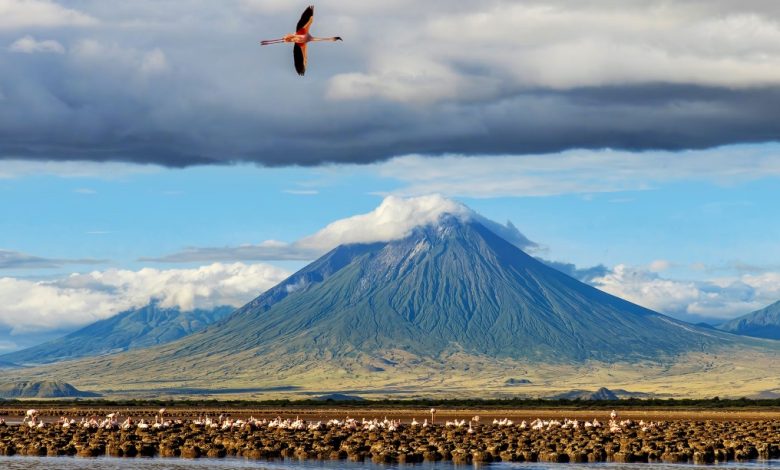
ARUSHA: TANZANIAN scientists have discovered that lesser flamingos from Lake Natron migrate across Tanzania and Kenya after fitting Global Positioning System (GPS) tracking devices on two birds to monitor their movements.
The findings have provided new information on the migration routes of the birds and the wetlands they use during seasonal movements across East Africa.
Speaking in Arusha, Eastern and Southern Africa Coordinator for the International Union for Conservation of Nature (IUCN) Special Survival Commission Flamingo Specialist Group, Dr Emmanuel Mgimwa, said the two tagged flamingos followed different routes after leaving Lake Natron.
“One travelled from Lake Natron into the Ngorongoro Conservation Area, entered the crater and stayed at the crater lake before flying to the Engaruka escarpments in Monduli and later crossing into Kenya, where it was traced at Lake Magadi,” Dr Mgimwa said.
Dr Mgimwa, who is also Director of Nature Tanzania, said the second flamingo travelled much farther north after crossing into Kenya and was later traced at Lake Logipi in the northern Kenya Rift Valley.
Lake Magadi and Lake Natron are highly alkaline Rift Valley lakes and scientists believe they were once part of a larger ancient water body. Lake Logipi is also a saline and alkaline lake that attracts large numbers of flamingos when environmental conditions are favourable.
Wildlife experts continue to monitor the movements of the two birds across Tanzania and Kenya, and the information collected is helping researchers understand how lesser flamingos move between breeding, feeding and resting sites in the region.
ALSO READ: Tanzania and Kenya call for protection of flamingoes at Lake Natron
According to Tanzania Wildlife Research Institute (TAWIRI) scientist Dr John Sulle, more than 80 per cent of the world’s lesser flamingo population breeds at Lake Natron, making the lake one of the most important breeding sites for the species globally.
The global population of lesser flamingos is estimated at about 3.5 million birds, with the East African Rift Valley serving as a key breeding and feeding range.
Researchers say the GPS tracking study will help strengthen conservation planning for Lake Natron and other wetlands used by flamingos during their seasonal movements.
The findings are also expected to support regional conservation cooperation between Tanzania and Kenya because the birds regularly move across international borders in search of suitable feeding and breeding conditions.




Incredible research! It’s fascinating how GPS technology maps out the flamingos’ exact flight corridors across the Rift Valley. Watching them navigate and switch between different feeding lakes feels like nature charting its own aerial Tap Road across borders. Hopefully, this tracking data will help establish stronger cross-border wetland conservation policies.