

How carbon farming is creating new wealth for Tanzania’s smallholder farmers
DAR ES SALAAM: THE annual Nanenane International Agricultural Exhibition has long served as Tanzania’s premier showcase for agricultural innovation.
Visitors explore improved crop varieties, advanced farming equipment, modern livestock breeds and technologies designed to boost productivity and strengthen food security. This year, however, one of the exhibition’s most significant innovations is not immediately visible.
Rather than focusing solely on higher crop yields, it highlights an emerging opportunity that combines environmental conservation with rural economic development through carbon farming.
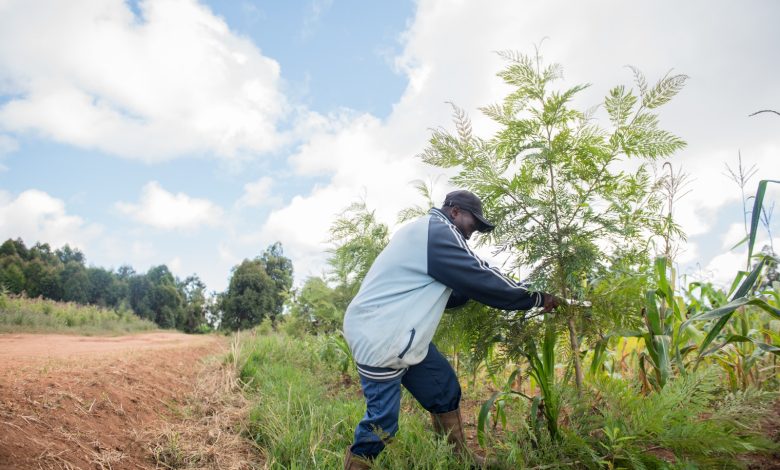
At the centre of this innovation is One-Acre Fund Tanzania, whose Afforestation, Reforestation and Revegetation (ARR) programme is introducing thousands of smallholder farmers to the growing global carbon market.
The initiative demonstrates that trees can provide benefits beyond shade, timber and soil protection. Properly managed, they can also generate carbon credits, creating an additional source of income while contributing to global efforts to address climate change.
Climate change continues to reshape agricultural production across Tanzania. Irregular rainfall, prolonged dry spells and rising temperatures are making farming increasingly unpredictable, threatening crop yields and household incomes.
These challenges have heightened the need for climate-smart agricultural practices that not only protect the environment but also strengthen farmers’ resilience. Carbon markets are emerging as one such solution.
ALSO READ: Tanzania records 116.9m users of mobile phone lines by June 2026
Through verified carbon credits, farmers have an opportunity to earn income from environmental stewardship while investing further in sustainable farming practices. The approach offers financial incentives that encourage long-term conservation, making climate action economically meaningful for rural households.
One-Acre Fund Tanzania has developed a model that differs from many traditional carbon offset programmes. In numerous projects around the world, carbon credits are generated collectively across large landscapes, with benefits distributed through community organisations or cooperatives.
Under One-Acre Fund’s approach, however, individual farmers remain at the centre of the programme. Every participating farmer owns the trees they establish under the initiative. Each tree is digitally recorded, monitored and linked directly to the household responsible for planting and maintaining it.
This digital mapping system makes it possible to accurately measure the amount of carbon captured and stored by individual trees, ensuring that the corresponding carbon credits can be attributed to the farmers who nurture them.
The programme extends well beyond simply distributing seedlings. Farmers receive technical guidance on tree establishment, management and maintenance. Continuous monitoring helps improve tree survival rates, while incentive payments encourage participants to care for young trees during their most vulnerable growth stages.
As trees mature, they absorb carbon dioxide from the atmosphere and store it in their trunks, branches, roots and surrounding soils. This natural process, known as carbon sequestration, reduces greenhouse gases in the atmosphere.
After independent verification under internationally recognised carbon standards, the amount of carbon removed or avoided is converted into carbon credits. Each verified credit represents one metric tonne of carbon dioxide equivalent that has been removed or prevented from entering the atmosphere.
These credits can then be sold on voluntary carbon markets, providing participating farmers with an additional stream of income. The programme has already attracted more than 11,000 smallholder farmers across Tanzania. By 2030, One-Acre Fund Tanzania aims to expand participation to approximately 34,000 farmers, significantly increasing both environmental and economic benefits.
Over a projected implementation period of 26 years, the initiative is expected to remove an average of about 63,000 metric tonnes of carbon dioxide equivalent annually. Such achievements would contribute not only to global climate mitigation but also to Tanzania’s broader efforts to promote sustainable rural development.
The initiative also supports Tanzania’s commitments under the Paris Agreement. Through its Nationally Determined Contributions (NDCs), the country has pledged to reduce greenhouse gas emissions while strengthening resilience to climate change.
Forestry, agroforestry and sustainable land management remain central to these commitments because trees naturally absorb atmospheric carbon while providing numerous environmental benefits.
The importance of integrating trees into agricultural landscapes extends well beyond carbon storage. Agriculture remains one of Tanzania’s most important economic sectors, employing nearly two-thirds of the population and contributing substantially to national economic growth.
Protecting the long-term productivity of agricultural land is therefore essential for both livelihoods and national development. Agroforestry offers multiple advantages to farming households.
Trees improve soil quality by increasing organic matter, reducing erosion and enhancing moisture retention. Healthier soils support stronger crop growth while reducing dependence on expensive chemical fertilisers.
Lower production costs can improve farm profitability and allow households to invest in other income-generating activities. Many tree species also provide valuable products such as fruits, fodder, fuelwood and timber.
These resources diversify household incomes while reducing pressure on natural forests, contributing to both environmental conservation and improved rural livelihoods. For many participating farmers, these practical benefits are just as important as future carbon payments.
One such farmer is Efeso Kibiki, who joined the programme in early 2025. Since planting his first seedlings, he has successfully established 218 healthy trees on his farm.
Although he expects to begin receiving payments for the carbon those trees will capture in future years, his decision to participate was initially driven by environmental concerns. According to Mr Kibiki, changing weather patterns convinced him that restoring tree cover was necessary.
ALSO READ: Ndejembi smells a rat in the Mama and Mtoto project at Kahama Municipal Hospital
He believes that landscapes with healthy tree cover are more attractive, provide cleaner air and contribute to a healthier environment for everyone.
His experience reflects a growing awareness among Tanzanian farmers that climate change is already affecting daily life. Many rural communities have experienced increasingly erratic rainfall and declining agricultural predictability, making adaptation an urgent priority rather than a future concern.
Mr Kibiki also anticipates important improvements in soil fertility as his trees mature. Better soil health, he believes, will enhance crop production and address one of the major challenges facing his farm.
The programme’s survival incentives have also encouraged careful management of newly planted trees. After successfully maintaining his trees, Mr Kibiki received an initial incentive payment of 20,000 Tanzanian shillings.
Instead of spending the money on immediate household expenses, he invested it in expanding his poultry enterprise by purchasing a rooster, thereby strengthening another source of family income.
His long-term ambition is even more ambitious. He hopes to increase the number of trees on his farm to 1,000, demonstrating how carbon farming can become part of a broader strategy for environmental conservation, agricultural improvement and rural entrepreneurship.
Internationally, demand for high-quality carbon credits continues to grow as businesses and organisations seek credible ways to compensate for greenhouse gas emissions that cannot yet be eliminated.
Buyers increasingly favour projects that combine measurable climate benefits with positive social outcomes, particularly those that improve livelihoods while protecting natural resources.
This trend presents valuable opportunities for countries such as Tanzania, where millions of smallholder farmers manage landscapes capable of delivering substantial environmental benefits.
By connecting farmers directly with carbon markets, initiatives such as One-Acre Fund Tanzania’s programme demonstrate how climate finance can reach rural households that are among the most vulnerable to climate change. The model also illustrates a broader shift in development thinking.
Rather than viewing farmers solely as recipients of climate assistance, it recognises them as active contributors to global climate solutions. Their efforts to restore degraded landscapes, plant trees and manage natural resources responsibly are rewarded through direct financial incentives that encourage long-term stewardship.
As discussions continue at this year’s Nanenane International Agricultural Exhibition, the growing interest in carbon farming highlights an important evolution in Tanzanian agriculture. The future of farming is no longer measured only by the quantity of crops harvested but also by the environmental value generated through sustainable land management.
The thousands of trees now taking root on smallholder farms across the country symbolise more than ecological restoration. They represent a new form of agricultural investment capable of improving soil fertility, strengthening climate resilience, creating additional household income and contributing to Tanzania’s national climate commitments.
As participation expands, carbon farming has the potential to become an increasingly important pillar of sustainable agricultural development, demonstrating that environmental protection and economic progress can grow together.
Ms Dorcas Tinga is a Communications Specialist from One-Acre Fund Tanzania.




I need more information on carbon credit and programs supported by One acre fund
Great article