Africa50 forum raises Tanzania’s investment profile
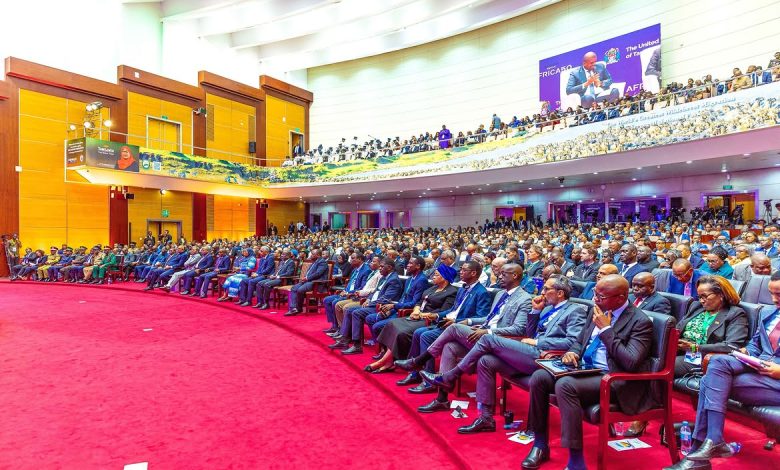
DAR ES SALAAM: TANZANIA’S hosting of the Africa50 General Shareholders Meeting (GSM) and Infra for Africa Forum has raised the country’s profile as a destination for infrastructure investment, while creating opportunities for deeper regional economic cooperation, analysts have said.
The two-day high level gathering, held from August 5 to 6 at the Julius Nyerere International Convention Centre (JNICC) in Dar es Salaam, brought together more than 1,200 senior government officials, financiers, development partners and private sector leaders from across Africa to explore innovative financing models and strengthen collaboration on critical infrastructure projects.
Speaking to the ‘Daily News’ after the forum, University of Dar es Salaam (UDSM) Associate Professor of Economics Dr Martin Chegere said hosting the continental gathering demonstrated Tanzania’s commitment to regional cooperation and sustainable development.
He said the forum provided Tanzania with an opportunity to work with other African countries in addressing infrastructure financing challenges while showcasing its economic potential to influential investors and development partners.
“Hosting a meeting of this magnitude shows our willingness to work together with other African nations and our commitment to implementing the resolutions reached during such discussions,” Dr Chegere said.
Beyond policy discussions, Dr Chegere said the forum generated immediate economic benefits through meetings, incentives, conferences and exhibitions (MICE) tourism, with delegates spending on accommodation, transport, flights and other services during their stay.
He said the exposure could also generate longer term benefits if participants returned as investors, business partners or leisure tourists after gaining first-hand knowledge of Tanzania’s economic and tourism potential.
Dr Chegere said hosting the event had also raised Tanzania’s international visibility and could strengthen investor confidence, particularly in the infrastructure sector.
“The world was watching Tanzania. Such exposure creates opportunities to attract foreign direct investment, partnerships and additional financing for development projects,” he said.
He described infrastructure as a key driver of economic transformation, noting that efficient transport, reliable electricity and other public infrastructure improve productivity, reduce business costs and support economic activity.
Dr Chegere cited Tanzania’s electrified Standard Gauge Railway (SGR) as an example of how modern infrastructure can improve mobility by reducing travel time and enabling people to conduct business more efficiently.
He also stressed the importance of reliable electricity to businesses, education and other productive activities.
Economic Diplomacy Expert at the University of Arusha (UoA), Professor Kitojo Wetengere, said the forum had further enhanced Tanzania’s visibility on regional and international platforms.
ALSO READ: Tanzania affirms cooperation with Africa50 in advancing infrastructure projects across Africa
“In economic diplomacy, one of the critical elements is marketing the respective country,” Prof Wetengere said.
He urged Tanzania to turn the visibility gained from hosting the forum into tangible economic opportunities by actively participating in strategic projects emerging from discussions involving continental and regional institutions, investors and governments.
Prof Wetengere said Tanzania should not remain an observer in such initiatives, arguing that hosting a major continental forum provided an opportunity to strengthen the country’s participation in projects aligned with its development objectives.
“I think instead of acting as observers, our position as the host of this forum enabled us to benefit from various resolutions reached during the discussions,” he said.
Economic and Investment Banker Dr Hildebrand Shayo said the broader significance of the Africa50 forum lay in addressing Africa’s infrastructure deficit, which continues to constrain economic competitiveness and regional trade.
He said Africa50 was moving beyond traditional financing models by supporting project development, mobilising domestic public and private capital and increasing investment in infrastructure across the continent.
“The gathering of the head of state and distinguished delegates from across Africa highlighted a clear point: a factory cannot compete globally if its electricity supply is unreliable. Similarly, a farmer cannot efficiently export produce without proper roads and storage facilities. A mining project cannot maximise domestic value if railways and ports are inefficient. Digital businesses also require affordable broadband and data infrastructure to scale successfully,” he said.
Dr Shayo said Africa’s geographical fragmentation remained a major economic obstacle, limiting the continent’s ability to fully benefit from the African Continental Free Trade Area (AfCFTA), as goods often remain costly to transport and cross-border trade can