

Egypt–Tanzania alliance will accelerate Africa’s single market
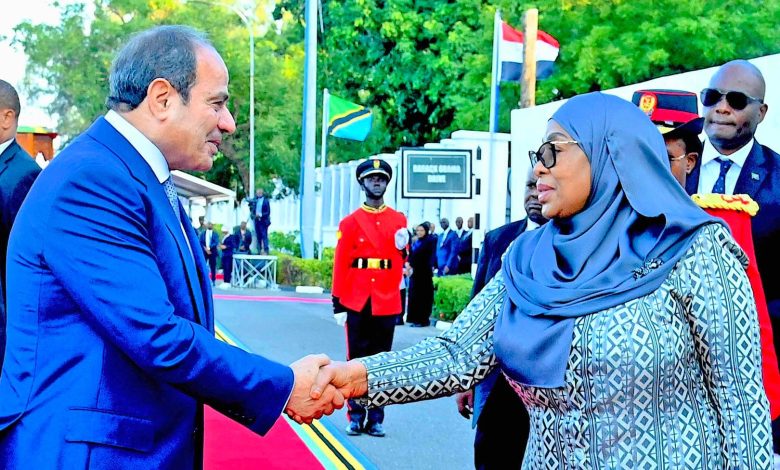
DAR ES SALAAM: EGYPT President Abdel Fattah El-Sisi’s recent state visit to Tanzania is more than just another diplomatic event between two allied African countries.
It signals a strategic shift that could reshape economic collaboration between North and East Africa, especially as the continent speeds up the rollout of the African Continental Free Trade Area (AfCFTA).
Beyond the formal welcomes and bilateral deals, a larger economic narrative is unfolding: The rise of a new development corridor connecting Egypt’s industrial power with Tanzania’s strategic location and rich natural resources, serving as a gateway to the EAC and SADC economic regions.
For decades, Egypt and Tanzania have maintained friendly relations, grounded in Pan-African solidarity from the times of President Julius Nyerere and President Gamal Abdel Nasser.
However, despite these historical connections, their economic interactions have not yet reached their full potential.
Trade volumes are modest, investment flows are limited and private sector collaboration is fragmented. President El-Sisi’s visit arrives at a time when both economies have strong incentives to turn political goodwill into tangible economic results.
Economically, the visit marks a move from historyfocused diplomacy to one centred on investment, production, infrastructure and regional value chains. The timing is ideal. Africa is now at a stage where regional integration has become an economic imperative rather than a choice.
With global supply chains undergoing reorganisation, ongoing geopolitical tensions are altering international trade dynamics and African nations are progressively understanding that their sustained growth hinges on increased intra-regional trade instead of relying mainly on foreign markets.
Egypt enters this partnership as one of Africa’s largest industrial economies, with advanced manufacturing capabilities, internationally competitive pharmaceutical production, construction expertise, financial institutions and engineering capacity.
Tanzania is quickly establishing itself as East Africa’s logistics hub, thanks to strategic investments in ports, railways, roads, aviation and energy infrastructure. This synergy offers a chance for economies to cooperate rather than compete.
The most notable aspect of this visit concerns logistics and connectivity. Egypt manages the vital Suez Canal, a key maritime route linking Europe and Asia.
Meanwhile, Tanzania’s strategic location on the Indian Ocean serves as the primary gateway for six landlocked countries: Zambia, Rwanda, Burundi, Uganda, Malawi and the eastern Democratic Republic of Congo.
Strategically, linking these two gateways would open the door to a unified North-East African trade route.
This route could reduce transport costs, shorten delivery times and boost regional trade. Improved connectivity would support not only bilateral trade but also strengthen continental supply chains within the AfCFTA framework.
The economic rationale goes beyond transportation. Egypt has significant industrial overcapacity in sectors such as fertilisers, chemicals, pharmaceuticals, electrical equipment, textiles and processed foods.
On the other hand, Tanzania benefits from extensive agricultural resources, important minerals, natural gas reserves and a quickly growing domestic market.
Rather than solely trading finished goods, the two countries can work together to develop regional value chains.
Tanzanian raw materials might undergo more processing through integrated industrial partnerships before reaching regional markets.
Likewise, Egyptian manufacturers could establish production facilities in Tanzania to access EAC and SADC markets, benefiting from Tanzania’s improving investment climate.
Egypt has become a leading energy hub in Africa, driven by major natural gas discoveries and large investments in electricity, renewables and transmission.
At the same time, Tanzania boasts extensive untapped gas reserves and increasing renewable energy potential. Collaboration will accelerate Tanzania’s industrial development and enable Egyptian companies to engage more in gas processing, petrochemicals, electricity infrastructure and renewable energy projects.
Instead of exporting raw natural resources, Tanzania could progressively enhance its value chain through joint industrial initiatives backed by Egyptian technology and expertise.
Both nations encounter food security issues but have highly complementary agricultural strengths.
Egypt is renowned for its expertise in irrigation technology, desert farming, greenhouse cultivation and water-efficient food production.
ALSO READ: EAC pushes digital single market
Meanwhile, Tanzania benefits from extensive fertile land and a suitable climate but still struggles with productivity limitations.
Technology transfer in irrigation, seed development, mechanisation and agricultural processing has the potential to significantly boost Tanzania’s agricultural productivity.
It also offers new investment opportunities for Egyptian agribusiness firms.
Establishing joint agro-processing zones could convert low-value agricultural commodities into higher-value processed products for markets in Africa and the Middle East.
Water cooperation is expected to draw significant focus due to both countries’ stakes in the Nile Basin.
Although discussions frequently highlight the political sensitivities of Nile water management, there are ample opportunities for technical collaboration in areas such as water conservation, improving irrigation efficiency and enhancing climate resilience.
Rather than considering water only in geopolitical terms, both governments might reframe it as a hub for innovation, joint research efforts and sustainable farming growth.
Egypt has one of the most advanced banking sectors in Africa, along with dynamic capital markets and a growing fintech ecosystem.
Meanwhile, Tanzania is expanding its financial sector and aiming to attract more long-term investment to fund infrastructure and industrial development.
Enhanced collaboration among development finance institutions, commercial banks, sovereign funds and export credit agencies can improve access to funding for large cross-border projects.
Government-owned financial institutions such as TIB Development Bank, TADB and Egyptian financial institutions can team up to utilise blended finance for infrastructure, manufacturing and industrial projects.
Strategically, this would reduce dependence on traditional external financing while strengthening African financial resilience entrenched in local and regional content financing.
In the past, many bilateral visits lead to memoranda of understanding that result in limited commercial gains due to insufficient business engagement.
The key to success will rely more on business-tobusiness partnerships than on government statements. Joint investment forums, business councils, chambers of commerce, startup exchanges and industrial matchmaking initiatives should support political agreements.
Ultimately, private companies, not governments are responsible for creating jobs, boosting exports and maintaining long-term economic partnerships. Egypt draws millions of visitors each year with its famous historical sites.
Likewise, Tanzania boasts world-famous attractions such as Mount Kilimanjaro, Selous Game Reserve, Serengeti National Park, the Ngorongoro Conservation Area and Zanzibar.
Strategic joint tourism marketing can promote multidestination travel packages across North and East Africa, boosting visitor spending and enhancing airline connectivity between these regions.
Egypt’s universities and research institutions possess extensive scientific expertise, while Tanzania is heavily investing in higher education and technical skills.
Increasing academic exchanges, engineering collaborations, medical partnerships and vocational training could improve longterm productivity and develop a new generation of professionals ready to lead continental integration.
However, seizing these opportunities will necessitate overcoming various structural challenges.
Trade among African nations is still hindered by high non-tariff barriers, complex customs processes, fragmented regulations and weak transport infrastructure.
If these issues are not tackled, political promises are unlikely to lead to substantial rises in trade and investment. Equally important is maintaining discipline in implementation.
While Africa is filled with ambitious declarations, the true challenge is in execution. Governments must create clear, measurable implementation frameworks that include investment targets, project timelines, monitoring systems and annual reviews.
The success of these efforts should be gauged by actual outcomes, such as higher trade volumes, new investments, job creation, industrial production and technology transfer, not just the number of agreements signed. Similarly, regional organisations play a crucial role.
The East African Community, COMESA, SADC and the African Union should see the Tanzania-Egypt partnership not just as a standalone bilateral project but as a precedent for wider continental integration.
Effective Egypt-Tanzania collaboration could inspire other strategic partnerships that connect various African regions by leveraging their complementary economic advantages. This visit also highlights shifting global economic conditions.
As leading economies implement industrial policies, diversify their supply chains and vie for strategic resources, African nations need to bolster intra-African collaborations to enhance resilience.
Developing regional manufacturing networks minimises reliance on external shocks and helps retain more value within the continent.
In Tanzania, this partnership supports its goal of transforming into a regional logistics and industrial hub by 2050.
Egyptian investment can boost industrial diversification, facilitate technology transfer and enhance export competitiveness.
For Egypt, increasing involvement with Tanzania broadens commercial opportunities in East Africa’s fastgrowing markets and enhances Cairo’s overall economic ties throughout Sub-Saharan Africa.
Ultimately, President ElSisi’s visit should be seen not just as a diplomatic milestone but as a strategic economic investment in Africa’s future.
If successfully executed, the partnership could create a new growth corridor across Africa, from the Mediterranean to the Indian Ocean via the Nile Valley.
This route would promote growth in manufacturing, agriculture, logistics, energy, finance and innovation, supporting the goals of the African Continental Free Trade Area.
The true success of this historic visit won’t be reflected in the photos or the agreements signed at official events.
Instead, it will be assessed years later by the factories built, ports expanded, businesses launched, trade boosted, technology transferred, jobs created and prosperity spread through bold privatesector engagement in East and North Africa.
President El-Sisi’s visit and Dr Samia’s tête-à-tête on behalf of Tanzanians offer a real opportunity to turn a longstanding African political friendship into a major economic alliance, demonstrating how African nations can unite and lay a foundation for developing their industries and thrive collectively in a competitive global market.



Hello my family member! I wish to say that this post is awesome, nice written and include approximately all significant infos. I’d like to look more posts like this .