CMA urges domestic to defend their labour rights
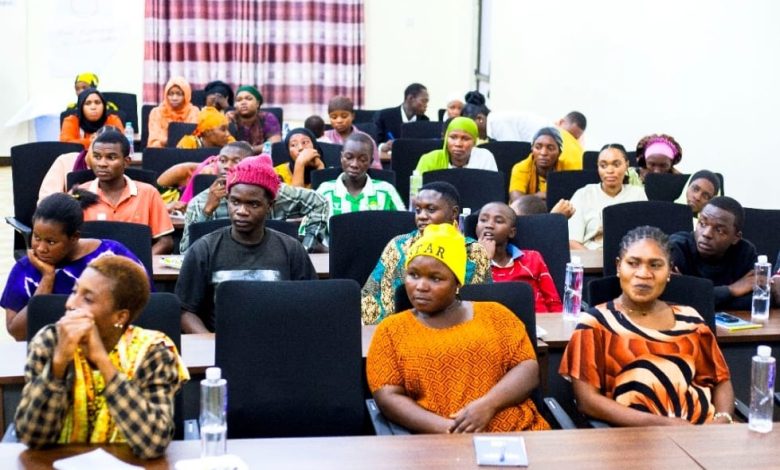
MOROGORO: THE Director of the Commission for Mediation and Arbitration (CMA), Usekelege Mpulla, has urged domestic workers in Tanzania to recognize their value and refuse to accept the denial or violation of their workplace rights.
He said that the country’s labour and employment laws protect domestic workers just as they protect all other employees.
Speaking in Morogoro while opening a one-day training session for domestic workers from the region, organized by the International Labour Organization (ILO) in collaboration with the Conservation, Domestic, Service and Hotel Workers Union (CHODAWU), Mpulla said domestic workers should not consider themselves powerless because the law recognizes and protects them.

He noted that, in addition to the existing labour laws, the Commission for Mediation and Arbitration (CMA) is mandated to receive and resolve labour disputes involving all workers without discrimination, while giving special priority to domestic workers because of the unique nature of their work.
“Do not see yourselves as powerless. The law recognizes and protects you just like all other workers. The Commission for Mediation and Arbitration receives labour disputes from all workers without discrimination, and because of your unique circumstances, we give your cases priority to ensure you receive justice on time.
“Domestic workers often face challenges such as being denied basic entitlements, including wages, rest periods and decent working conditions. CMA is here to ensure these rights are protected in accordance with the law,” he said.
Mpulla added that Tanzania has continued to strengthen systems for protecting workers’ rights by aligning with international labour standards and dispute resolution guidelines, with the aim of ensuring that every worker receives fair treatment without bias.
He also encouraged domestic workers to make use of the e-Utatuzi digital platform, which allows them to submit labour disputes online at any time without having to visit CMA offices.
Meanwhile, Morogoro peer educator and Chairperson of Domestic Workers in the region, Desdelia Haule, thanked the ILO for providing training to 61 domestic workers from different parts of Morogoro Region and pledged to put the knowledge gained into practice.
She said many domestic workers had little understanding of their fundamental rights or their responsibilities and those of their employers, adding that the training had helped them realize that they are workers entitled to the same legal protections as employees in other sectors.
“I thank the ILO for bringing this training to our region. We will use this opportunity to educate other domestic workers about the Employment and Labour Relations Act, their rights and responsibilities, as well as those of employers,” she said.
One of the participants, domestic worker Salama Rashid, said that before the training, many domestic workers in the region were unaware of their rights and often worked without formal employment contracts.
“We have learned about the importance of employment contracts, rest periods, sick leave and other fundamental rights. Many of us did not know these things before. We are leaving here with a much better understanding of both our rights and responsibilities,” she said.
She added that participants had agreed to share the knowledge with other domestic workers who were unable to attend the training so that more people could benefit from the information.