

Kiswahili rising globally as Africa’s Lingua Franca, connects millions across borders
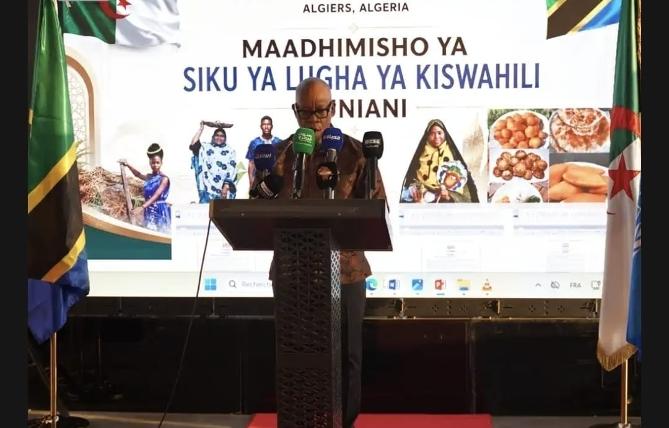
ALGERIA: The Kiswahili language continues to strengthen its position as one of Africa’s most influential means of communication, connecting millions of people across borders while gaining increasing recognition on the global stage.
For centuries, Kiswahili has played a unique role in bringing together communities from different ethnic and linguistic backgrounds, particularly in Eastern and Central Africa. Today, the language is not only a tool for everyday communication but also an important instrument for diplomacy, education, trade, cultural exchange and regional integration.
Tanzania’s Ambassador to Algeria, Mobhare Matinyi, highlighted this growing influence, saying Kiswahili continues to expand globally, with more than 200 million people now speaking the language across 14 countries worldwide.
He made the remarks during World Kiswahili Language Day celebrations organised by the Embassy of Tanzania in Algeria and held in Algiers on July 9. The event brought together ambassadors, representatives from international organisations, public and private institutions, academics and journalists, led by Algeria’s Secretary General of the Ministry of Culture and Arts, Ms Nacera Ayaïchia.
Ambassador Matinyi explained that Kiswahili’s strength lies in its ability to unite people beyond national and ethnic boundaries. In many parts of Africa, the language serves as a regional lingua franca and that is a common language used by people who may have different mother tongues but need a shared means of communication.
“Besides Tanzania, Kiswahili is also a national language in Kenya, Uganda, Rwanda and the Democratic Republic of Congo (DRC),” Ambassador Matinyi pointed out.
His remarks underline the important position Kiswahili holds in East and Central Africa, where it facilitates interaction among communities, supports regional trade and enables citizens from different backgrounds to communicate effectively.
Unlike languages limited to one country or community, Kiswahili has developed into a bridge connecting millions of Africans. It is widely used in markets, schools, public institutions, media platforms and regional meetings, making it a valuable tool for cooperation and understanding.
The ambassador delivered his speech in Kiswahili, with translated copies provided in Arabic, French and English for invited guests. Participants were also able to follow the presentation through audio and written translations displayed on a large screen, reflecting the international nature of the celebration.
The event was further enriched by a 10-minute documentary showcasing former and current presidents from Tanzania and other countries in Eastern, Central and Southern Africa delivering speeches in Kiswahili at different times.
The documentary also featured President Dr Samia Suluhu Hassan addressing a gathering in Kiswahili in Comoros in 2025 during celebrations marking the 50th anniversary of the country’s independence.
The use of Kiswahili by national leaders demonstrates how the language has moved beyond informal communication to become a symbol of national identity, regional cooperation and African confidence.
Ambassador Matinyi further explained that Kiswahili has gained official recognition beyond national borders. It is an official language of the African Union (AU), the Southern African Development Community (SADC), the East African Community (EAC) and the United Nations Educational, Scientific and Cultural Organisation (UNESCO).
This recognition reflects the growing understanding that languages are not only tools of communication but also important assets for cultural preservation, international relations and economic cooperation.
The growing international presence of Kiswahili is also reflected in global media platforms. Ambassador Matinyi cited international broadcasters from countries including the United Kingdom, Germany, France, Japan, China, Iran, India and, at one time, the United States, which have used Kiswahili in their daily broadcasts to reach audiences in Africa and beyond.
The continued use of Kiswahili by international media demonstrates its importance as a communication tool in a world where stronger connections between countries and communities are increasingly necessary. Through radio, television, digital platforms and educational programmes, the language continues to introduce African perspectives to global audiences while allowing people outside the continent to engage with Africa’s cultures, ideas and developments.
The ambassador noted that Kiswahili’s influence goes beyond communication. It has become a symbol of African unity, identity and cooperation. Referring to this year’s theme, “Kiswahili for Peace, Solidarity and Global Economic Diplomacy,” he said the language carries a proud history and continues to contribute to peacebuilding, social cohesion and economic progress across Africa.
Historically, Kiswahili has played an important role in connecting communities along the East African coast and the wider Great Lakes region. As a language shaped by centuries of interaction among African communities and other cultures through trade and social exchange, Kiswahili represents the continent’s ability to create shared platforms that bring people together.
Its role in Africa’s liberation movements also remains part of its historical significance. The language was used as a means of mobilisation and communication during various struggles for independence, helping unite people around common aspirations. Today, it continues to support dialogue, cooperation and mutual understanding among nations.
Beyond politics and culture, Kiswahili has economic value. As regional integration increases through organisations such as the East African Community and the Southern African Development Community, a common language helps businesses, traders and communities interact more easily. Effective communication can strengthen cross-border trade, tourism and partnerships by reducing language barriers.
The Algiers celebration demonstrated how language can also serve as a tool of cultural diplomacy. The event was conducted in four languages, with Kiswahili taking the leading role, and featured various aspects of Tanzanian heritage. Guests enjoyed Tanzanian tea and coffee, Kiswahili cuisine and exhibitions showcasing traditional coastal clothing, including khanga, baibui, kanzu, kikoi and vitenge.
The cultural displays were presented by Tanzanian students studying at universities in Algeria. The students also performed traditional dances representing Tanzania’s Maasai and Haya communities and recited a Kiswahili poem, giving guests an opportunity to experience Tanzania’s rich cultural diversity.
Such events demonstrate that promoting a language also means promoting the history, values and traditions of the people who speak it. Kiswahili carries stories, customs and knowledge passed from one generation to another, making it an important part of Africa’s cultural heritage.
World Kiswahili Language Day has been celebrated every July since 2022 following the United Nations Educational, Scientific and Cultural Organization (UNESCO’s) decision in 2021 to declare July 7 as a special day dedicated to celebrating the language. The decision marked a historic achievement, as Kiswahili became the first African language to receive such international recognition from UNESCO.
The annual celebration provides an opportunity to reflect on the achievements of Kiswahili while encouraging its continued development and wider use. It also highlights the importance of preserving African languages at a time when globalisation is rapidly changing patterns of communication.
As Kiswahili continues to expand across Africa and gain recognition internationally, its future appears increasingly significant. The language is no longer only a means of communication among neighbouring communities; it has become a platform for diplomacy, education, culture and economic cooperation.
The story of Kiswahili is therefore a story of connection. From local communities to regional institutions and global platforms, the language continues to bring people together. Its growing influence demonstrates the power of language in building bridges, strengthening identity and supporting peaceful cooperation among nations.
The celebrations in Algeria served as a reminder that Kiswahili’s journey is far from complete. With millions of speakers, official recognition in major organisations and increasing global interest, the language continues to carry Africa’s voice to the world.

References:
Lollybet Casino Live Casino http://toolbarqueries.google.es
References:
Lollybet Casino No Deposit https://akmrko.ru/bitrix/redirect.php?goto=https://lollybet.com.de/
References:
%random_anchor_text% undrtone.com
References:
1go Casino Bonus ohne Einzahlung https://vmcworks.com/
References:
Vegas Casino Einzahlung nou-rau.uem.br
References:
Candy96 app download https://anomaastudio.in/groups/candy96-payment-methods-fast-secure-crypto-friendly/members