

Mining revenue hits 1.338tri/-
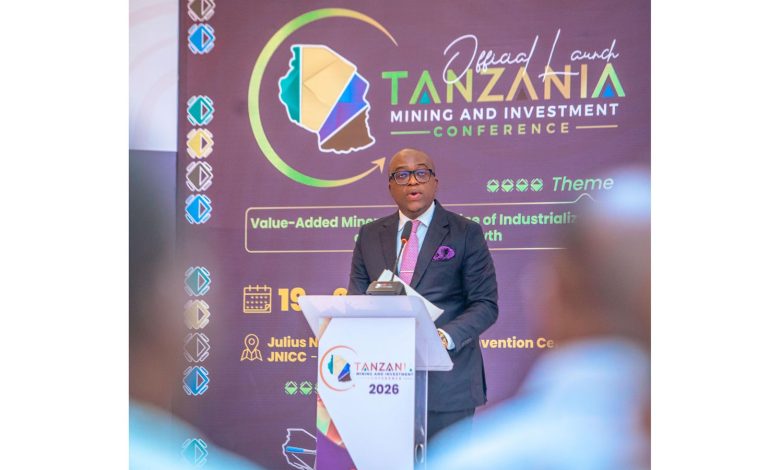
DAR ES SALAAM: THE country’s mining sector has generated 1.338tri/- in governmen t revenue this financial year, surpassing the 1.2tri/- target, Minister for Minerals Anthony Mavunde said yesterday.
Launching the Tanzania Mining and Investment Conference (TMIC) 2026, Mr Mavunde said the sector’s strong performance reflects significant progress in value addition, local participation, revenue collection and geological exploration, positioning Tanzania as an emerging regional hub for mineral processing and investment.
He said mining revenue has surged from 161bn/- in 2015 to 1.338tri/- this financial year, prompting the government to set a higher collection target of 1.4tri/- for the 2026/27 financial year.
Mr Mavunde attributed the growth to wide-ranging reforms, including stronger regulation, formalised mineral markets, improved oversight and the government’s commitment to mineral beneficiation and industrialisation.
“The established policy, legal and regulatory frameworks now provide clear guidance from exploration and extraction to processing and mineral sales, ensuring that Tanzanians receive greater benefits from their natural resources,” he said.
The minister said Tanzania now has eight goldprocessing facilities and is pursuing international accreditation to establish a globally recognised gold refinery.
He added that more than 16 mineral value-addition industries have been established across the country, with Dodoma hosting nine processing plants, some already operational and others under construction.
Mr Mavunde reiterated that the government’s policy requires minerals to undergo value addition before export.
“There will be no minerals leaving the country without value addition. This is central to our industrial agenda and to ensuring Tanzanians derive greater benefits from their natural resources,” he said.
Among major investments underway are a large copperprocessing plant in Dodoma, a steel factory worth more than 600bn/- that will use locally mined iron ore, as well as strategic rare earth and critical minerals projects in Songwe, Kabanga and other regions.
The Songwe project is expected to host the world’s fourth-largest rare earth processing facility, while the Kabanga nickel project will include a modern refinery.
Mr Mavunde also highlighted efforts to increase local content participation, saying mining companies currently spend about 5.1tri/- annually on goods and services.
He said recent amendments to local content regulations reserve 20 categories of goods and services exclusively for Tanzanian suppliers, creating greater opportunities for local enterprises.
The minister further said the government has approved the allocation of 10 per cent of mining revenue to geological exploration.
Although geological mapping has been completed across much of the country, only 16 per cent of Tanzania has undergone detailed geophysical surveys, he said.
“Expanding exploration will unlock new discoveries and attract further investment,” he added.
Mr Mavunde said the TMIC 2026, jointly organised by the Ministry of Minerals and the Tanzania Chamber of Mines (TCM), will be held in Dar es Salaam from November 19 to 21 under the theme: “Value-Added Minerals: The Engine of Industrialisation and Economic Growth.”
President Samia Suluhu Hassan is expected to officiate at the opening ceremony, while Zanzibar President Dr Hussein Ali Mwinyi is expected to grace the closing ceremony.
He said the conference will provide a strategic platform for investors, mining companies, policymakers, researchers and industry experts to forge partnerships, exchange knowledge and promote innovation in mineral value addition.
Mr Mavunde said the event will reinforce Tanzania’s ambition to transform its mineral wealth into a driver of industrialisation, job creation and long-term economic prosperity.
ALSO READ: TMIC 2026 to boost mining investment in Tanzania
TCM Executive Secretary, Eng Benjamin Mchwampaka, said the conference is expected to attract more than 2,000 participants from over 50 countries.
He said the programme will feature keynote addresses and discussions on policy and governance, energy transition and critical minerals, mineral value addition, as well as financing opportunities for value-added mineral industries.



References:
Lollybet Casino Willkommensbonus http://www.google.md/url?sa=f&rct=j&url=https://lollybet.com.de/
References:
Lollybet Gutscheincode http://images.google.co.il
References:
Robocat Casino Bewertung bbs.mofang.com.tw
References:
%random_anchor_text% https://shwemusic.com/dianekey06785/songs
References:
Candy96 Casino legit https://adhe.com.br/companies/candy96-sign-in-in-traffic-delineator-posts-online-shopping
References:
Posido Casino Bewertung http://backelektroniksigara.scandwap.xtgem.com/?id=IRENON&url=links.flowahq.com%2Fdereklizotte9
References:
Candy96 Casino bonus https://toptalent.co.mz/employer/official-site-5
References:
Online pokies with payid australia real money https://platform.cellac.com/forum/topic/listen-to-your-customers-they-will-tell-you-all-about-pokies-net-australia-payid-withdrawal/
References:
Desktop payid pokies http://www.cruzenews.com/wp-content/plugins/zingiri-forum/mybb/member.php?action=profile&uid=2396451