Transforming ‘machinga’ into business owners
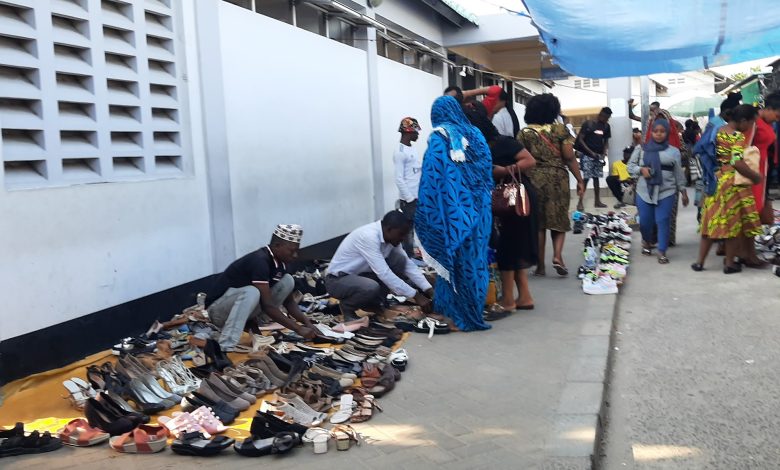
DAR ES SALAAM: WALK through any street in Dar es Salaam, Mwanza, Mbeya, Arusha, or Dodoma and one thing becomes immediately clear: Tanzania’s informal sector is alive with energy, innovation and resilience. From food vendors and secondhand clothes traders to mobile money agents and street-side artisans, millions of Tanzanians earn their livelihoods through small informal businesses commonly referred to as machinga (hawkers) enterprises.
For decades, discussions about economic development have often focused on large industries, foreign investments, and formal employment. While these are undoubtedly important, the reality is that the informal sector remains one of Tanzania’s largest sources of employment and income generation.
Rather than viewing informal businesses merely as survival activities, policymakers, financial institutions, and society at large should recognize them as a powerful engine for entrepreneurship and economic transformation.
The typical machinga entrepreneur begins with very little capital. Many start with a small table, a bicycle, a basket of fruits, or a few household goods. Yet behind these modest beginnings lies remarkable entrepreneurial spirit.
These traders identify market opportunities, manage customer relationships, control costs, and adapt quickly to changing consumer demands. In many ways, they demonstrate the very qualities celebrated in successful entrepreneurs worldwide.
However, despite their potential, informal businesses face numerous challenges that limit their growth. Access to affordable finance remains one of the biggest barriers. Most informal traders lack collateral, formal business records, or credit histories required by traditional financial institutions.
As a result, many rely on personal savings or informal borrowing arrangements, which are often insufficient for business expansion.
Another challenge is the limited access to business training and skills development. While many entrepreneurs possess practical experience, they often lack formal knowledge in areas such as bookkeeping, marketing, inventory management, customer service and digital commerce. Without these skills, it becomes difficult for businesses to grow beyond subsistence levels.
Infrastructure constraints also affect productivity. Inadequate trading spaces, poor storage facilities, unreliable electricity, and limited access to clean water can reduce efficiency and increase operational costs. In some cases, frequent relocation or uncertainty regarding trading locations discourages traders from investing in their businesses.
Yet, the future of Tanzania’s informal sector is promising. The rapid expansion of mobile technology and digital financial services presents unprecedented opportunities.
Mobile money platforms have already transformed how small businesses receive payments, transfer funds, and manage transactions. Digital platforms can further help entrepreneurs reach wider markets, advertise products and connect with customers beyond their immediate neighborhoods.
To unlock this potential, a shift in mindset is necessary. The objective should not simply be to regulate informal businesses but to support their gradual transition into sustainable and productive enterprises. This requires creating an enabling environment that encourages growth while maintaining flexibility for small entrepreneurs.
First, access to finance should be expanded through innovative lending models tailored to the realities of informal businesses. Digital credit scoring, group lending mechanisms, and microfinance products designed for small traders can provide much-needed capital for expansion.
Second, entrepreneurship training programs should be scaled up across the country. Local government authorities, universities, vocational institutions, and private sector organizations can collaborate to provide practical business education focused on financial literacy, business planning, digital marketing and customer management.
Third, investment in dedicated trading infrastructure can significantly improve productivity. Wellorganised markets equipped with basic services such as sanitation, storage facilities, electricity, and internet connectivity can create a more conducive environment for business growth.
Fourth, policies should encourage formalization through incentives rather than penalties. Simplified registration procedures, affordable licensing systems, and access to business support services can motivate entrepreneurs to join the formal economy voluntarily. Formalization should be seen as a pathway to growth, not as an administrative burden.
Most importantly, society must begin to celebrate the entrepreneurial contribution of informal traders. Many of Tanzania’s successful business owners started with small informal ventures before building larger enterprises. Today’s street vendor may become tomorrow’s manufacturer, distributor, or exporter if provided with the right opportunities and support.
ALSO READ: 2D barcodes open new trade frontiers for Tanzanian entrepreneurs
Tanzania’s development ambitions, including industrialization, job creation, and inclusive economic growth, cannot be achieved without recognizing the strategic importance of the informal sector. The millions of Tanzanians operating small businesses are not merely participants in the economy; they are creators of value, innovators, and potential drivers of future prosperity.
The journey from machinga to entrepreneur is not only possible it is already happening. The challenge before us is to create the conditions that allow more informal businesses to make that transition successfully. By investing in skills, finance, infrastructure, and supportive policies, Tanzania can unlock the enormous potential of its informal sector and transform it into a cornerstone of national economic development.