Minister calls for stronger political cooperation
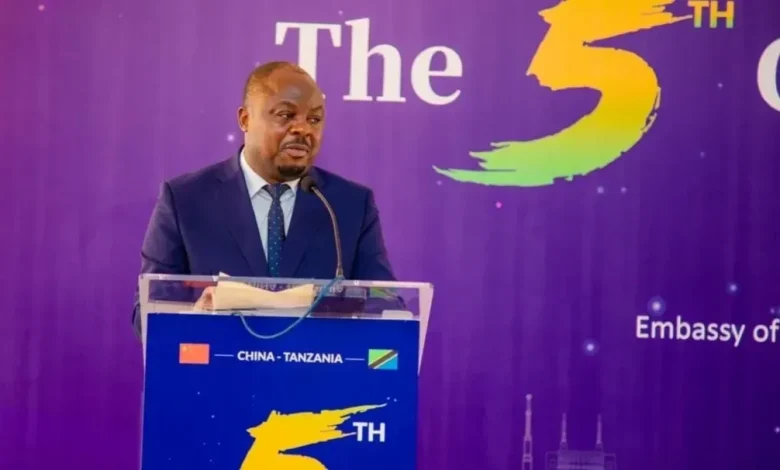
MOROGORO: THE Minister of State in the Prime Minister’s Office responsible for Labour, Employment and Industrial Relations, Deus Sangu, has urged members of the National Council of Political Parties to promote national unity and serve as ambassadors of peace.
He also called on them to resist attempts by individuals pursuing personal interests to undermine peace, stability and social harmony in the country.
Sangu made the remarks on Wednesday while opening a workshop for members of the Council of Political Parties in Morogoro. Representatives from 18 of the 19 fully registered political parties attended the event.
Also present were Deputy Permanent Secretary responsible for Relations in the Prime Minister’s Office, Zuhura Yunus, and the Registrar of Political Parties, Francis Mutungi.
In his address, Sangu cited the nation’s founding father, Julius Kambarage Nyerere, who consistently emphasised the importance of unity, describing it as the greatest resource available to ordinary citizens. He also recalled Nyerere’s assertion that “peace does not come by chance; it is the result of deliberate efforts.”
Sangu described the Council of Political Parties as a vital platform for strengthening relations among political parties and urged party chairpersons and secretaries general to continue using it as a forum for dialogue and cooperation with the government.
He stressed that good relations are essential for national development, noting that strong partnerships form the foundation of sustainable progress.
According to the minister, the council has played a significant role in fostering cooperation between the government and political parties, as well as among the parties themselves.
“This council is an important institution. Use it effectively. As a government, we recognise its importance, which is why we are committed to providing it with strong support,” Sangu said.
He noted that experience around the world shows that countries lacking strong social and political relations often struggle to achieve meaningful development. Reminding participants that “one tree does not make a forest,” Sangu said the workshop provided an opportunity to exchange ideas on strengthening national cohesion and preserving peace.
“Our elders’ said unity is strength and division is weakness. Solidarity is a bridge, while division is a pit. If we continue to uphold these principles, nothing will destabilise our country,” he said. He stressed that building national unity is a collective responsibility, particularly for leaders.
“Our country has no state religion, but every citizen is free to worship. All religions emphasise unity and these are values we must continue to uphold,” Sangu said.
He urged Tanzanians to preserve and pass on these values to future generations. Referring to President Samia Suluhu Hassan’s 4Rs philosophy; Reconciliation, Resilience, Reforms and Rebuilding Sangu said the government would continue to champion the approach because it reflects the President’s vision for the country.
ALSO READ: EAC advances political integration
He assured council members that the government would continue working closely with them as key stakeholders in strengthening national relations.
The minister encouraged political leaders to promote constructive dialogue and cooperation, noting that Tanzania inherited from its founding leaders, Julius Nyerere and Abeid Amani Karume, a culture of resolving differences through dialogue.
Sangu also joined President Samia in congratulating leaders of political parties who participated in the 2025 General Election presidential and vice-presidential nomination processes.
Speaking on Vision 2050, he said political leaders and citizens must continue to uphold peace, unity, solidarity and love as implementation of the development blueprint begins in July 2026.
“Our Vision 2050 contains ambitious goals and major initiatives, including seven flagship strategic projects that will be implemented under the vision,” Sangu said.
He emphasised that achieving the vision’s objectives would depend on maintaining peace and national cohesion.
Meanwhile, Chairman of the Council of Political Parties, Juma Ali Khatib, commended the establishment of the Department of Relations and the inclusion of political parties in its activities.
He said the move would strengthen cooperation and mutual understanding, adding that the council remains an important agent of peace, dialogue and collaboration in advancing the nation’s broader interests.