Women traders get cash boost at Kobero–Kabanga OSBP
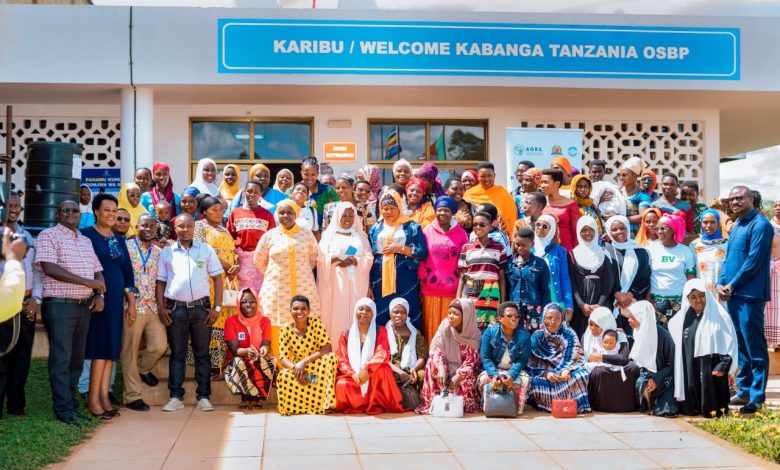
KIGOMA: WOMEN and youth cross border traders operating between Tanzania and Burundi have received new financial and institutional support aimed at boosting their businesses and easing trade at the Kobero–Kabanga One Stop Border Post.
The intervention, led by the East African Business Council (EABC), in partnership with AGRA, targeted more than 65 traders dealing in cereals and horticultural products, with a focus on improving access to trade information, reducing non tariff barriers, and strengthening participation in the East African Community Simplified Trade Regime.
Speaking during a public private dialogue on non tariff barriers, EABC Trade and Policy Advisor, Mr Adrian Njau, said lack of information remains one of the biggest constraints for small traders, particularly women and youth.
“Awareness of trade procedures limits the ability of women and youth traders to take advantage of opportunities under the EAC Common Market,” said Mr Njau. He called on Burundi and Tanzania to publish the list of commonly traded goods under the “Simplified Trade Regime” and establish a dedicated trade information desk at the border to support small-scale traders.
Mr Alexis Nyongera from the Ministry of Foreign Affairs, Regional Integration and Development Cooperation of Burundi, said the government remains committed to improving conditions for small traders and ensuring they benefit from regional integration frameworks.
According to him, Burundi will continue supporting efforts that enable traders to fully participate in the EAC Common Market and expand cross-border opportunities.
Representing the Tanzania Women Chamber of Commerce (TWCC), Ms Dotto Mushaija pointed to persistent gaps affecting women traders, especially in skills development and infrastructure at border points.
ALSO READ: Arusha braces for June Tanzania Annual Scientific Conference
She called for stronger investment in value addition training for agricultural products and improved border facilities that respond to the needs of women traders.
“We need more practical training on value addition and border facilities that are safe, functional, and responsive to women traders,” she said.
For traders on the ground, the intervention is already beginning to shift how they operate.
Ms Debora Jema, a young trader from Kabanga, said the training had improved her confidence in managing and growing her business.
“I now understand my business better, and I am more organised in how I trade,” she said.
Ms Amida Uwingabire, representing the Association of Women and Girls of Kabanga, said traders are now applying financial skills that were previously missing in their daily operations.
“We have learned how to plan, track money, and make better decisions in our businesses,” she said.
The programme also introduced a Trade Information Booth at the border post, designed to provide simplified trade guidance, report non tariff barriers, and connect traders to market information and digital business platforms.
In a direct cash support component, 10 young women traders received US$200 each under a “Business Capital Award” scheme to expand their trading activities in cereals and horticultural products. Two women led associations also received US$500 each to strengthen their operations and support access to microfinance.
On the other hand Mr Njau said the intervention is part of a broader effort to make cross border trade more efficient and inclusive, especially for small scale traders who often operate informally due to information gaps and structural barriers.
According to the EABC, the initiative supports its goal of building a more integrated and business-friendly East African market.
AGRA said the programme aligns with its work of strengthening agricultural value chains and connecting producers and traders to reliable markets across Africa.
The intervention is expected to improve trade flows at the Tanzania–Burundi border while strengthening women’s participation in formal cross-border trade systems.