Tanzania invited to host the Africa beekeeping expo 2028 OR Africa bee expo chooses Tanzania for 2028 edition
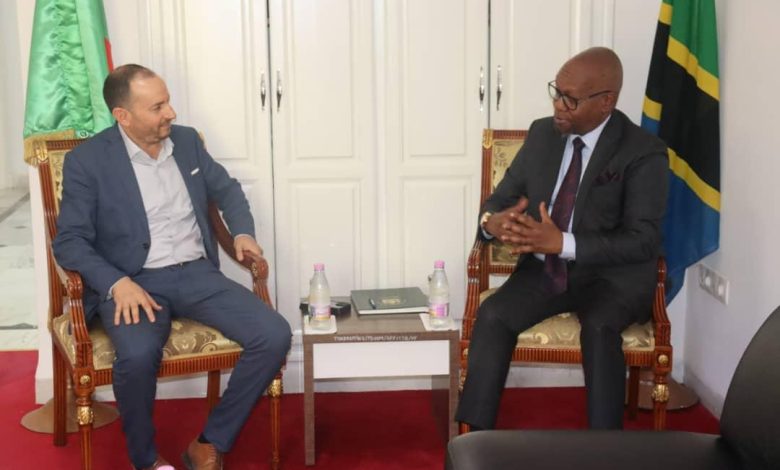
ALGERIA: Tanzania’s remarkable rise as one of Africa’s leading honey producers has earned it a prestigious continental honour: an invitation to host the 5th Africa Beekeeping Expo in 2028.
The invitation was extended by the Africa Bee Expo, the organisation behind the continent’s premier beekeeping exhibition, during a high-level meeting in Algiers, Algeria. The exhibition is expected to be attended by nearly 50 countries with beekeepers, researchers, entrepreneurs, policymakers and investors taking the lead.
The announcement marks another milestone for Tanzania’s beekeeping sector, which has quietly evolved into one of the country’s most promising natural- resource industries and promises it as one of Africa’s fastest-growing agricultural industries.
While gold, tourism and agriculture often dominate economic conversations in Tanzania, honey and beeswax production have steadily built a reputation that is now attracting attention far beyond the country’s borders.
The invitation was formally presented by Africa Bee Expo Chairman, Mr Fatah Ben Chouia of Algeria, during talks with Tanzania’s Ambassador to Algeria, Mr Mobhare Matinyi, at the Tanzanian Embassy in Algiers, recently. In the same meeting, Tanzania received a second honour.
The country was invited to participate as the Guest of Honour at the 4th Africa Beekeeping Expo, scheduled to take place in Algiers from September 3 to 6, 2026. Organisers have encouraged Tanzanian government institutions, private companies, researchers and beekeeping associations to attend and showcase the country’s achievements. For Tanzania, the dual invitation is more than a diplomatic courtesy.
It is a recognition of years of investment, policy support and the hard work of thousands of beekeepers spread across the country’s forests, woodlands and rural communities. Ambassador Matinyi welcomed the invitations, describing them as a significant vote of confidence in Tanzania’s beekeeping industry.
He assured the organisers that the government would carefully consider both opportunities, noting that the sector contributes meaningfully to employment creation and economic development.
According to official estimates, Tanzania’s beekeeping industry supports approximately two million people through direct and indirect employment. From hive construction and honey harvesting to processing, packaging and export activities, the value chain provides livelihoods for communities across both mainland Tanzania and Zanzibar. Mr Chouia was generous in his praise of Tanzania’s achievements.
He described the country as one of Africa’s most successful beekeeping nations and noted that its growing influence in honey and beeswax production made it a natural choice to host the 2028 gathering. His assessment is supported by international data.
Figures from the International Federation of Beekeepers’ Associations (Apimondia) place Tanzania as the second-largest honey producer in Africa and the tenth-largest producer globally. The country produces approximately 31,000 tonnes of honey and 1,800 tonnes of beeswax annually, impressive figures that continue to attract international interest. The statistics tell an important story.
ALSO READ: Tanzanians urged to avoid politicians and activists who incite unrest
Tanzania possesses vast areas of natural forests and woodlands that provide ideal habitats for bees. Regions such as Tabora, Katavi, Kigoma, Singida, Manyara and parts of the Southern Highlands have become important centres of honey production. In many communities, beekeeping has emerged as a sustainable source of income that encourages environmental conservation while generating economic benefits.
Unlike some agricultural activities that require extensive land clearing, beekeeping often thrives where forests are protected. As a result, many conservation experts view the sector as an effective tool for promoting environmental stewardship. Simply put, healthy forests produce healthy bees, and healthy bees produce healthy businesses.
The Africa Beekeeping Expo itself has become an increasingly important platform for advancing the industry across the continent. The event brings together experts from diverse fields including apiculture, biodiversity conservation, food processing, agricultural technology, research and trade.
Participants use the gathering to exchange knowledge, explore new technologies, discuss market opportunities and strengthen cross-border partnerships.
The exhibitions typically feature modern beekeeping equipment, innovations in honey processing, value-added bee products and discussions on how African producers can compete more effectively in international markets.
For Tanzania, hosting the 2028 edition could provide substantial benefits. Beyond the prestige associated with welcoming delegates from around the world, the event would offer local producers an opportunity to showcase Tanzanian honey, beeswax, propolis and other bee products to potential buyers and investors.
It could also boost tourism, hospitality and conference-related services, generating economic activity in the host city. The expo would further allow Tanzania to highlight its efforts in sustainable natural-resource management and rural economic development.
At a time when many countries are searching for practical ways to balance economic growth with environmental protection, Tanzania’s beekeeping success story offers valuable lessons. Industry stakeholders believe the sector still holds enormous untapped potential.
Although production levels are already impressive, experts argue that improved technology, better market access, enhanced quality standards and stronger value- addition initiatives could significantly increase export earnings.
The growing global demand for natural honey and organic products also presents new opportunities. Consumers worldwide are increasingly seeking authentic, sustainably sourced products, and Tanzania’s largely natural production systems position it favourably in this expanding market.
Yet perhaps the greatest significance of the invitation lies in what it symbolises. Africa’s beekeeping community is effectively acknowledging Tanzania as one of the continent’s leading voices in the sector.
That recognition has not come overnight. It is the result of years of work by rural beekeepers, researchers, conservationists, entrepreneurs and policymakers who have helped transform an often-overlooked industry into a source of national pride.
As preparations begin for the 2026 expo in Algeria, Tanzania now has an opportunity to demonstrate why it has become one of the world’s leading honey producers. And if the country eventually hosts the 2028 edition, it will not simply be welcoming delegates to another conference. It will be hosting a continental celebration of an industry that has turned the quiet work of millions of bees into jobs, exports, environmental conservation and international recognition.
Not bad for an industry whose hardest workers never attend meetings, never make speeches and never ask for credit, but only flowers.