Why Moscow mission matters
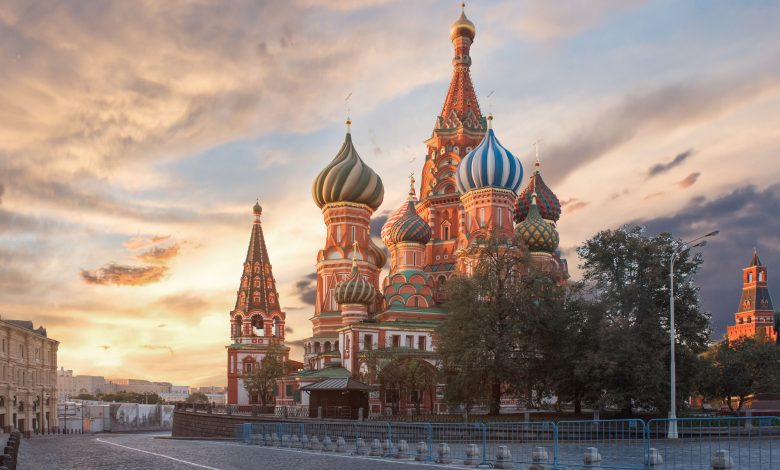
DAR ES SALAAM: FIFTY-six years after Mwalimu Julius Nyerere paved the diplomatic road to Moscow, President Samia Suluhu Hassan’s state visit to Russian this week marks a profound evolutionary leap from historical solidarity to a high-yielding economic partnership.
As the Head of State prepares to commence her high-level mission to the Eastern economic powerhouse tomorrow, Tanzania’s strategic focus aligns directly with the world’s fourth-largest economy by PPP, signalling a landmark moment in economic multi-alignment and market diversification.
With the foundational pillars of our National Development Vision 2050 taking shape, this engagement represents a calculated, proactive push to secure the capital, technology and energy investments vital for Tanzania’s industrial future.
There is a palpable sense of anticipation surrounding this engagement, and for good reason. President Samia is slated to hold face-to-face bilateral talks with President Vladimir Putin at the Kremlin. She will on the global stage when she addresses the plenary session of the prestigious 29th St.
Petersburg International Economic Forum (SPIEF 2026). That place Tanzania at the centre of international economic discourse, allowing the nation to present its investment reform agenda directly to global financiers and industrial leaders. In the wake of recent familiarisation tours by leading Russian travel operators, bilateral cooperation in tourism is poised for significant growth.
With the Africa Cup of Nations (AFCON 2027) on the horizon, efforts are underway to establish direct Air Tanzania Company Limited (ATCL) flights to Moscow later this year.
The direct air link could prove a game-changer, removing logistical barriers, strengthening people-to-people exchanges and opening the door to increased arrivals of Russian tourists to Zanzibar, Serengeti, Ngorongoro, Kilimanjaro and other premier destinations across Tanzania.
ALSO READ: Government rallies stakeholders for Vision 2050
Trade turnover between the two nations has already demonstrated upward momentum, expanding by nearly 20 per cent in the lead-up to 2026. Yet it remains below the true potential of the two economies.
By establishing value-added processing zones for Tanzanian cash crops such as tobacco, coffee and tea before export, there is a viable path to significantly increase bilateral trade through new commercial channels.
For Tanzania, the ultimate measure of economic diplomacy will not be found in the signing of Memoranda of Understanding (MoUs), but in their implementation. Success will be defined by factories constructed on Tanzanian soil, the modernisation of agriculture through fertiliser and mechanisation technologies, and the strengthening of human capital through advanced scientific training.
With both Dar es Salaam and Moscow expressing optimism, this historic visit stands as a powerful testament to President Samia’s approach to economic diplomacy as Tanzania is set to advance its ambition of becoming a fully industrialised, middle-income economic hub for East and Central Africa.