Timmy Thomas ‘MSailor’ still sails on with Bongo Flava music
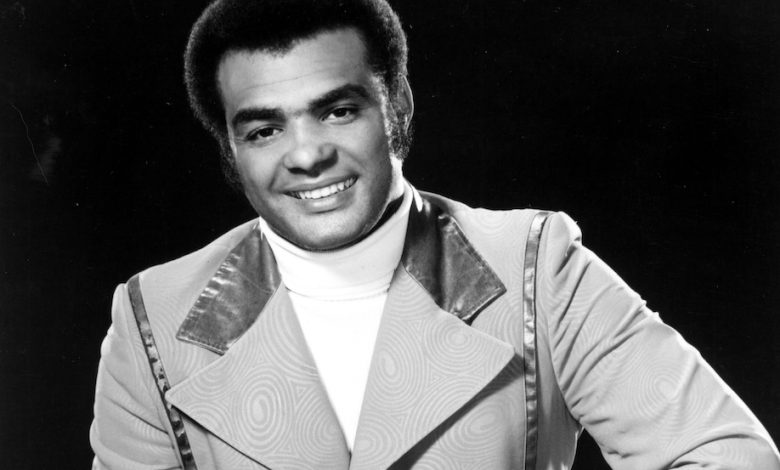
DAR ES SALAAM: FROM obscurity, a musician known as Timmy Thomas landed on the Tanzanian dance music floor with a strange instrument, synthesizer, whose sound didn’t fit the Tanzanian call-andresponse format. As the owner of Orchestra Tomatoma, Timmy Thomas caught Tanzanian music fans off-guard with newly invented instrument as a synthesizer looked far ahead of time.
Though it seemed unnoticeable, Timmy Thomas did introduce his synthesizer in Orchestra Tomatoma’s eponymous hits, but the power of synthesizer was not defined by then. Only those who were with him at Orchestra Tomatoma knew how the synthesizer functioned as evidenced through the band’s hits, most notably, Stendi ya Basi, Mwanaidi, Kaka Tujirekebishe, Kesa Chane, Stella and Baba Kalee.
Stendi ya Basi and Kesa Chane, which Orchestra Tomatoma sang in Kinyamwezi Language caught many viewers attention. “Yes, this reminds me Tomatoma Band with its founder Timmy Thomas, and great musicians of the Band such as composer of this song Adam Bakari and other vocalists such as Banza Tax, Kasaloo Kyanga, Skassy Kasambula and Francis Lubua with style Tambatamba,” noted Shukuru koll.
ALSO READ: Gender inclusion vital in energy efficiency drive
Still, these hits didn’t really define the role of synthesizer besides producing sporadic fanfare sounds. Music fans of the late 1970s, as noted by the band’s guitarist Mbwana Suleiman Cox, and a drummer, Abuu Semhando, didn’t cherish synthesizer sound at the time when original sound of a guitar held high esteem.
But today, when Bongo Flava enjoys huge global appeal, synthesizer has become the genre’s most useful instrument.
Well understood now, synthesizer is vital music bank that can provide sounds of a guitar, drums, horns, congas, and even sound effects like flanger, echoplex, reverbs, in all major genres from Zouk, Rock, R&B, DanceHall Reggae and Root Reggae, to the extent you can hear Carly Barret (Bob Marley’s drummer) and Aston Barrett(Bob Marley’s bassist) in synthesized sounds.
Bongo Flava mega star, Harmonize managed to record his third studio album featuring tracks like “Mwenyewe” and “Miss Bantu” using synthesizer and Midi gadgets. The arrival of Timmy Thomas with his synthesizer ‘monster’ came one year after Donna Summer’s I Feel Love hit the global music scene with its strange groove. It was in 1977 when Donna Summer hit dominated the radio airwaves with a vocal style that looked heavenly, while the accompanying groove seemed hellish to the then music lovers.
The arrival of I feel love and its weird groove baffled Tanzanian musicians in the late 1970S and 1980s, since it looked strange to them for it lacked a human touch. While adored by youth and students all over East Africa the arrival of I Feel Love; was sad news to band and session musicians of that time, but for the Bongo Flava artistry, a synthesizer will remain its best companion forever.
After enjoying global airplay for a long period, it was later disclosed that the groove style that backed Donna Summer’s I Feel Love was called Electronic Rub A Dub Dub, being a work of Moog Synthesizers co-manned by Giorgio Moroder, and Pete Bellotte.
Rub a Dub style was not new since it was fully explained in the late 1970s by Bob Marley Coming in From the Cold, hence Donna Summer’s Electronic Rub A Dub Dub was machine-made innovation. Synthesizer sound re-erupted in Tanzanian music scene In early 1980s through Yeke Yeke, penned by a Guinean singer, Mori Kante. It was supported by an alien groove similar to that of I Fee Love.
This time it was Yamaha DX7, the Japanese synthesizer that flavoured Yeke Yeke taste to its global fame. Similarly to the way he came to the Tanzanian music scene, Timmy Thomas, who was introduced as a Tanzanian sailor disappeared from the music scene leaving the band at its peak of success.
Timmy Tomas, according to his fellow music was a sailor during the stowaway craze. Tanzanians of that time just regarded Timmy Thomas as a sailor who adored seafaring, not a serious musician. Besides introducing a synthesizer, which serves as the pillar head of the new generation music, Timmy Thomas, the sailor, has created a character in the Bongo Flava genre.
The word Msela(M Sailor) or Usela( state) can be heard frequently in most of the Bongo Flava hits today. Mbosso: …”Usela Usela tupunguze Usela Mapenzi na Usela ni sawa kutia chumvi kwenye pera….” Contrary to the Tanzanian views, Timmy Thomas was not a sailor or adventure seeker, rather an accomplished American musician. Here is what America tells us about him.
American R&B singer and keyboardist Timmy Thomas is famously linked to East African music history as the leader of Orchestra Toma Toma. During the late 1970s, Thomas toured Africa and introduced the first synthesizers to Tanzanian music fans, leaving a lasting impact on Muziki wa Dansi(dance Music).
Timmy Thomas is globally recognised for his iconic 1972 antiwar soul anthem, “Why Can’t We Live Together”, which was driven by his distinctive Hammond organ, rhythm machine, and soulful vocals. Later in the 1970s, he went on international tours, including a historic 1978 trek across Africa.
During his time in Tanzania, he formed and led Orchestra Tomatoma. Through this band, he actively introduced the synthesizer to the local East African dance music scene, heavily influencing a new era of Dance musicians. Timmy Thomas, who passed away in March 2022,has remained a heavily influential figure in both American soul and global pop music.
Beyond his work with Orchestra Toma Toma, his tracks continue to resonate with modern listeners; his iconic “Why Can’t We Live Together” keyboard groove was notably sampled in Drake’s 2011 hit “Hotline Bling,” bringing his timeless sound to an entirely new generation. If Eid al Adha celebration had come this Wednesday in 1978, Orchestra Tomatoma’s Mwanaidi would have dominated airplay at the Radio Tanzania Dar es Salaam back then.