Tanzania sets ambitious housing, land reform targets
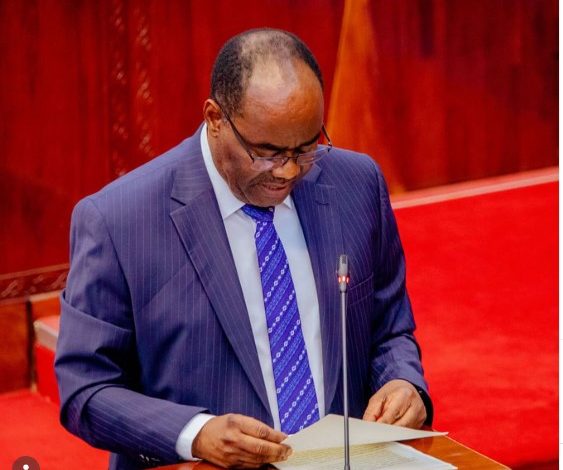
DODOMA: THE government has rolled out a national strategy aimed at curbing escalating land conflicts, while accelerating the construction of affordable housing as part of broader efforts to strengthen land security and improve living conditions for low and middleincome earners.
Presenting his ministry’s 210.3bn/- budget estimates for the 2026/2027 financial year in the National Assembly on Thursday, the Minister for Lands, Housing and Human Settlements Development, Dr Leonard Akwilapo said the strategy seeks to provide lasting solutions to persistent land disputes affecting various parts of the country.
Dr Akwilapo said the strategy brings together key stakeholders, including farmers, pastoralists, investors, and conservation authorities, to ensure sustainable resolution of disputes related to land use and ownership.
“Due to the continued emergence of land conflicts in different parts of the country, the Prime Minister, Dr Mwigulu Nchemba directed the Ministry of Lands and the Office of the Attorney General to prepare a national strategy aimed at finding lasting solutions to these disputes,” Dr Akwilapo said.
He commended the Prime Minister for his commitment to ensuring land conflicts are effectively addressed to enable citizens to conduct their activities peacefully. The minister revealed that by May 15th this year, a total of 5,573 land disputes had been resolved, including 3,183 cases through land clinics and 2,390 through normal administrative procedures.
He said the ministry plans to resolve an additional 4,000 disputes administratively during the 2026/2027 financial year.
“I call upon leaders, public servants, and citizens to comply with land laws, regulations, and guidelines in order to avoid creating new disputes,” he said.
Dr Akwilapo further noted that the government continues implementing Cabinet directives aimed at resolving land conflicts in 975 villages and streets across the country.
As part of the exercise, more than 3.13 million acres of land have already been returned to citizens, while compensation amounting to 95.27bn/- has been paid to affected residents in 14 areas.
He said implementation will continue in 349 villages and 11 streets where the exercise has already begun, while another 166 villages will be covered during the 2026/2027 financial year. On housing, Dr Akwilapo said the National Housing Corporation (NHC) is finalising preparations for affordable housing projects in Salama Creek in Kigamboni, Dar es Salaam; Sabasaba in Morogoro; Iyumbu in Dodoma; and Buswelu in Mwanza.
ALSO READ: TZ remains united, stable, investor friendly — Migiro
He said implementation of the projects will begin in the 2026/2027 financial year as part of efforts to increase access to decent and affordable housing for low and middle-income earners.
Dr Akwilapo further said the NHC continues implementing the 5,000-house under Samia Housing Scheme project, which is expected to cost a total of 466bn/-. During the 2025/2026 financial year, the corporation planned to continue with the second phase of the project involving construction of 908 houses in various parts of the country.
“I call upon local government authorities and institutions responsible for electricity, water, and road infrastructure to support the corporation by facilitating access to land and infrastructure in order to reduce housing construction costs,” he said.
The minister added that the NHC will continue implementation of the Samia Housing Scheme in Mtoni Kijichi, and Kawe in Dar es Salaam, as well as Medeli and Iyumbu in Dodoma. He further revealed that the corporation plans to begin construction of houses in Njedengwa in Dodoma, Urafiki in Dar es Salaam, Sokoine Complex in Arusha, and Makongoro in Mwanza.
In addition, the government plans to construct 800 affordable housing units in phases under projects in Salama Creek, Sabasaba, Iyumbu, and Buswelu.
Dr Akwilapo said the ministry plans to survey and approve 500,000 plots and 500 farms during the 2026/2027 financial year in a bid to enhance land security, increase land value, and reduce boundary-related disputes.
The ministry also plans to continue working with the Prime Minister’s Office–Regional Administration and Local Government (PMORALG) and development partners to verify, update, and survey boundaries in 226 villages nationwide.