China zero-tariff policy opens door for Tanzania exports

China’s decision to fully implement a zero-tariff policy for all 53 African countries with diplomatic ties to Beijing is expected to create new export opportunities for Tanzania’s agriculture, spice and trade sectors, officials and traders say.
The policy, which took effect on May 1, allows African products to enter the Chinese market duty-free, giving exporters from countries such as Tanzania improved access to one of the world’s largest consumer markets at a time of rising global trade barriers and slowing international demand.
Tanzania is among African countries expected to benefit from the initiative, particularly through exports of spices, agricultural products and other raw materials.
In Zanzibar, traders and producers are closely monitoring the policy’s potential impact on the islands’ historic spice industry, which has long been one of the region’s economic pillars.
The connection between Zanzibar and spice production dates back more than a century, with the islands of Unguja and Pemba becoming globally known for clove cultivation because of their tropical maritime climate. At its peak, Zanzibar had more than four million clove trees and annual production of about 24,000 tonnes.
Clove farming remains labour-intensive, with trees taking between five and ten years before producing harvests. Farmers on the islands conduct two major harvest seasons annually, with cloves continuing to serve as one of Zanzibar’s main export commodities.
Despite its long history, however, the spice sector has struggled with unstable international demand and heavy dependence on traditional export markets in Europe, the Middle East and North America.
Analysts say China’s zero-tariff policy could help diversify Zanzibar’s export destinations while improving the competitiveness of products such as cloves, cinnamon and nutmeg in the Chinese market.
Soud Said Ali said the initiative represented more than a standard trade arrangement.
“It is a milestone in China’s high-level opening-up and demonstrates China’s commitment to advancing modernization in step with Africa,” he said.
Officials say the removal of tariffs is expected to lower export costs for Tanzanian producers while giving Chinese consumers wider access to African products.
The policy has also drawn attention from traders and manufacturers in mainland Tanzania, particularly in Dar es Salaam, where businesses are assessing potential opportunities linked to expanded trade access.
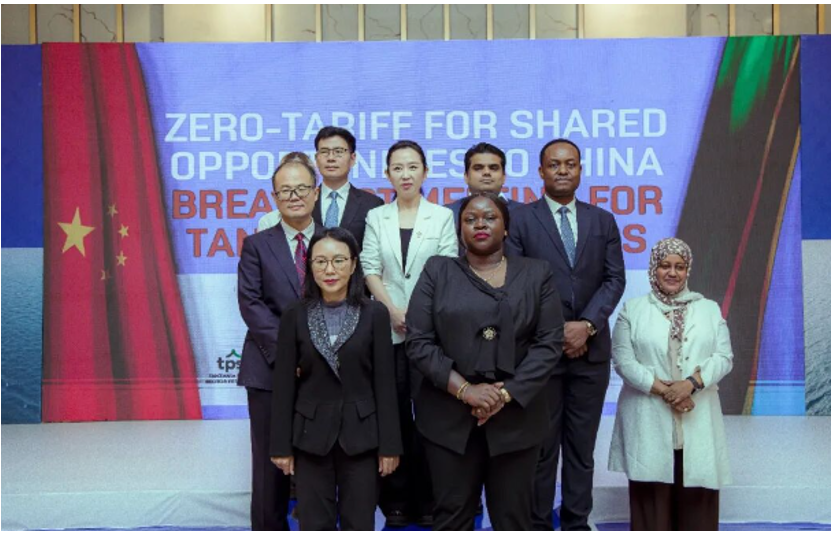
On May 9, the Chinese embassy in Tanzania and Tanzania’s Ministry of Industry and Trade jointly hosted a policy briefing in Dar es Salaam titled “Zero Tariffs, Shared Opportunities” aimed at explaining the new measures to local businesses and government stakeholders.
During the event, Chinese Ambassador to Tanzania Chen Mingjian said the expansion of zero-tariff treatment to all African diplomatic partners reflected China’s commitment to deeper economic cooperation with the continent.
She said Tanzania should take advantage of the policy to strengthen bilateral trade and investment ties with China.
Participants at the forum welcomed the initiative, describing it as a practical step that could generate tangible economic benefits for Tanzanian producers and exporters.
Trade analysts say the success of the policy for Tanzania will depend on the country’s ability to improve production standards, logistics and export capacity to meet rising demand from the Chinese market.