Inquiry report and the lesson of protecting peace
DAR ES SALAAM: FOR more than six decades, Tanzania has built a reputation as one of Africa’s most peaceful and politically stable nations. While many countries across the continent have experienced political conflict, civil unrest and election-related violence, Tanzania has often been regarded as a model of national unity, reconciliation and social cohesion.
Yet the violence that emerged during and after the October 2025 General Election served as a stark reminder that peace and stability cannot be taken for granted and must be actively protected.
The report produced by the Presidential Commission of Inquiry into the violence and breakdown of public order has become more than a record of what occurred. It also stands as an important national lesson about the need to safeguard peace, protect democratic processes and preserve national unity.
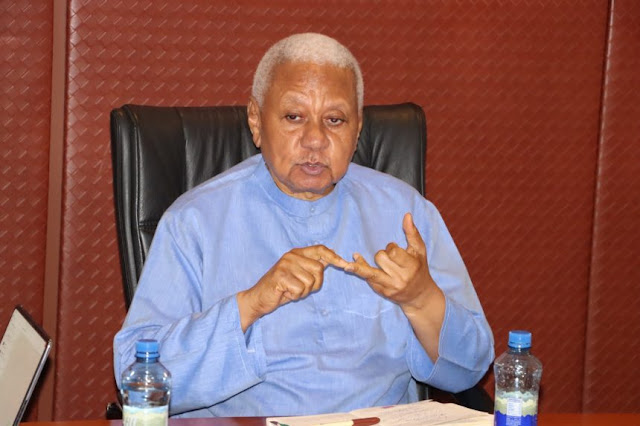
Through testimony gathered from citizens, victims, experts and institutions, the report illustrates how quickly political tensions can damage social cohesion when disagreements escalate into violence and division. While presenting the report, Commission’s Chairman, former Chief Justice Mohamed Chande Othman, said many citizens who appeared before the inquiry believed the violence did not reflect the true character of Tanzanian society.
“Citizens who appeared before the commission spoke about what happened during and after the October 2025 General Election and acknowledged that such actions do not reflect who we are as Tanzanians by our nature, our values and the teachings of the founders of our nation,” Justice Othman said.
The statement carried particular significance because it reminded the nation that Tanzania’s stability has historically been rooted in the principles of unity and solidarity promoted by the country’s founding leaders, including Julius Nyerere.
The violence, therefore, was widely viewed as inconsistent with the values that helped shape the country for generations. One of the key conclusions highlighted in the report was the importance of protecting elections as a pillar of democracy. The commission found that one of the aims of the unrest architects was to disrupt or prevent the October 2025 General Election from taking place.
That finding reinforced the idea that elections should not be viewed merely as political events, but as essential foundations of national stability and citizens’ democratic rights. In its conclusions, the commission stated that the events under investigation could not be regarded as peaceful demonstrations because they involved the use of weapons, destruction of property and actions that denied other citizens the right to participate in the electoral process. The report argued that democracy cannot be sustained through intimidation or violence.
“To engage in violence on that day was to deprive other citizens of their constitutional and legal rights, including the right to vote and to stand for election,” Justice Othman said in one section of his address. The statement underscored the principle that elections represent a fundamental democratic right that must be protected. In democratic societies, political disagreements are expected to be resolved through dialogue, legal mechanisms and the ballot box rather than through force or violence.
The report also examined how political conflict can damage social cohesion. According to the commission, the violence contributed to widespread fear, psychological distress, declining trust in social and political systems and growing divisions within communities.
ALSO READ: Doyo advocates African-led systems amid global governance debate
Those consequences serve as a reminder that political violence rarely ends with the events themselves. In many cases, it leaves long-lasting emotional and social wounds affecting families, communities and entire nations.
For that reason, the report placed strong emphasis on reconciliation, national healing and strengthening unity among citizens. Justice Othman reinforced that message when he stated: “The report we are presenting today, together with its recommendations, carries the collective national commitment to heal wounds, ensure accountability where necessary, but above all, to learn and move forward together.” His remarks suggested that the country now has an opportunity to transform the pain of the crisis into a lesson that can help build a more united and resilient society in the future.
For younger generations, the report carries important political and social lessons. One of the clearest messages is that peace cannot survive without deliberate efforts to protect it. Young people, in particular, are encouraged to recognise that political differences should not become a source of hatred, division or violence.
The report also described how some young people were recruited and persuaded to participate in the unrest through promises and political slogans. That finding highlights the importance of equipping young citizens with the ability to evaluate information critically, participate peacefully in politics and protect the country’s future stability.
In addition, the inquiry highlighted the dangers associated with the misuse of social media in spreading misinformation and escalating tensions. For a generation increasingly dependent on digital platforms, the report serves as a reminder of the responsibility that comes with using technology and online communication responsibly and in ways that protect national interests.
Another important lesson emerging from the report is the value of strong institutions in preserving peace. Through the commission, Tanzania demonstrated that political crises can be addressed through legal institutions, investigations and national dialogue rather than allowing tensions to escalate further.
Throughout history, societies that are willing to learn from moments of crisis are often better positioned to build stronger futures. For Tanzania, the report may become an important part of the country’s national memory — a reminder of both the costs of political conflict and the importance of protecting the peace that has been built over many decades.
Ultimately, one of the report’s central lessons is that Tanzania’s peace remains a valuable national inheritance that must be protected by every generation. Elections should serve as instruments for strengthening democracy and national unity, not as sources of division and violence.
Through the recommendations and lessons contained in the report, Tanzania now has an opportunity to reinforce its national cohesion further and ensure that future generations inherit a country defined by peace, stability and unity.