

Tanzania turns to innovation, community power in fight against Malaria

DAR ES SALAAM: AS the world marks World Malaria Day, Tanzania’s renewed fight against malaria is increasingly being shaped by science, innovation and community engagement, three pillars’ experts say are essential, if the country is to eliminate one of its most persistent public health threats.
This message emerged clearly during a recent media tour at the laboratories of Ifakara Health Institute (IHI) in Bagamoyo, where journalists were given insight into a groundbreaking study on gene drive technology, a scientific approach that could transform malaria control in the coming decade.
Opening the discussion, Director of Research, Policy and Innovation from the Ministry of Health, Mr Tumainieli Macha, emphasised that community involvement is central to the success of the new intervention.
“It is true that for this initiative to succeed, there must be close collaboration with communities. Since the research began about three years ago, we have ensured that communities are engaged, informed and given space to ask questions,” he said.
Mr Macha explained that residents in study areas have been involved in understanding mosquito behaviour, breeding sites and transmission patterns. Public education campaigns have also been conducted to explain both existing malaria interventions and emerging technologies like gene drive.
According to the World Health Organisation, malaria remains a major global health challenge, with an estimated 249 million cases and over 600,000 deaths recorded worldwide in recent years, the majority occurring in Africa.
In Tanzania, the burden remains significant. Data shows that more than 90 per cent of the population lives in areas at risk of malaria transmission. The country recorded approximately 3.8 million confirmed cases and about 25,500 deaths in 2023 alone, highlighting the continued impact of the disease.
Further, Tanzania contributes roughly 4 per cent of global malaria deaths and remains among a small group of countries carrying a disproportionately high share of the global burden.
Within the country, malaria prevalence varies significantly by region. The north-western and south-eastern zones, including regions such as Kagera, Tabora, Mwanza and parts of the coastal belt, continue to record higher transmission rates compared to other areas.
In some regions, prevalence can reach as high as 23 per cent, while in others it drops to as low as one per cent.
It is against this backdrop that scientists at Ifakara are exploring gene drive technology as a complementary solution to existing malaria interventions.
Gene drive is an advanced genetic approach designed to alter the DNA of mosquitoes in a way that either reduces their population or prevents them from transmitting malaria parasites.
Unlike conventional methods such as insecticide-treated nets or indoor residual spraying, which must be applied repeatedly, gene drive has the potential to spread a desired genetic trait rapidly through mosquito populations over generations.
This means that once introduced, the modified trait could sustain itself in the wild, offering a long-term solution to malaria transmission.
However, experts caution that the technology is still under development and requires rigorous testing.
Director of Ifakara Health Institute, Dr Honorati Masanja said, “we are currently at the laboratory stage. This research has been ongoing for about three years and its main goal is to ensure safety, effectiveness and a deep scientific understanding before moving to the next phase.”
Dr Masanja said that no genetically modified mosquitoes have been released into the environment, noting that the laboratory phase is critical in determining whether the technology is safe for future use.
He added that, if successful, gene drive could significantly strengthen existing malaria control measures, which include the use of treated bed nets, rapid diagnostic tests and effective treatment.
Despite these interventions, malaria remains resilient due to several emerging challenges. Experts point to growing resistance of mosquitoes to insecticides and parasites to drugs, as well as the impact of climate change.
Changing weather patterns, particularly increased rainfall and warmer temperatures have created favourable conditions for mosquito breeding, allowing them to survive longer and expand into new areas.
Dr Masanja said, “these challenges mean that current interventions alone may not be sufficient. We need complementary solutions and gene drive is one of the promising options.”
Providing a broader continental perspective, Senior Director of the African Leaders Malaria Alliance (ALMA), Dr Abraham Mzava, said Africa must take greater ownership of malaria control efforts.
“Our role is to support African leaders in driving the malaria elimination agenda. We depend on research institutions like Ifakara and the National Institute for Medical Research (NIMRI) to provide scientific solutions,” he said.
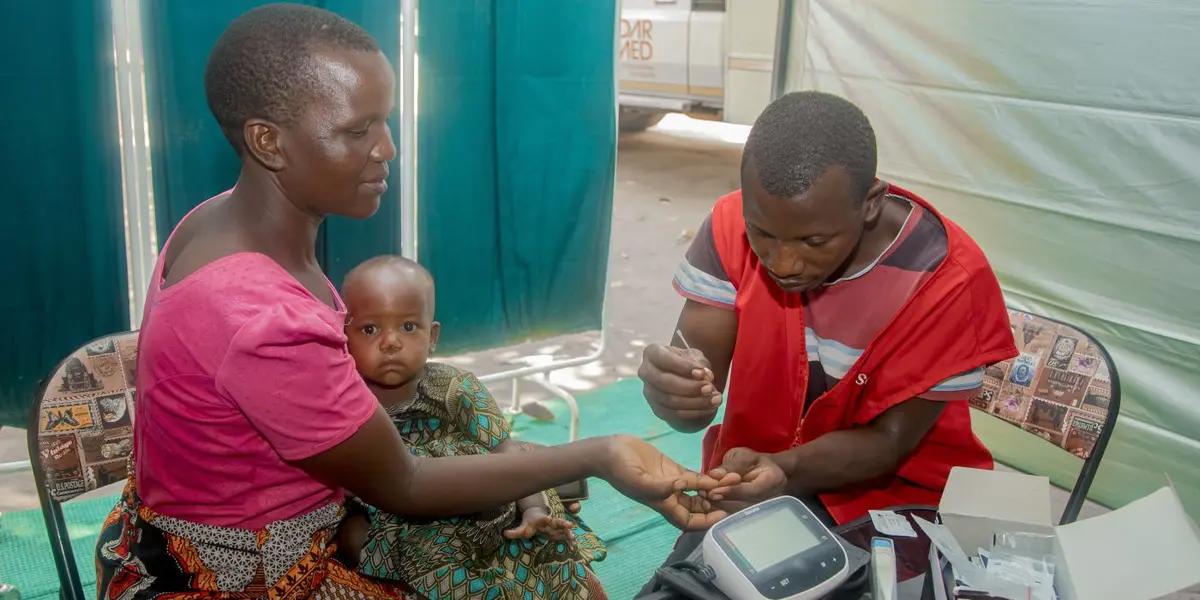
Mr Mzava said that Tanzania has demonstrated leadership through initiatives such as the establishment of a national malaria elimination council, which brings together stakeholders from government, private sector, civil society and religious institutions.
He also emphasised the need for increased domestic financing, warning that overreliance on external funding could undermine long-term sustainability.
These requirements include compliance with international guidelines, particularly those set by the WHO, as well as ensuring that communities fully understand and support the technology.
Importantly, experts say gene drive is not intended to replace existing malaria interventions but to complement them.
Current strategies, while effective, require continuous application. Mosquitoes reproduce rapidly, meaning that even after control measures are applied, new populations can emerge quickly.
Gene drive, by contrast, aims to create a self-sustaining impact by modifying the mosquitoes themselves, potentially reducing the need for repeated interventions.
As Tanzania joins the global community in marking World Malaria Day, the message from scientists, policymakers and regional leaders is clear, the fight against malaria is far from over, but innovation is opening new frontiers.
With sustained investment, scientific rigor and community trust, technologies like gene drive could play a transformative role in shaping a malaria-free future, not only for Tanzania, but for Africa as a whole.




Email: support@7mcn16.io
сервисный центр тойота сервисный центр тойота
вывод из запоя недорого вывод из запоя недорого
a/b тест наружная реклама https://reklamnyj-kreativ20.ru
заказать кухню цены https://zakazat-kuhnyu-18.ru
сервис анализа креативов сервис анализа креативов
заказать кухню с установкой https://zakazat-kuhnyu-18.ru
В CPU-heavy проектах Ryzen X3D часто оказываются быстрее обычных Ryzen: разбор игровых CPU. При 240 Гц X3D раскрываются сильнее всего.
Всем доброго времени суток. Дело деликатное, но решил черкануть пару строк, потому что в экстренной ситуации трудно сориентироваться. Если ищете анонимного специалиста с быстрым выездом, то не рискуйте и не доверяйте случайным объявлениям.
Знакомые вызывали бригаду в похожей ситуации чтобы помощь оказали без лишних хлопот и в спокойной атмосфере. Если вам актуально или ситуация экстренная, вся информация есть здесь: стационар для вывода из запоя стационар для вывода из запоя.
На этом ресурсе действительно дана полная информация, реагируют очень быстро, буквально за час. Главное — не затягивать в такие моменты, кому-то тоже пригодится и спасет здоровье. Всем душевного спокойствия!
Ребята, выручайте! Решил обновить кухонный уголок, а старую обивку уже не найти. Теперь мучаюсь — какую взять ткань для мебели, чтобы и выглядело достойно, и кошачьи когти выдержало. купить ткань для перетяжки мебели https://tkan-dlya-mebeli-1.ru А то везде пишут разное, а на деле хочется купить ткань мебельную и забыть на пару лет. Нужен метров 15-20, может, кто знает нормального поставщика.