Reforms target women in agriculture
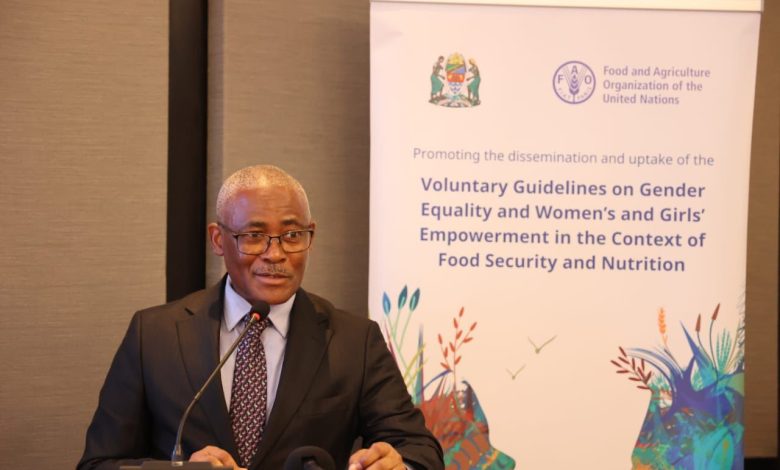
DAR ES SALAAM: TANZANIA plans to remove structural barriers facing women in agriculture as it seeks to unlock productivity, strengthen food security and drive eco- nomic growth.
Deputy Permanent Secretary in the Ministry of Agriculture, Peter Msoffe, said at a high-level sub-regional awareness event that the forum marked a decisive step toward building inclusive agricultural systems across Eastern and Southern Africa.
“These constraints reduce productivity and incomes, while undermining food security and nutrition outcomes,” he said yesterday, saying that studies show equal access to resources could raise farm yields by up to 30 per cent.
Mr Msoffe said that agriculture re- mains the backbone of most economies in the continent, with women playing a central role.
“Globally, women constitute nearly 40 per cent of the agricultural labour force and in Tanzania, they account for a substantial share,” he said.
Despite the country achieving food self-sufficiency of over 100 per cent, he cautioned that nutrition indicators tell a different story.
“Household diets are often dominated by cereals with minimal intake of fruits, vegetables, legumes and animal- source foods, leading to monotonous diets that fail to meet children’s micronutrient needs,” he noted.
He said structural inequalities continue to limit women’s economic potential.
ALSO READ: TZ targets higher mineral revenues with Tanzanite market reforms
“Women face significant barriers, including limited access to land ownership, financial services, modern technologies and decision-making platforms,” Mr Msoffe said.
The government, he said, is responding through policy and institutional reforms, including the National Gender and Women Development Policy (2023) and long-term strategies such as Development Vision 2050.
However, implementation gaps persist.
“Challenges remain in translating policies into tangible results due to re- source constraints and socio-cultural norms,” he said.
The FAO Representative in Tanzania, Dr Tipo Nyabenyi, said empowering women is critical to transforming agrifood systems.
“Women are farmers, processors, traders and custodians of household nutrition,” she said, adding that 76 per cent of working women in Africa are employed in the sector.
“Yet they continue to face sys- temic discrimination that limits access to land, finance and technology,” she said.
Dr Nyabenyi described the voluntary guidelines on gender equality, endorsed in 2023, as a “landmark frame- work” offering practical solutions.
“They promote equal access to resources, strengthen women’s leadership and address structural inequalities,” she said.
“Gender equality requires the active engagement of both women and men,” FAO, with support from SDC, launched a multi year programme in 2025 to accelerate implementation of the guidelines, aiming to build more inclusive and resilient agrifood systems.
The forum is expected to catalyse coordinated regional action and investment in gender-responsive agriculture.