Rage: Why Commission of Inquiry signals new era for Tanzania
DAR ES SALAAM: IN the high-stakes theatre of African politics, where power often speaks in hushed tones and accountability is sometimes dressed in ambiguity, the formation of a commission of inquiry can feel like either a flicker of hope or a familiar illusion.
Too often, such bodies are dismissed as smoke without fire, grand declarations that dissolve into silence.
Yet in Tanzania, the October 29 Commission of Inquiry is being framed not as a smokescreen, but as a searchlight, one designed to illuminate truth rather than obscure it.
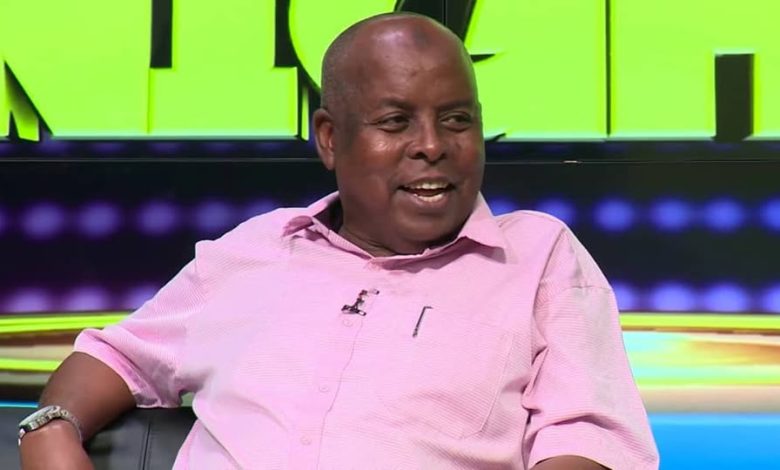
For Aden Rage, former Simba SC Chairman, the then Tanzania Football Association (FAT) Secretary General and ex-Member of Parliament for Tabora Urban, this moment is not just political, it is pivotal.
In his telling, President Samia Suluhu Hassan has not merely responded to a national concern. She has rewritten the script. Where others might have opted for quiet containment, she has chosen to openly resolve the issues. Where silence might have prevailed, she has invited scrutiny.
The Commission was born out of the events of October 29th, 2025 a date that now lingers in the national consciousness like an unanswered question. The incidents stirred unease, sparked debate and stretched the fabric of public trust. Voices rose not in whispers, but in a chorus demanding clarity, accountability and above all, transparency.
As reported in the Daily News, the government’s response was deliberate and decisive. Rather than allowing the issue to fade into bureaucratic obscurity, President Samia brought it into the full glare of institutional examination. In doing so, she did more than form a commission, she set the stage for accountability to take centre spotlight.
Speaking to journalists in Dar es Salaam, Mr Rage did not mince his words. His endorsement of the Commission was both emphatic and evocative, casting it as a turning point in Tanzania’s democratic journey.
“President Samia has done what many African leaders fail to do,” Mr Rage asserted. “She has stepped forward with courage to form a commission of experts whose international standing is beyond reproach. This is the mark of a leader who prioritises national unity over political expediency.”
“This is leadership with a spine,” he added. “President Samia has done what many fear to do, she has chosen truth over comfort, unity over convenience,” he said.
To Rage, the Commission is more than a fact-finding mission; it is, in his own words, a “vessel for national healing.” Yet it is also a mirror, one that may reflect both strengths and scars. And, standing at the centre of that mirror is retired Chief Justice Mohamed Chande Othman, a man whose reputation Rage likens to a compass guiding the nation through uncertain terrain.
At the heart of Rage’s confidence is the belief that the integrity of the Commission begins with its leadership. Justice Chande, who served as Tanzania’s Chief Justice from 2010 to 2017, carries with him a legacy forged in both domestic jurisprudence and international legal service.
“To be the Chief Justice of this country, you must possess a level of wisdom and integrity that is absolute,” Rage noted. “Unless one is mentally unsound, there is no logical reason to doubt a man of Chande’s stature. To question him is to question every institution, both local and international, that has sought his expertise.”
“To question Chande is to question the compass of our justice system,” he added. “This is a man whose integrity does not bend with the wind.”
Chande’s career reads less like a résumé and more like a roadmap of global justice. From the corridors of Tanzania’s judiciary to the chambers of the United Nations, his footprint is both wide and weighty. Since 2017, he has served as the “Eminent Person” appointed under a UN General Assembly mandate to investigate the mysterious 1961 death of former UN Secretary-General Dag Hammarskjöld, a task as complex as it is historic.
His credentials extend further still: Prosecutor General of East Timor, Chief of Prosecutions for the UN International Criminal Tribunal for Rwanda and a contributor to the UN Human Rights Council’s inquiry into Lebanon. Each role adds another layer to his armour of impartiality.
“This is a man who has worked in Geneva, Switzerland serving for the UN, and helped reform the International Criminal Court (ICC),” Mr Rage emphasised. “If the world trusts him to solve the mysteries of a UN Secretary-General’s death, why should we have an ounce of doubt regarding his service to his own motherland?”
But as Rage is quick to point out, no ship sails on one sail alone. The Commission’s strength lies not only in its chairperson, but in the collective weight of its members. The inclusion of Ambassador Dr Stergomena Tax and retired Chief Justice Professor Ibrahim Juma, he argues, transforms the body from credible to formidable.
Dr Tax, former Executive Secretary of Southern African Development Community (SADC) and Tanzania’s former Minister for Defence and National Service, brings with her a blend of diplomatic acumen and security insight. Her experience operates at the intersection of policy and practice, ensuring that the Commission’s work is informed by both regional awareness and administrative precision. “She is a woman of immense discipline and international repute,” Rage said. “Her presence ensures that the Commission understands the nuances of regional stability and administrative excellence.”
Prof Ibrahim Juma, meanwhile, represents the intellectual engine of reform. Widely regarded as the architect of Tanzania’s e-Judiciary, his tenure as Chief Justice was marked by innovation. By introducing virtual courts and digitising case management systems, he did not merely modernise the judiciary, he reimagined it.
His academic pedigree, as former Dean of the Faculty of Law at the University of Dar es Salaam, is matched by his practical influence as former Chairman of the Law Reform Commission. In him, Mr Rage says, theory meets practice; scholarship meets service.
The Commission’s depth is further strengthened by Retired Lieutenant General Paul Mella, a Tanzanian national who served as Force Commander of the African Union-United Nations Hybrid Operation in Darfur (UNAMID).
He was appointed to the role on June 4, 2013, by then United Nations Secretary-General Ban Ki-moon and African Union Chairperson Nkosazana DlaminiZuma, underscoring his international standing in matters of peacekeeping and security.
Diplomatic experience is equally well represented by Ambassador Ombeni Sefue, whose career spans decades of public service.
He began his tenure as Tanzania’s Ambassador to the United States on June 15, 2007. Sefue studied public policy and administration at what is now Mzumbe University before earning a master’s degree with distinction from the Institute of Social Studies in The Hague in 1981.
He also holds a postgraduate diploma in international relations and diplomacy from the Tanzania-Mozambique Centre for Foreign Relations in Dar es Salaam, alongside certificates in international negotiations and development studies.
His earlier assignments include serving as counsellor at Tanzania’s Embassy in Stockholm from 1987 to 1992, with concurrent accreditation to Denmark, Norway, Finland and Iceland. In 1993, he left the Foreign Service to become speechwriter and personal assistant to then President Ali Hassan Mwinyi.
Following the 1995 general election, President Benjamin Mkapa retained him in the same role, expanding his responsibilities until 2005.
During this period, Amb Sefue collaborated with Hernando de Soto’s Institute for Liberty and Democracy on a Property and Business Formalisation Programme, and with the Clinton Foundation’s HIV/AIDS Initiative to develop national care and treatment strategies, including the Mkapa National HIV/AIDS Fellows Programme.
Before his appointment to Washington, he served as Tanzania’s High Commissioner to Canada from October 2005 to June 2007.
Also bringing considerable diplomatic weight is Radhia Msuya, former Tanzania’s High Commissioner in Pretoria, South Africa, with accreditation to Namibia, Lesotho, Botswana and the Southern African Development Community (SADC).
Since graduating from the University of Dar es Salaam in 1982, she has served in various capacities within the Ministry of Foreign Affairs. Her postings have included the Tanzanian Permanent Mission in New York and the High Commission in London, before she returned to Dar es Salaam to serve as Director for Europe and the Americas.
On the security front, former Tanzania’s Inspector General of Police (IGP) Saidi Mwema adds decades of operational and administrative experience.
His career began in fraud investigation and prosecution in Dar es Salaam and Arusha, rising through the ranks to become Assistant Superintendent in 1982, when he was seconded to the Bank of Tanzania’s Foreign Exchange Directorate. Over the years, he has held senior roles across the country, including Regional Crime Officer for Dar es Salaam and Regional Police Commander for Mbeya.
Between 2004 and 2006, he served as Head of the SubRegional Bureau of Interpol in Nairobi, Kenya, before assuming the post of Inspector General of Police in March 2006. His professional development includes specialised training in areas such as counterfeit currency investigations, hostage negotiation, money laundering and advanced law enforcement management.
He holds a Bachelor of Laws (Hons) degree from the University of Dar es Salaam, obtained in 1988, and also serves as Chairman of the Board of Tanzania Standard (Newspapers) Limited (TSN).
Also in the list is Ambassador David Kapya, who has built a distinguished career in diplomacy and conflict resolution, serving in several high-level advisory and mediation roles across Africa and within international organisations.
He previously worked as a special aide to President Benjamin Mkapa during peace talks aimed at resolving conflicts in Eastern Democratic Republic of Congo and Sudan, contributing to processes linked to the eventual creation of South Sudan. He also served as a special adviser to President Mkapa on conflict mediation in Burundi.
Under President Jakaya Kikwete, Amb Kapya continued his engagement in regional diplomacy as a special aide on the African Union’s conflict resolution efforts in Côte d’Ivoire. In addition, he was appointed Tanzania’s special representative for conflict resolution in Zimbabwe, further reinforcing his role in regional peace initiatives.
Beyond national assignments, Kapya is a Senior Advisor with the Crisis Management Initiative (CMI), where he has supported preventive diplomacy and peace mediation efforts across the African continent.
His international experience also includes a long tenure with the United Nations High Commissioner for Refugees (UNHCR), where he held senior positions such as Representative to Guinea and Deputy Director for Special Operations in Sudan and Chad. In these roles, he managed large-scale refugee relocations and negotiated humanitarian access in conflict zones, strengthening his reputation in complex humanitarian and security environments.
Taken together, these figures illustrate the breadth of expertise assembled within the Commission Together, Chande’s team form what Mr Rage calls the “crème de la crème”, not just a gathering of distinguished names, but a convergence of minds.
At its core, the Commission is tightly interwoven with President Samia’s “4Rs” philosophy– Reconciliation, Resilience, Reforms and Rebuilding. If governance were a house, then this Commission is both blueprint and builder, tasked with repairing cracks while reinforcing the foundation.
By selecting individuals perceived to be above partisan currents, the president is sending a clear signal that the findings of this inquiry will be anchored in evidence rather than rhetoric, in truth rather than theatre.
“This is not a gathering of names,” Rage insisted. “It is a convergence of minds.” At its core, the Commission is tightly interwoven with President Samia’s “4Rs” philosophy– Reconciliation, Resilience, Reforms and Rebuilding. If governance were a house, then this Commission is both blueprint and builder, tasked with repairing cracks while reinforcing the foundation. By selecting individuals perceived to be above partisan currents, the president is sending a clear signal that the findings of this inquiry will be anchored in evidence rather than rhetoric, in truth rather than theatre.
“This Commission will bring good things to Tanzanians,” Mr Rage predicted. “It is designed to reunite us as a nation. The members are patriots; their professionalism is their brand. When they speak, the nation will listen because we know they cannot be bought and they cannot be intimidated.”
For the people of Tanzania, October 29 remains more than a date, it is a chapter etched with sensitivity. It is a reminder that even stable systems can be tested, and that trust, once shaken, must be carefully restored.
By opening this chapter to scrutiny, the government is placing its faith in a simple yet profound principle: that truth, no matter how uncomfortable, is the surest path to lasting peace.
Still, Rage remains unwavering in his confidence.
“We are not chasing shadows,” he said. “We are chasing clarity. And clarity builds trust.”
He argues that the Commission’s composition, rich in expertise across International Humanitarian Law, Refugee Law and Peacekeeping, positions it to meet global standards of due process. In a landscape where inquiries can sometimes be politicised, this one, he believes, stands apart.
“We are lucky,” Rage said. “In many places, such inquiries are handled by political appointees with clear agendas. Here, we have the ‘crème de la crème’ of our legal and diplomatic corps. This is not just a commission; it is a statement of our maturity as a democracy.”
As the Commission continues its work, the eyes of the nation and indeed the international community remain fixed on Dar es Salaam. What unfolds in its hearings, deliberations and eventual findings will shape not only public understanding of October 29, but also the broader narrative of governance in Tanzania.
If Rage’s assessment holds true, the Commission’s final report will be more than a document, it will be a blueprint. A guide for navigating future challenges with dignity, transparency and a renewed sense of national brotherhood.
In the end, the story of the October 29 Commission will not be judged solely by its formation, but by its findings. Yet even now, its existence speaks volumes. It whispers of courage, echoes accountability and signals a new dawn, one where governance is not only exercised, but examined.
For Rage, the message is simple but powerful: trust the process. Because the people entrusted with uncovering the truth have spent decades earning that trust, not in words, but in service.
And, if the past asked difficult questions, perhaps this Commission will finally provide the answers.