Call to Africa: Increase investment in health
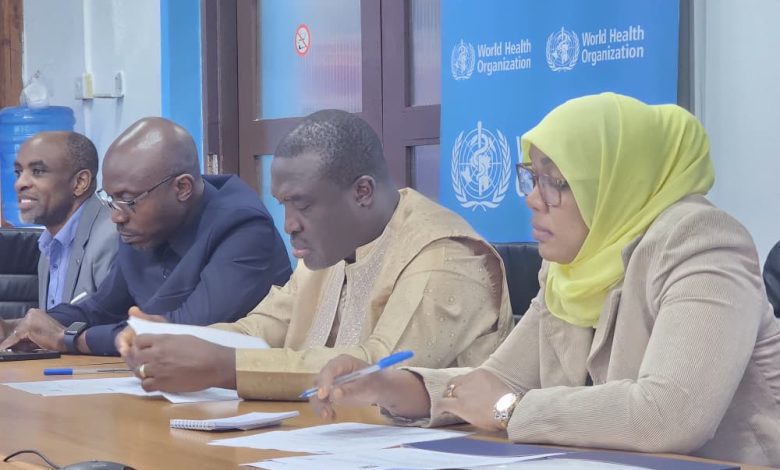
DAR ES SALAAM: The Ministry of Health, in collaboration with the World Health Organization (WHO), the National Institute for Medical Research (NIMR), and CHIEB partners, has urged African countries to increase investment in science, research, and innovation in order to strengthen health systems and ensure access to quality healthcare for all.
This call was made on April 7, 2026, in Dar es Salaam during the commemoration of World Health Day.
Speaking on behalf of the WHO Regional Director for Africa, Dr Thomas Fedjo, a Universal Health Coverage (Life Course) expert, said that Africa has made significant progress in the health sector.
He noted that these achievements include the development of Ebola vaccines, early detection of new variants of COVID 19, and ongoing efforts to manufacture vaccines within the African continent.
However, he pointed out that major challenges still remain, including the rise of non communicable diseases, new disease outbreaks, and weak health systems.
He emphasized that these challenges cannot be solved by a single country alone, but require broad collaboration between governments, experts, and communities.
Fedjo also stressed the importance of the “One Health” approach, which focuses on addressing human, animal, and environmental health issues collectively.
On his part, the Technical Director of the Global Health Security Project from CHIEB, Dr Siril Kulaya, said that investment in health science and technology is a key foundation for enabling countries to respond quickly and effectively to disease outbreaks.
He noted that between 60 to 75 percent of human diseases originate from the environment, wildlife, and domestic animals, highlighting the importance of strengthening cross-sector collaboration.
ALSO READ: Tanzania sees economic gains in medical tourism
He added that the CHIEB project operates under the slogan “Together for Health, Stand with Science,” while continuing to strengthen disease surveillance systems and promote innovative approaches to addressing health challenges in Africa.
Meanwhile, the Director of Research Promotion and Coordination at NIMR, Dr Nyanda Elias Ntinginya, said the institution continues to strengthen scientific research focused on non communicable diseases and emerging outbreaks.
He explained that, in collaboration with WHO and CHIEB, NIMR aims to ensure that research findings are directly applied to improve health systems and benefit communities.
Currently, a total of 46 African countries have developed national health security plans, with each country also implementing strategies to combat antimicrobial resistance.
Additionally, some countries have successfully strengthened disease surveillance systems to enhance preparedness for health emergencies.