Empowered women create change in local markets
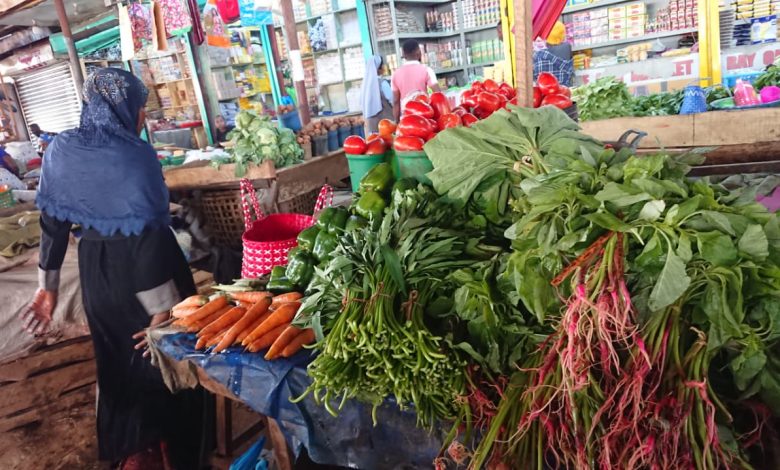
SONGEA: In the daily hustle and bustle of Songea Main Market, there are countless stories of people striving to build better lives through small businesses.
Among them is Helena Komba, a courageous woman and entrepreneur earning a living through vegetable sales. It is around 6:00pm on Tuesday, March 10, when I visit Songea Main Market in Ruvuma Region. Amid the noise of buyers and sellers, I meet Helena Komba. Helena, a mother of two and a resident of Mateka Ward, has been trading vegetables in the market for more than five years.
At her stall, Helena sells a variety of vegetables such as Chinese cabbage, spinach, pumpkin leaves, carrots, tomatoes, bell peppers, potatoes, and eggplants. She explains that life’s challenges motivated her to start the business so she could be self-reliant and provide for her children. With a hopeful tone, Helena admits that the business has brought her significant success. Through the income she earns, she has been able to expand her farming activities.
“This business has helped me greatly. I started with one acre, then two, then three, and now I farm up to four acres. Within three years, I also began building my house. I thank God today that I have a home with over 200 roofing sheets and three front frames,” Helena says with joy.
She attributes these achievements to hard work, patience, and dedication to her daily tasks. She adds that as her capital grew, she strengthened her business and eventually moved her operations to Songea Main Market. Despite her focus on vegetables, Helena dreams of expanding her business in the future. She hopes to start selling other products such as spices, cooking oil, rice, soap, and sugar.
“I believe that in the future I will transition from vegetables to other types of business. I am a confident woman and I believe I will succeed,” she says firmly.
Beyond earning a living, Helena notes that her business has become a crucial support for her children’s upbringing and education.
ALSO READ: Invisible women climate leaders finally take center stage
Her eldest is in secondary school, while her youngest attends primary school, with all educational expenses covered through her business. She also cares for two young people who are not her biological relatives, supporting them through the income from her vegetable sales.
“Through this business, I’ve been able to educate my children. I also support two young people I live with who are not my relatives,” she explains.
However, like any business, vegetable trading has its challenges. Helena says she sometimes encounters difficult customers who order wrong vegetables or take too long to choose items without buying.
Some customers buy on credit, paying one to two weeks later, which can disrupt cash flow. Competition from vendors selling outside the market in the evening also affects her sales, as outside vendors are allowed to start at 3:00 PM.
Helena urges market authorities to let outside traders begin at 6:00 PM instead, so buyers return to the market stalls. When asked about gender-based violence, Helena says she has never faced such incidents in her business activities. As our conversation concludes, Helena shares a message for other women. She encourages them not to wait at home for men’s support but to take initiative and become self-reliant.
“I tell my fellow women that even with just 10,000/-, you can start a vegetable business and succeed. Let’s not wait at home for men. We can do it; nothing can stop us,” she emphasizes.
She also requests government support for fruit and vegetable entrepreneurs in accessing loans. She notes that while they were asked to open bank accounts for loans, they have yet to receive assistance. Regarding market conditions, Helena is generally satisfied but notes challenges during the rainy season. Flooding occurs due to poor drainage, creating mud, flies, and other pests.
“The government should help install proper drainage to remove mud and stagnant water. If conditions improve, we can trade more happily,” she says.
Helena Komba’s story is a living example of a woman demonstrating that success is possible through hard work, courage, and self-belief. Through a small vegetable business, she has built a better life for her family and shown that women can achieve economic independence when given opportunity and determination.
Efforts to empower women economically continue through various institutions supporting entrepreneurship, especially for women in small businesses like vegetable trading. During International Women’s Day celebrations on March 8, 2026, the Tanzania Media Women Association (TAMWA), together with partners, celebrated and recognized women vegetable entrepreneurs for their contribution to society.
Speaking at the event, TAMWA’s Executive Director noted that despite their efforts, these women still face commercial and social challenges, including safety concerns when going to the market early, theft, delayed sales, and some customers failing to pay on time. To strengthen their capacity, TAMWA, in collaboration with CRDB Bank Foundation, provided training to enhance entrepreneurial skills, financial management, and capital growth.
Women also received education on gender-based violence, learning how to protect themselves both in the market and at home. Joshua Mwakalobo, Training and Management Manager at CRDB Foundation, expressed admiration for the women’s efforts and emphasized that the foundation would continue providing financial literacy, entrepreneurship training, and accessible loans with reasonable conditions.
“These initiatives aim to empower these entrepreneurs through sustainable financial programs and accessible loans to grow their businesses,” he emphasized.
Overall, these efforts show how collaboration between institutions and communities can drive progress for women entrepreneurs, increasing productivity, and improving their lives and those of their families. Pic: Stella Caption: Efforts to empower women economically continue through various institutions supporting entrepreneurship, especially for women in small businesses like vegetable trading.