Banks near gender parity milestone
DAR ES SALAAM: NEARLY half of Tanzania’s licensed banks have reached the critical benchmark of 33 per cent female representation in boardrooms and senior management, signalling a structural shift in the country’s financial leadership.
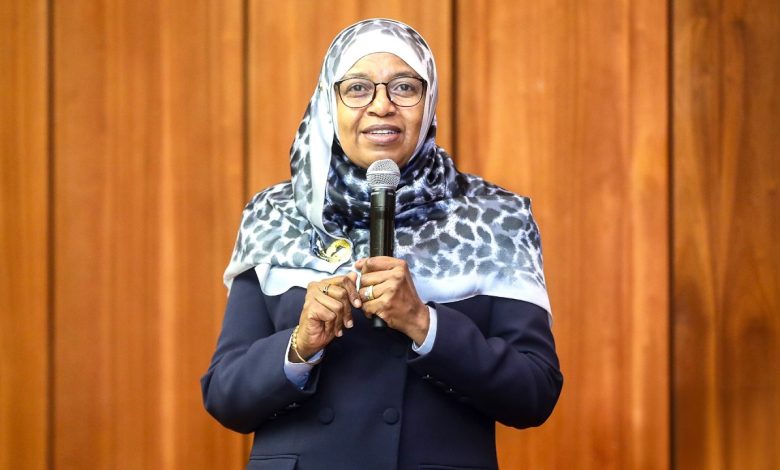
Deputy Governor of the Bank of Tanzania (Financial Stability and Deepening), Sauda Msemo, said at the Second Banks and Financial Institutions Leaders’ Forum in Dar es Salaam that 20 out of 42 banks had met the onethird threshold ahead of the August 2027 deadline.
The figures, as of December 31, 2025, underscore the rapid pace of reforms driven by a central bank directive that elevated gender inclusion from a voluntary goal to a regulatory requirement.
“The response from the industry has been strong,” she said at the forum where CEOs and Managing Directors of banks and financial institutions discussed initiatives to bridge the gender gap in the wider financial inclusion agenda.
“The progress achieved so far is encouraging… reflecting a high-level commitment to this agenda.”
The shift follows a 2024 directive requiring banks to embed gender considerations into succession planning and develop structured leadership pipelines for women.
Ms Msemo said sectorwide, female representation has risen to 30.6 per cent at board level and 30.7 per cent in senior management, evidence of steady movement towards parity in what has historically been a maledominated industry.
According to her, 32 banks have adopted governance policies to support gender diversity, compared to 20 previously while 30 institutions have established competence matrices that explicitly include gender, nearly double the previous count.
Furthermore, the market is seeing a shift in consumerfacing strategy, as 26 banks now offer women-centric financial products, representing roughly 62 per cent of the sector, she said.
She noted that while the progress is encouraging, it reflects a broader national trend where the gender gap in financial inclusion has narrowed from 10 per cent in 2017 to just 3 per cent in 2023. Total female financial exclusion has also plummeted, falling from 30 per cent to 19.4 per cent in the same period.
While the top tier of the industry has embraced the shift, a subset of institutions still reports lower levels of female representation. However, the central bank indicated that these laggards have initiated corrective measures, including policy reforms and targeted succession planning to meet upcoming deadlines.
ALSO READ: DSE, IFC partner to advance gender inclusive governance
For investors and regional analysts, the BoT’s strategy represents a template for the “Social” pillar of ESG integration in African frontier markets. By focusing on scaling products, financial literacy and disaggregated data, Tanzania is betting that a more inclusive financial sector will lead to greater systemic stability.
Ms Msemwa said the central bank has outlined key priorities for deepening inclusion across the sector, including scaling gender-responsive credit and savings products, strengthening financial literacy and entrepreneurship pipelines, refining regulatory frameworks to balance inclusion with stability and expanding the use of genderdisaggregated data to guide policy.