William Lukuvi: Son of Isimani, we mourn you
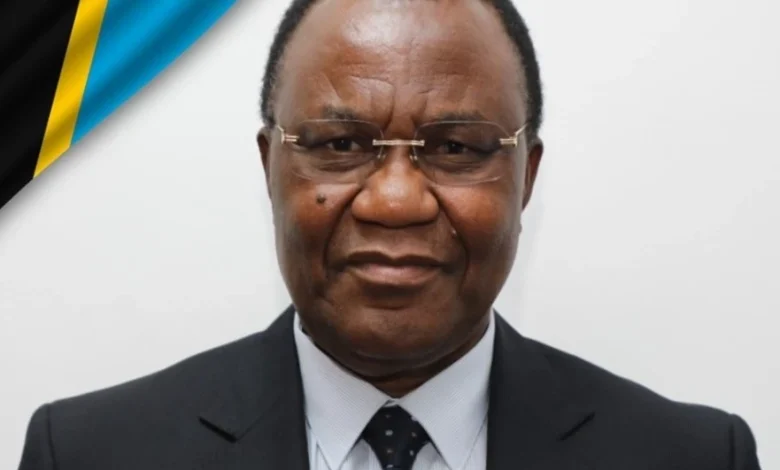
THIS morning feels different. Not because of ceremony alone, but because of the weight that has been building over the past few days. The news came abruptly the passing of William Vangimembe Lukuvi on March 25, 2026. A sitting minister. A long-serving Member of Parliament. A figure who, for many, had simply always been there.
And like many others, I was caught off guard.
There was no gradual transition, no slow fading from public life. One moment, he was part of the machinery of the state. The next, the country was speaking of him in the past tense. It is in such moments that mourning does not begin with reflection, but with disbelief. You pause. You read. You go back and read again.
Over the days that followed, I found myself doing what many across Tanzania were doing, reading. Not just one article, but many. Reports, tributes, profiles, reflections. Each writer approaching the same life from a different angle. Each voice adding something, however small, to a growing national memory.
At first, they felt separate. One spoke of his discipline. Another of his long service. Another returned to Isimani, asking why he was trusted for three decades. Others followed the movement of the state, Parliament pausing, leaders sending condolences, preparations unfolding from Dodoma to Dar es Salaam, and now to Iringa.
But as I continued reading, something shifted.
The voices began to align.
Not in wording, but in direction. Certain ideas kept returning, steadiness, accessibility, endurance. They appeared across platforms, across tones, across authors who had no reason to echo one another. Slowly, what began as individual reflections started to feel like signals in a larger pattern.
I was no longer just reading about a man.
I was watching a country, in real time, try to understand what he had meant.
And today, as Tanzania gathers in Idodi, that understanding feels clearer.
To ask who William Lukuvi was is to ask a deceptively simple question. On paper, the answer is straightforward. He served as Member of Parliament for Ismani from 1995 until his death. He held senior roles in government, including Minister for Lands, Housing and Human Settlements Development, and later Minister of State in the Prime Minister’s Office responsible for Policy, Parliament and Coordination. His career spanned more than three decades.
But that description, while accurate, is incomplete.
Because it tells you what he held.
Not what he held together.
He was not a man who changed systems overnight.
He was one who kept them working.
For over thirty years, Lukuvi stood as a point of contact between citizens and the state. In Ismani, his repeated election was not simply political success. It was a sustained act of trust. In a system where access can define outcomes, his relevance was rooted in something practical: whether he could be reached, whether he could carry concerns forward, whether he could make the system respond.
This was a politics grounded in proximity.
Not loud. Not performative. But dependable.
If that defined how he was experienced politically, his imprint on governance was most clearly felt in land, the most personal and contested terrain in Tanzania. Land here is more than an asset. It is security, inheritance, memory. It is where families build their futures and where uncertainty can linger for generations.
During his tenure in the land sector, efforts to expand planning, surveying and title issuance gained momentum, particularly as cities expanded and pressure intensified. These efforts did not resolve all challenges. The system remains complex, uneven, and at times slow. But something important shifted.
For many, uncertainty narrowed.
That narrowing is not abstract.
It is the difference between building a permanent home or stopping at bricks, unsure of tomorrow.
It is the difference between passing land to your children with clarity or leaving behind conflict.
It is the difference between living on land and knowing it is yours.
This is where his work lives.
Not in headlines, but in households.
As I read through article after article, I noticed something else, not just what was being said, but what was not. No one described him as radical. No one framed him as disruptive. There were no grand claims of sweeping transformation.
And that absence is telling. It points to a different kind of leadership. One that does not seek to redefine the system, but to reduce friction within it. One that does not move in dramatic shifts, but in steady adjustments that, over time, make everyday life more predictable.
This pattern extended into the less visible parts of his career. In roles focused on policy, Parliament, and coordination, he operated in the space where governance either holds or begins to fragment. Citizens rarely see this level directly. But they feel its absence immediately, when processes stall, when institutions fail to align, when decisions fail to carry through.
That he remained trusted in such roles tells its own story.
Not of visibility.
But of reliability.
Even in his final responsibilities, this same logic persisted. Efforts to improve systems for persons with disabilities reflected a quieter expansion of governance: recognition. To be counted is to be seen. And to be seen is to begin to matter within the system.
In a matter of days, Tanzania has written about him.
Today, it becomes clear what that story was. It was not the story of spectacle.
It was not the story of disruption.
It was the story of a man who remained.
And today, that understanding comes to rest in Idodi.
By mid-morning, the roads leading into the village begin to fill. People arrive in quiet clusters, some in official convoys, others on foot, others carried by the simple urgency of being present. The air is heavy, not with noise, but with recognition. Here, far from the formal language of policy and power, the country confronts something simpler.
That every national figure begins somewhere grounded.
That every life of service is shaped by place.
And that, in the end, all leadership returns to where it first drew meaning.
From Ismani to the nation, and now back to Idodi, his journey completes its arc.
Today, Tanzania lays to rest a giant in Idodi.
And now, he rests. In the end, the many voices that have spoken over these past days, news reports, tributes, reflections, do not stand apart. They converge. And in that convergence, something clear remains.
ALSO READ: Farewell to William Lukuvi, a steady hand in uncertain times
He did not redefine the system entirely.
He made it work better.
And for a nation that lives within it every day, that is where leadership is most deeply felt, and most meaningfully remembered.