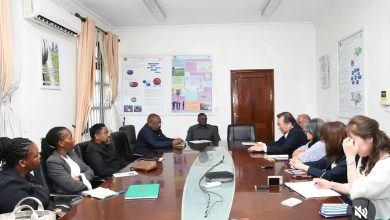
School feeding benefits 634,456 children

DODOMA: DODOMA Region’s school feeding programme is showing positive results, with 634,456 primary and secondary school students now receiving meals, Regional Commissioner Ms Rosemary Senyamule has said.
Speaking during a meeting with education and local government officials in Dodoma, she said that as of February 2026, a total of 511,630 primary school pupils, equivalent to 84.3 per cent, and 122,826 secondary school students, equivalent to 79.7 per cent, were benefiting from the programme.
“Our Strategic Plan has identified the provision of school meals as a priority. The progress so far is encouraging,” she said.
She urged stakeholders to continue supporting school feeding initiatives, noting that access to meals helps improve concentration in class and reduces truancy among pupils.
ALSO READ: TRC reduces reliance on govt subsidies
Ms Senyamule said efforts to strengthen the programme should go hand in hand with food production in schools, including the establishment of school gardens and the planting of shade and fruit trees to promote self-reliance among students. School feeding programmes are widely recognised as a key intervention in improving enrolment, attendance and learning outcomes, particularly in public schools.
The Regional Commissioner also reminded officials of the Education and Training Policy of 2014 (2023 Edition), which provides for ten years compulsory basic education from Standard One to Form Four.
“Every child who enrols in Standard One is expected to complete education up to Form Four,” she noted.
She noted further that the region was preparing for increased enrolment pressure, with two cohorts expected to sit for examinations and join Form One in 2028 under the on-going education reforms.
Dodoma Region expects a total of 130,394 students to join Form One in 2028, including 63,476 from Standard Five and 66,918 from Standard Six.
Ms Senyamule called on Local Government Authorities and other stakeholders to step up preparations, including expanding school infrastructure, to accommodate the expected rise in student numbers.