Tax reforms and the trust question
DAR ES SALAAM: A COUNTRY can survive many things, but it cannot grow on a broken tax compact.
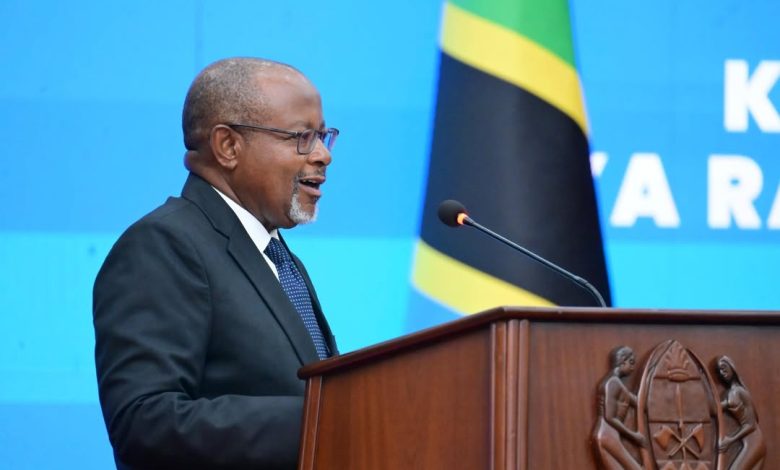
That is why the handover of the Presidential Commission on Tax System Reforms report to President Samia Suluhu at the State House in Dar es Salaam on Wednesday was far more than a routine event: it was a moment that goes to the heart of how Tanzania finances development, how businesses survive or suffocate, and whether citizens believe the system is fair enough to deserve their trust.
That is why this report matters. From what has emerged so far, the recommendations are not shallow.
They appear broad, structured, and in several areas quite thoughtful.
The proposals on reducing overlapping levies, easing the burden on young businesses, improving tax dispute resolution, digitising administration, limiting unnecessary face-to-face contact between taxpayers and tax officials, and building a stronger ecosystem to identify, nurture and finance entrepreneurs all point to a deeper attempt to rethink how the tax system works in practice.
That deserves recognition. Too often in public debate, we rush to dismiss before we have properly read, weighed, or understood the work that has been done. In this case, that would be unfair.
Whatever one’s political preferences, the direction of the recommendations suggests a real effort to look beyond collection alone and toward the wider economy. That matters because good tax reform is not just about taking money.
It is about shaping incentives. When overlapping taxes, fees, and charges pile up at different stages of production and distribution, they do not remain on paper. They move through the economy.
A transporter pays more, then the wholesaler pays more, then the retailer pays more, and finally the household pays more. That means duplicated charges do not only burden business owners.
They also contribute to higher prices, weaker competitiveness, and lower purchasing power. So, when a commission proposes rationalising these burdens, it is not offering a technical footnote.
It is speaking to inflation pressure, business margins, domestic production, and consumer welfare. The same applies to the idea of giving new businesses breathing space before the full force of income taxation begins.
Some people hear such proposals and assume they are soft or generous. In truth, they can be economically disciplined. Most businesses die young not because they lack ideas, but because they lack cash-flow stability.
In the first years, revenue is uncertain, customers are still being built, and fixed costs are already real. If the state taxes too hard, too early, it may destroy tomorrow’s taxpayer before that taxpayer has had the chance to become strong enough to contribute meaningfully.
A transition period is not a giveaway. It is an investment in business survival, formalisation, employment, and future revenue. That is what many critics miss. The healthiest tax base is not the one that extracts fastest. It is the one that grows widest and strongest over time.
The recommendation to reduce direct face-to-face interaction between tax officers and taxpayers should also be read beyond the language of corruption alone. It has a financial meaning. Where discretion is high, uncertainty rises. Where uncertainty rises, businesses hold back.
They delay investment, keep more money idle, avoid formality, and price fear into their operations. A more digital, rules-based, transparent system lowers that hidden premium.
It makes compliance more predictable. And predictability is one of the most valuable assets any economy can offer. In other words, these ideas are not anti-revenue. Properly implemented, they are progrowth and pro-revenue in a more durable way.
ALSO READ: Bold tax reforms key to one trillion-dollar economy dream
A stronger dispute-resolution system, for example, can unlock working capital and restore confidence. Long, unresolved tax disputes freeze business decisions.
They make lenders nervous. They discourage expansion. They turn planning into guesswork. Faster, fairer resolution is not only good administration.
It is good economics. Likewise, a more complete system to identify, guide, finance, and grow entrepreneurs is not just social language. It is fiscal strategy. The best way to widen the tax base is not simply to squeeze the few who are already visible.
It is to help more firms become capable, formal, productive, and bankable. That is why this report should not be treated casually. Yet public skepticism is also real, and it should not be mocked away.
Many citizens have reacted less to the recommendations themselves than to the familiar question of implementation. Will this be another report that sounds right and then disappears into a shelf? Will businesses actually feel relief?
Will overlapping charges really be removed? Will discretion truly fall? Will public institutions move from diagnosis to delivery?
These are legitimate concerns. There has also been criticism about familiar figures appearing again in national commissions, especially Ambassador Ombeni Sefue as chair. That concern should be heard, but it should not be exaggerated into automatic condemnation.
Reusing the same people does not, by itself, prove incapacity, compromise, or old thinking. A chair’s role is not necessarily to dictate the intellectual content of every recommendation.
A chair guides the process. He steers the committee, keeps the work coherent, and helps the secretariat move from scattered inputs to an organised output.
That is a coordinating role, not necessarily a dominating one. In a process of this size, experience may be part of the reason such a person was chosen in the first place.
So let us be balanced. Familiarity is not always failure. Experience is not always stagnation. Still, the government would be wise to take the public mood seriously.
The online reaction has revealed a credibility gap. Many Tanzanians do not reject reform. They doubt whether reform will be carried through. They doubt whether the burdens they face every day will actually change.
They doubt whether revenue collected in the name of development will always be matched by visible discipline in expenditure and governance. That distrust is not a small matter.
It affects compliance. It affects investment. It affects social cohesion. A tax system can be technically sound and still fail if citizens do not trust the environment around it. So what now? Now the real work begins.
This report should be treated as a foundation, not a victory lap. The government must move quickly to clarify priorities, sequence implementation, and identify which reforms can be acted on early. Visible early wins will matter.
They will tell the public whether this moment is different or merely familiar. But the government is not the only actor here.
As the President herself said, only 22 per cent of attaining these recommendations lies directly with government, while 70 per cent lies with the private sector, including the very citizens and stakeholders who have been airing their views. That is the sentence the country should now sit with carefully.
It means tax reform is not a spectator sport. It is a shared national assignment. The private sector must do more than criticise; it must offer solutions.
Citizens must keep speaking, but with seriousness. Public debate should be vigilant, not destructive. We should not poke holes in the same boat we are all trying to cross in.
As an old African man, I would say nations are built by people who can recognise good work, point out danger, correct weak points, and still remain committed to the journey. That is where Tanzania stands now. The report is in. The debate is alive. The concerns are real.
The ideas are serious. What matters now is whether this becomes just another conversation, or the start of a fairer, clearer tax system that can support growth. The handover is over. Delivery is what matters now.