TZ seeks to boost Chinese investment in textiles

CHINA: TANZANIA has stepped up a charm offensive to attract Chinese capital into textiles, agro processing and mineral beneficiation, as it seeks to accelerate industrialisation and reduce reliance on imports.
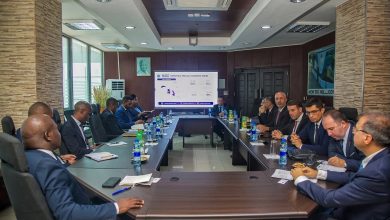
The Minister of State in the President’s Office (Planning and Investment), Prof Kitila Mkumbo, used a trade and investment forum in Shanghai to pitch the country as a competitive manufacturing base and a gateway to regional markets.
Speaking at the Nantong– Tanzania Economic and Trade Exchange and Investment Promotion Conference on Wednesday, he urged Chinese manufacturers particularly in garments and textiles to establish operations in Tanzania’s cottongrowing regions of Shinyanga, Simiyu and Mara.
The push comes as Tanzania looks to retain more value from its raw materials.
About 80 per cent of the country’s cotton is exported unprocessed, underscoring the government’s drive to attract downstream investment that can create jobs and boost export earnings.
“We welcome Chinese enterprises to collaborate with Tanzania in developing modern industrial parks and special economic zones, advancing technology transfer and expanding manufacturing capacity for global markets,” Prof Mkumbo said.
The outreach forms part of a broader effort by President Samia Suluhu Hassan’s administration to reposition Tanzania as an investment destination, backed by regulatory reforms and infrastructure upgrades.
These include streamlined licensing procedures, expanded public-private partnerships and strengthened investment facilitation through the Tanzania Investment and Special Economic Zones Authority (TISEZA).
The government is also investing in logistics, notably upgrades at the Dar es Salaam port and the construction of the electrified Standard Gauge Railway.
Prof Mkumbo highlighted opportunities beyond textiles, pointing to electronics assembly, construction materials, machinery and mineral value addition as priority sectors for Chinese investors.
ALSO READ: Tanzania’s double taxation agreements: Balancing investment, revenue and reform
He framed Tanzania’s appeal around its demographic and geographic advantages, including a population of more than 70 million, political stability and access to a regional market of over 300 million people across the East African Community (EAC) and the Southern African Development Community (SADC).
Membership in the African Continental Free Trade Area (AfCFTA) further expands that reach to a market of more than one billion people.
“Investing in Tanzania is not just about the domestic market, but access to a much larger regional and continental market,” he said.
The government is also preparing to roll out its long-term development blueprint, Vision 2050, which aims to transform the country into an upper-middle-income, industrialised and knowledge-based economy.
“Partnerships with global investors, including those from China, will be essential in achieving these goals,” Prof Mkumbo said.
Chinese business leaders signalled strong interest. Lisa Wang, chairperson of the East Africa Commercial and Logistic Centre, said the event had drawn more than 200 companies keen to explore opportunities in Tanzania.
“This is a golden opportunity. Many enterprises here are looking closely at Tanzania as their next investment destination,” she said. The forum was organised by the Nantong Home Textile Association.