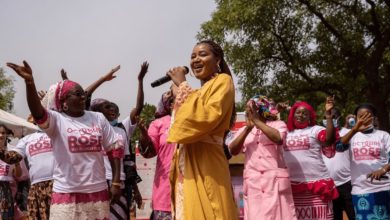
When the law speaks for women

DAR ES SALAAM: ON paper, the law speaks with certainty. It declares rights in firm language, equality before the law, protection from violence, freedom from discrimination. In legal texts, these promises appear clear and unwavering.
Yet the true test of the law is not found in statutes or policy documents. It is found in everyday life. When a woman seeks justice, safety or economic opportunity, the question becomes simple: does the law truly speak for her?
International Women’s Day offers an opportunity not only to celebrate the achievements of women, but also to reflect on the role the law plays in shaping their lives. Behind every right recognized in legislation lies a deeper effort to ensure that those rights are experienced in reality.
In Tanzania, the legal framework protecting women’s rights has evolved significantly over the years. The Constitution of the United Republic of Tanzania establishes the principle of equality before the law and prohibits discrimination on the basis of gender. These constitutional guarantees form the foundation upon which other legal protections are built, affirming that women are entitled to equal dignity, protection and participation in society.
Building on this constitutional foundation, several legislative reforms have strengthened legal protections for women across different sectors. Reforms in criminal law, particularly through the Sexual Offences Special Provisions Act, expanded protections against sexual violence and introduced stricter penalties for offenders. Labour legislation such as the Employment and Labour Relations Act prohibits discrimination in employment and promotes fair treatment in the workplace. Similarly, the Land Act and the Village Land Act recognize the right of women to acquire, hold and use land , an important development in a society where access to land often determines economic security.
In bridging the gap between legal rights and practical access to justice, paralegal organizations have played a significant role. Across Tanzania, communitybased legal aid providers and paralegals work at the grassroots level to ensure that women understand their rights and are able to seek legal remedies when those rights are violated. Through legal education, mediation, referrals to formal courts and support for survivors of gender-based violence, these organizations have helped bring the law closer to the communities it is meant to serve. For many women, particularly in rural areas, paralegals often represent the first point of contact with the justice system, translating complex legal procedures into practical assistance that empowers women to claim their rights.
Tanzania has also aligned itself with international commitments aimed at advancing gender equality. By ratifying instruments such as the Convention on the Elimination of All Forms of Discrimination Against Women and the African Union’s Maputo Protocol, the country has accepted obligations to promote gender equality and eliminate discriminatory practices. These frameworks influence domestic legal reform and reinforce the state’s responsibility to safeguard women’s rights.
Viewed from a legal perspective, these developments represent meaningful progress. The legal architecture protecting women’s rights today is far more developed than it was several decades ago. Laws now recognize women not merely as beneficiaries of protection, but as equal holders of rights within the legal system.
Yet the presence of legal protections does not always guarantee equal outcomes in practice.
Gender-based violence remains one of the most visible challenges affecting women. Despite the existence of legal provisions addressing such offenses, many survivors still encounter obstacles when attempting to access justice. Fear of stigma, limited awareness of legal remedies and procedural barriers within the justice system can make it difficult for victims to pursue legal action.
Economic participation also reveals areas where the law continues to evolve. While labour laws prohibit discrimination and promote equal treatment, many women remain active in informal sectors of the economy where legal protections may be difficult to enforce. In such circumstances, the promise of equality contained in legislation does not always translate into equal economic opportunity.
ALSO READ: Women’s empowerment gains momentum in Dodoma
Family and property relations present another dimension where law and social practice sometimes intersect in complex ways. Although statutory laws recognize women’s rights to own and inherit property, social expectations and customary practices may influence how these rights are exercised within families and communities.
These realities highlight an important truth about law and social change: passing legislation is only the first step. For legal protections to become meaningful, they must be supported by accessible justice systems, effective institutions and widespread public awareness of rights.
International Women’s Day therefore offers more than a celebration of progress. It offers a moment to pause and examine how effectively the law protects the rights it promises. Tanzania’s legal and policy framework has made meaningful strides in recognizing and protecting women’s rights across different sectors of society. Yet the true strength of the law lies not only in the provisions written in statutes, but in the everyday experiences of the people it is meant to protect.
When the law truly speaks for women, its voice is not heard only in courtrooms or statutes. It is heard in safer communities, fairer workplaces, equal opportunities and the quiet confidence that justice is not reserved for a few. It belongs to everyone.