DCEA seizes 10 tonnes of drugs, destroys farms
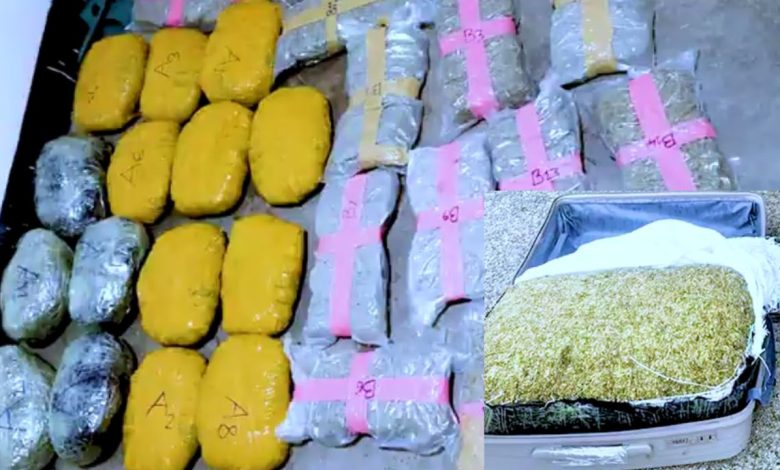
DAR ES SALAAM: THE Drug Control and Enforcement Authority (DCEA) has seized 9.93 tonnes of assorted illicit drugs, confiscated 1,795 bottles of narcotic-based medicinal drugs and destroyed 87.5 acres of cannabis farms in a series of coordinated operations conducted across the country.
Speaking at a press conference yesterday in Dar es Salaam, DCEA Commissioner General Aretas Lyimo said that during the crackdown, the authority also impounded six motor vehicles and 29 motorcycles, while arresting 151 suspects allegedly linked to the illegal trade.
Mr Lyimo said in a joint operation with customs officers at the Mutukula border post, DCEA intercepted a large consignment of narcotic-based medicinal drugs.
The seizure included 105 boxes of Pethidine containing 1,045 bottles, 31 boxes of Morphine Sulphate with 310 bottles and 44 boxes of Fentanyl comprising 440 bottles.
The drugs were discovered in an SR Classic passenger bus registered in the Democratic Republic of Congo (DRC), number 5673AB04, which operates between Uganda, Tanzania and the DRC.
The consignment was uncovered during inspection at the Mutukula customs post as the bus entered Tanzania. Seven suspects were arrested in connection with the incident.
They include Mr Hassan Mwambashi, alias “Macheni” (50), a resident of Mbezi in Dar es Salaam; Ibrahim Malindi (36), a Tanzanian national residing in Kampala, Uganda; Mr Yassa Hamood (38) of Magomeni, Dar es Salaam; Hamad Hamad (46) of Mombo, Tanga; Mr Abdul Khamis (31), a resident of Amana, Dar es Salaam; Mr Mohamed Sako (34), a resident of Ilala; and Mwinshaa Abdalla (47), a resident of Magomeni, Dar es Salaam.
Pethidine, Morphine and Fentanyl are opioid-based medicines used in hospitals to manage severe pain during surgical procedures and for patients suffering from cancer, serious injuries and sickle cell disease.
The Commissioner General noted that, when diverted from authorised medical channels, they can be abused as narcotics and cause rapid addiction due to their high potency.
ALSO READ: Youth must choose life, not drugs
These depressant drugs can be fatal, as they disrupt vital body systems including heart function, the nervous system and breathing.
In Tanzania, the medicines are regulated under the Drug Control and Enforcement Act, Cap 95, and the Tanzania Medicines and Medical Devices Act, Cap 219.
The law places them under the First Schedule, restricting their importation and distribution exclusively to the Medical Stores Department (MSD). Meanwhile, high-potency cannabis, commonly known as skunk, continues to be seized in large quantities.
In Dar es Salaam, Mr Jontwa Mwaikonyole (43), a resident of Gogoni Kibamba, was arrested with 81.883 kilogrammes of skunk concealed in a South African-registered Scania truck (CAA 129054) and trailer (CAA 22911) that was transporting apples.
At Chanika Buyuni, Masudi Rajabu (38) and Shafii Mohamed (30) were apprehended with 488.64 kilogrammes of the drug. In Mbeya, six suspects were arrested at different times while transporting skunk on passenger buses.
In Arusha Region, Ms Fatuma Mohamed (45), popularly known as “Mama Arapha”, and Mr Elibaraka Kingu (29), alias “Baraka”, were arrested with 937 bundles of khat weighing 363.45 kilogrammes.
Authorities described the woman as a long-time offender involved in trafficking networks.
Additional operations in several regions led to the seizure of 5.24 tonnes of cannabis, 4.04 tonnes of khat and 72 grammes of heroin.
Commissioner General Lyimo said the operations reflect the government’s continued commitment to reducing the availability of illicit drugs and preventing the diversion of controlled medicines.