Banks set the tone for Dar Stock Exchange
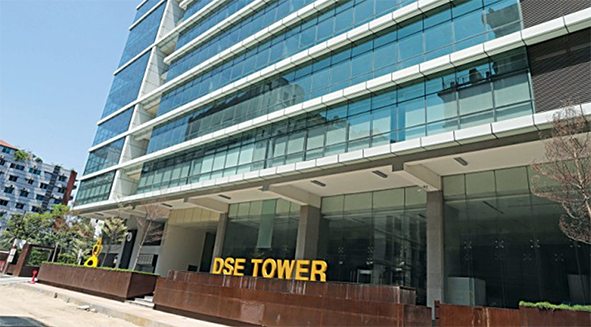
DAR ES SALAAM: THE banking sector sits at the centre of the Dar es Salaam Stock Exchange (DSE), setting the rhythm for market performance and investor sentiment. Listed banks dominate market capitalisation and liquidity, and their earnings results are often the clearest signal of where the broader market is headed.
For participants across equities and bonds, bank balance sheets have become the lens through which opportunity and risk are assessed.
“The banking sector remains the single most powerful stream on the DSE,” Mr Geresa Kamugisha, Chief Executive at Alpha Capitals said yesterday. “When banks perform well, confidence spreads across the market. When pressures emerge, they are felt almost immediately.” This influence is reinforced by the close relationship between banks and the government securities market.
Treasury bonds remain the most actively traded instruments on the exchange, anchoring the yield curve and shaping how investors price risk. Stable bond auctions support confidence and liquidity, while unexpected movements in yields or volumes can quickly alter expectations.
“Government securities act as the market’s reference point,” Mr Kamugisha said.
“They quietly guide pricing and behaviour across the capital market.” Beyond banks and bonds, structural reform is steadily reshaping how the DSE functions. Enhancements to trading rules, price discovery and post-trade processes have improved transparency and alignment with international standards.
Zan Securities’ Advisory and Research Manager, Mr Isaac Lubeja said yesterday that trading activity was largely driven by banks, especially CRDB, which accounted for 61.16 per cent of total market turnover and NMB followed with a 15.82 per cent contribution.
“The DSE continued to register elevated activity in the equities market, albeit with a slower turnover compared to the previous week,” Mr Lubeja said. On the price performance front, MUCOBA emerged as the week’s top gainer, with its share price rising by 16.67 per cent to 630/- per share.
Mwalimu Commercial Bank (MCB) advanced by 9.49 per cent to 750/-, while NMB recorded a strong gain of 8.79 per cent.
Conversely, Maendeleo Bank Plc (MBP) was the week’s top laggard, shedding 36.18 per cent to 1,940/- per share, while Mkombozi Commercial Bank (MKCB) fell by 24.75 per cent to 3,710/-.
“The Bank, Finance and Investment Index,” Mr Lubeja said, “which posted a weekly gain of 1.05 per cent, is expected to remain in focus, supported by sustained interest in tier-one banking stocks.” Counters such as CRDB and NMB are likely to continue anchoring market activity, given their dominant contribution to turnover and positive price momentum.
ALSO READ: Telecom expansion brings millions online
Retail investors have also become a defining feature of the current cycle. Digital trading platforms and mobile-based access have broadened participation, adding depth to daily trading and strengthening demand for dividends.
At the same time, this growing base has increased sensitivity to sentiment, especially in less liquid stocks where confidence can move prices quickly. Product diversification offers another stream of opportunity.
The gradual introduction of exchange traded funds, thematic products and innovative bond structures points to a maturing market, even as progress remains incremental.
Yet the market’s direction is not without risk. Political and policy developments, global economic conditions, liquidity constraints and regulatory enforcement all remain potential trip wires.
“In this environment, success on the DSE is about understanding the underlying currents, not reacting to daily noise,” Mr Kamugisha said. “The foundations are visible, but vigilance remains the price of confidence.”