

Rebeca’s global fight for the right to learn
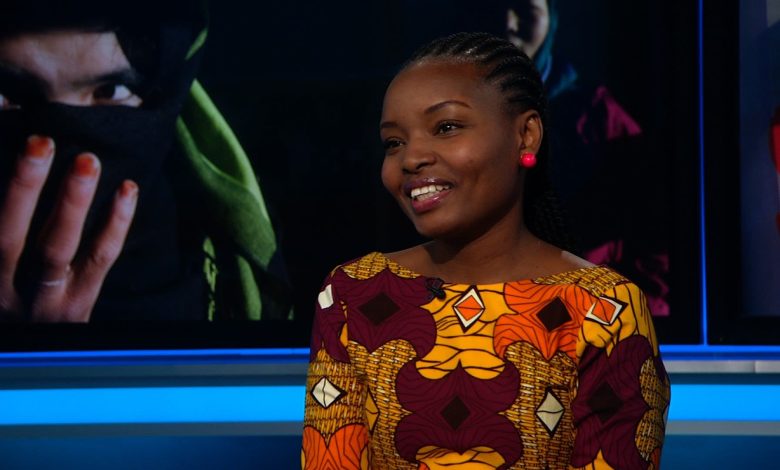
…Marking the International Day of Education, we profile Rebeca Gyumi, the activist ensuring no girl is left behind.
DODOMA: BEFORE Rebeca Gyumi ever walked the halls of the United Nations or sat across from Michelle Obama, her path was being paved by a woman she never met, but whose name she proudly carries.
Decades ago, in the rugged terrain of Dodoma Region, her grandmother would trek across hills and valleys, not for water or trade, but for the radical act of finding a classroom for her children.
Today, that same fire for education burns in the younger Rebeca. As the founder of Msichana Initiative, Rebeca isn’t just fighting for girls’ rights; she is fulfilling a family legacy of resilience that refuses to accept ‘no’ for an answer. For many, activism is a career choice.
For Rebeca, it is a birthright. Growing up in Tanzania’s capital, Dodoma, she was surrounded by stories of the women who came before her.
Her paternal grandmother, the original Rebeca, was a woman ahead of her time. In an era when a girl’s education was often seen as a waste of resources, the elder Rebeca saw it as a lifeline.
“I am who I am because of strong and resilient women who have existed in my family,” Rebeca says with a smile.
“Some of them I even inherited their names from. They say what you inherit stays with you, and activism is something that lives deep inside my life.”
This foundation was strengthened by her parents, who broke the mould of traditional expectations. In a world that often tells girls to be quiet, Rebeca was told to speak up.
Her parents created a home where expression was celebrated, not punished. This upbringing planted a seed of confidence that would eventually grow into a national movement.
“It was part of shaping me,” she explains. “If I see something that is wrong, I speak out because it is not a sin.”
While Rebeca had the support of her family, she quickly realized that many other girls were not as lucky. Her eyes were truly opened during her time as a volunteer with Femina, a civil society organization that works with young people across Tanzania.
Traveling through different regions, Rebeca saw a recurring tragedy, desks that should have been occupied by bright young girls were sitting empty.
The reason? Child marriage and teenage pregnancy. “Through Femina, I travelled to many parts of the country,” she recalls.
“I met many young people, but what angered and hurt me most was seeing girls dropping out of school because of pregnancy or early marriage. You would find a girl getting pregnant in Standard Five or Six, she is only 14 or 16, still a child and then she is married off. It was extremely painful.”
It wasn’t just a few isolated cases. It was a national crisis. Rebeca realized that if she wanted to change the lives of these girls, she needed more than just passion; she needed a tool that the system couldn’t ignore.
That tool was the law. Rebeca enrolled at the University of Dar es Salaam (UDSM) to study law between 2008 and 2012. She wasn’t just studying to get a degree; she was studying to build a shield for the girl child.
“Education is everything to me,” she says firmly.
“It is the tool that transformed my life and enabled me to transform my community.”
Her own academic record is proof of her dedication. From Kikuyu Secondary School in Dodoma to the prestigious Kilakala Special School for girls in Morogoro, Rebeca was always at the top of her class.
She knew that her education gave her a voice, and she was determined to use that voice for those who were being silenced.
One statement, in particular, guided her through the long nights of law school: “You must see yourselves as more than someone’s wife.” These words became her North Star, reminding her that a woman’s worth is not defined by her relationship to a man, but by her own dreams and contributions.
In 2016, Rebeca’s work reached a fever pitch. Through the Msichana Initiative, she challenged the Law of Marriage Act, which allowed girls as young as 14 to be married with parental consent. It was a landmark case that caught the world’s attention.
By 2018, her efforts earned her the United Nations Human Rights Prize. Suddenly, the girl from Dodoma was a global icon.
In November 2023, she found herself in a high-level discussion alongside some of the most influential women on the planet such as former US First Lady Michelle Obama, philanthropist Melinda Gates, and international human rights lawyer Amal Clooney.
“Meeting influential women and global leaders humbles me and reminds me that I can become anything I want to be,” Rebeca says.
“Sitting with world-famous people reminds me of the great responsibility I carry. To sit with people like Michelle Obama and have them listen to me is something very big for me.”
Rebeca’s mission feels more urgent than ever as the world recently celebrated International Day of Education on January 24. This day serves as a global reminder that education is a fundamental human right, not a luxury.
For Rebeca, this day isn’t just about statistics; it’s about the Standard Six girl she met years ago who was forced to trade her uniform for a wedding dress. It is about the theme of 2026, which focuses on the power of youth to shape their own learning.
“Education is the only way we can ensure a girl has a choice in her future,” Rebeca insists.
Whether it’s through her legal advocacy or her work on the ground, she continues to push for a world where every girl, regardless of where she is born, can stay in school and reach her full potential.
The Woman Behind the Movement Despite the awards and the meetings with world leaders, Rebeca remains grounded. She is a wife and a mother of three, and she is the first to admit that balancing a world-changing career with family life is a challenge. Rebeca credits much of her success to the support of her husband.
“He has stood by me throughout my activism,” she says.
In a world that often asks women to choose between their ambitions and their families, Rebeca proves that with the right support system, you can nurture both. As we look toward the future of education in Tanzania, Rebeca stands as a beacon of hope.
Her journey from the hills of Dodoma to the stages of the UN is a testament to what happens when we invest in girls.
For Rebeca, the fight for the girl child is not just a career; it is a calling. It is a story shaped by generations of strong women, personal conviction, and an unshakable belief that every girl deserves the chance to learn, dream, and lead.
As she often says to the young girls she meets: “Your education is your power. Never let anyone take it away.”

Loving the information on this website , you have done outstanding job on the content.