Tanzania moves to rein in industrial fishing on Lake Victoria
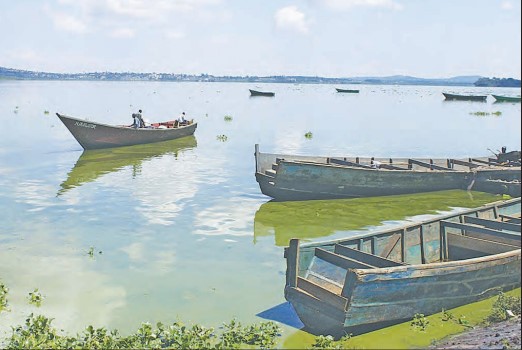
AS dawn breaks over Lake Victoria, wooden fishing boats glide quietly across the water, their silhouettes cutting through the morning mist. For generations, these waters have sustained millions of families, feeding communities, powering local economies and anchoring cultures across East Africa.
But today, Africa’s largest freshwater lake is under mounting pressure, and the delicate balance between economic exploitation and ecological survival is increasingly under threat. Against this backdrop, the Tanzanian government has taken a decisive step to curb industrial involvement in fishing on Lake Victoria, signalling a renewed commitment to conservation and regional sustainability.
The move reflects growing concern among policymakers, scientists and fishing communities that unchecked commercial practices are accelerating the depletion of fish stocks and undermining the livelihoods of small-scale fishermen who depend on the lake for survival.
The announcement was made recently by the Minister for Livestock and Fisheries, Dr Bashiru Ally, during a working visit to the Kagera Region in north-western Tanzania. Touring a Nile perch processing plant in Muleba District, Dr Ally delivered a clear message: Industries will no longer be permitted to engage directly in fishing activities on the lake.
According to the minister, industrial operators particularly those linked to fish processing and export have increasingly encroached on areas traditionally reserved for artisanal fishermen, using capital-intensive methods that harvest fish faster than natural systems can replenish them.
This, he warned, is not only degrading the lake’s ecosystem but also threatening the social and economic fabric of lakeside communities.
“Encroachment on the 200-metre buffer zone by industries and farmers, together with the use of illegal fishing nets that capture juvenile fish, continues to degrade Lake Victoria’s resources,” Dr Ally said.
“Urgent joint action is needed to protect Lake Victoria for the survival and livelihoods of more than 47 million people in the region.” Lake Victoria is not merely a body of water; it is a regional lifeline. Covering nearly 68,800 square kilometres, it is the world’s second-largest freshwater lake by surface area and is shared by five countries: Tanzania, Kenya, Uganda, Rwanda and Burundi.
Tanzania owns approximately 51 per cent of the lake’s surface area, making it the single largest custodian of this vital resource.
The lake supports the livelihoods of more than 47 million people, many of whom rely directly on fishing, fish processing, transportation and related activities. Beyond fisheries, Lake Victoria is a critical source of water for domestic use, irrigation and industry.
It facilitates regional trade and transport, generates hydroelectric power downstream and plays a crucial role in climate regulation and biodiversity conservation across the East African region.
ALSO READ: Fear, not AI, threatens humanity
Economically, the lake hosts one of the world’s most productive freshwater fisheries. It produces more than 1.5 million tonnes of fish annually, dominated by species such as Nile perch, tilapia and dagaa (silver cyprinid).
The annual market value of this catch is estimated at 1.1 billion US dollars, with a significant portion destined for export markets in Europe, Asia and the Middle East. Yet, this productivity masks a growing vulnerability. Environmental experts have long warned that Lake Victoria is under increasing strain from a combination of human and environmental pressures.
Wetland degradation, deforestation in the catchment basin, pollution from untreated industrial and urban wastewater, agricultural runoff and overfishing have steadily eroded the lake’s ecological resilience. In many shoreline areas, wetlands that once acted as natural filters have been cleared for farming, settlement and industrial development.
These wetlands played a vital role in absorbing pollutants and regulating water flow. Their loss has led to increased nutrient loading in the lake, fuelling algal blooms that deplete oxygen levels and threaten aquatic life. Deforestation in the wider catchment has compounded the problem.
As trees disappear, soil erosion increases, washing sediments and agrochemicals into rivers that feed the lake. At the same time, rapid urbanisation around major lakeside cities has resulted in the discharge of untreated sewage and industrial effluent into the water.
Overfishing remains one of the most visible and contentious challenges. The widespread use of illegal fishing gear particularly undersized nets that capture juvenile fish has reduced the reproductive capacity of key species. Industrial-scale operations, often better equipped and less constrained by local enforcement, have been accused of accelerating this decline.
The cumulative impact of these pressures has weakened the lake’s ability to recover naturally, raising fears of long-term ecological collapse if decisive action is not taken.
The government’s decision to restrict industrial fishing is therefore as much a social intervention as it is an environmental one. Smallscale fishermen, who operate from thousands of landing sites along the lake’s shores, have increasingly found themselves competing with larger, better-funded operators.
By limiting direct industrial involvement in fishing, authorities aim to restore balance, ensuring that artisanal fishermen, many of whom fish for subsistence as well as income are not pushed out of their traditional livelihoods.
Dr Ally has emphasised that the move does not target the fish processing industry itself, which remains a major employer and export earner, but rather seeks to separate processing from direct extraction. Under the new approach, industries will be expected to source fish through regulated, legal supply chains rather than engaging in fishing operations that strain the lake’s resources.
At the same time, Tanzania plans to strengthen enforcement of existing regulations, including the protection of the 200-metre shoreline buffer zone and restrictions on destructive fishing gear. This will involve closer monitoring, tougher penalties for violations and increased collaboration with local communities. Lake Victoria’s challenges do not stop at national borders.
As a shared water body, its sustainability depends on coordinated action among all riparian states. Recognising this, Tanzania has pledged to work closely with neighbouring countries to safeguard the lake for future generations.
In 2025, member states of the East African Community (EAC) reaffirmed their commitment to the Protocol for Sustainable Development, pledging closer coordination on climate action and increased funding for conservation initiatives across the Lake Victoria basin.
Regional institutions such as the Lake Victoria Basin Commission (LVBC) have been tasked with harmonising policies, sharing data and supporting joint interventions. Regional cooperation is widely seen as critical to addressing cross-border issues such as illegal fishing, pollution control and climate adaptation. Without it, unilateral actions risk being undermined by activities elsewhere on the lake.
Beyond policy measures, the Tanzanian government is backing its conservation agenda with significant financial investment. Several multi-million-dollar projects are currently being implemented, focusing on environmental restoration, water sanitation and maritime safety.
In June 2025, Tanzania launched a regional study in collaboration with the Lake Victoria Basin Commission, using Earth observation technology to monitor water quality and guide future conservation efforts.
Satellite data and remote sensing tools are expected to provide real-time insights into pollution levels, algal blooms and changes in water volume, enabling faster and more targeted responses.
The government has also announced plans to spend approximately 4.2bn/- on establishing 10 monitoring and rescue centres across Lake Victoria. These centres will enhance surveillance, improve safety for fishermen and strengthen emergency response capabilities, particularly during extreme weather events that are becoming more frequent due to climate change.
Ultimately, the challenge facing Lake Victoria is one of balance between economic growth and environmental stewardship, between regional integration and national responsibility and between present needs and future security.
The move to restrict industrial fishing represents a significant policy shift, one that acknowledges the limits of the lake’s capacity and the urgency of protecting it. While enforcement and regional coordination will determine its success, the decision has been welcomed by many as a step in the right direction. If managed effectively, these measures could help ensure that Lake Victoria continues to provide food, income and ecological services for generations to come.
Failure, however, would risk turning one of Africa’s greatest natural assets into a cautionary tale of exploitation without restraint. As the sun rises higher over the lake and fishermen haul in their nets, the stakes could not be clearer. The future of Lake Victoria and the millions of lives bound to it depends on the choices being made today.