Investing in children today powers national growth tomorrow
DAR ES SALAAM: Education is often described as the great equaliser—and for good reason. It shapes minds, builds character, and quietly prepares societies for the future long before economic growth statistics appear on balance sheets.
A nation that invests in educating its children is effectively placing a long-term deposit into its own prosperity account, with interest paid in the form of innovation, social cohesion, and sustainable development. Without education, progress limps; with it, communities move forward confidently—sometimes even briskly.
It is against this backdrop that the Minister for Education, Science and Technology, Prof. Adolf Mkenda, has commended LALJI FOUNDATION for its sustained efforts to support children from disadvantaged families through the distribution of school uniforms and learning materials.
Prof. Mkenda noted that the initiative directly complements the Sixth Phase Government’s commitment to ensuring inclusive, equitable, and quality education for all Tanzanian children—regardless of their background or circumstances.
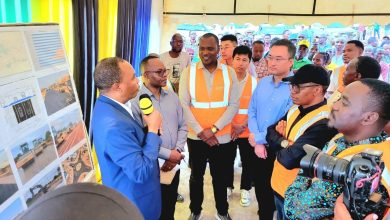
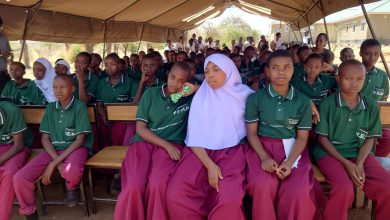
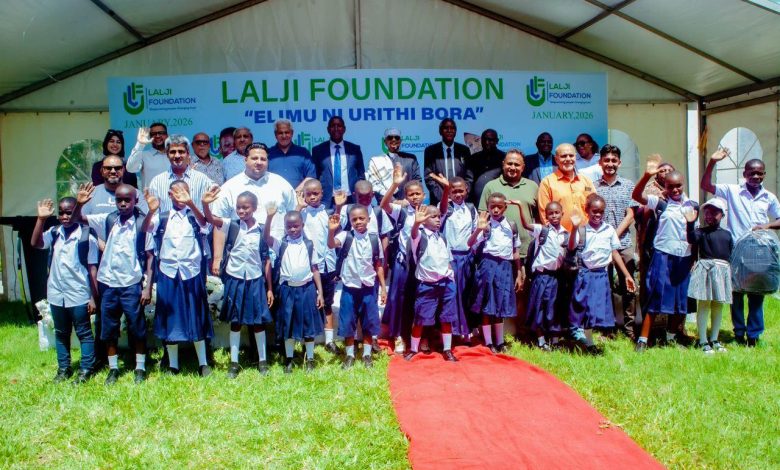
Prof. Mkenda made these remarks during a ceremony held in Dar es Salaam, where LALJI FOUNDATION distributed school uniforms and essential learning materials to 400 children from seven orphanage centres across the city. The initiative forms part of the Foundation’s broader contribution to national efforts aimed at improving access to education for children from underprivileged families, many of whom face challenges that go well beyond the classroom.
While a uniform may appear simple at first glance, its impact is far-reaching. In many communities, the lack of basic school requirements can quietly exclude children from education long before they sit for their first examination.
A missing uniform can delay school attendance, erode confidence, and in some cases discourage a child altogether. By addressing these practical barriers, initiatives such as this one help ensure that children arrive at school not only on time, but also with dignity—and dignity, as educators know well, is a powerful learning tool.
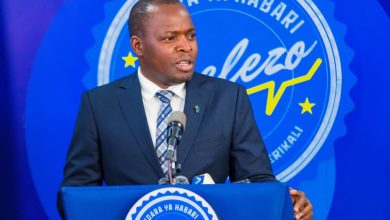
Speaking at the event, Prof. Mkenda said the support provided to vulnerable children demonstrated strong collaboration between the private sector and the Government in promoting equitable and non-discriminatory access to education. He emphasised that such partnerships are essential in translating policy ambitions into real, tangible outcomes at the community level.
“These children will now join their peers at school with happiness and confidence,” Prof. Mkenda said. “They will have uniforms, school bags, shoes, and learning materials just like other students. This is an important step in reducing vulnerability and restoring hope for these children.”
He added that when children feel included and prepared, learning becomes a shared experience rather than a daily struggle. Education, he noted, is most effective when children can focus on lessons rather than worrying about what they lack.
From a national perspective, Prof. Mkenda explained, investments in education produce long-term dividends. Educated citizens are more likely to participate productively in the economy, make informed decisions, and contribute positively to social stability. In short, classrooms today are shaping the workforce, leadership, and communities of tomorrow.
Adding his voice to the discussion, the Commissioner for Education, Mr. Lyabwene Mutahabwa, said the support provided by LALJI FOUNDATION would significantly reduce the challenges children often face at the beginning of the academic year. He noted that for many vulnerable children, the start of school can feel less like an opportunity and more like an obstacle course.
“These children will now attend school on time, without the burden of searching for uniforms or learning materials,” Mr. Mutahabwa said. “This will improve attendance and, ultimately, academic performance.”
He explained that consistent attendance is closely linked to learning outcomes. When students miss school due to preventable challenges, gaps in understanding widen, confidence drops, and the likelihood of dropping out increases. Removing such barriers, he said, allows teachers to teach and students to learn—an arrangement that benefits everyone involved.
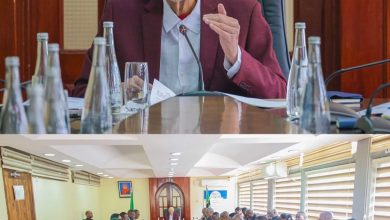
The event also carried a strong moral and spiritual message, delivered by the Chief Sheikh of Tanzania, Mufti Abubakar Zubeir. He urged Tanzanians to uphold acts of compassion within their communities, particularly by supporting families and children in need.
“Giving to those in need is an act of worship that pleases Almighty God,” Mufti Zubeir said. “I call upon the community to give according to their ability, for the reward before God is great.”
He emphasised that compassion is not measured by the size of the contribution, but by the sincerity behind it. Whether through organised initiatives or individual acts of kindness, he said, supporting vulnerable members of society strengthens social bonds and reinforces shared values.
For his part, the Patron of LALJI FOUNDATION, Mr. Mohsin Lalji (Sheni), reaffirmed the Foundation’s commitment to supporting communities across the country. He said education remains a central pillar of the Foundation’s work, alongside health and social welfare, as part of its broader mission to give back to society.
Mr. Lalji noted that while governments carry the primary responsibility for providing public services, sustainable development is best achieved when the private sector and civil society actively participate. He described education as a particularly powerful area of intervention, as its impact extends across generations.
“When you educate a child, you do not only change that child’s future,” he said. “You influence families, communities, and eventually the nation.”
As Tanzania continues its journey toward inclusive development, initiatives such as those led by LALJI FOUNDATION highlight the importance of shared responsibility in nation-building. They serve as reminders that meaningful change often begins with practical action—sometimes as simple as a school uniform, yet as powerful as a renewed sense of belonging.
In a world where conversations about development often revolve around big numbers and complex strategies, this initiative offers a refreshingly human perspective. It shows that progress can also be measured in smiles, confidence, and children walking into classrooms ready to learn—properly dressed, well-equipped, and hopeful.
After all, while education may not solve every problem overnight, it has a remarkable way of making tomorrow look far more promising than yesterday. And that, as both economists and educators would agree, is a return on investment worth pursuing.