How Mwinyi reinterprets Zanzibar Revolution
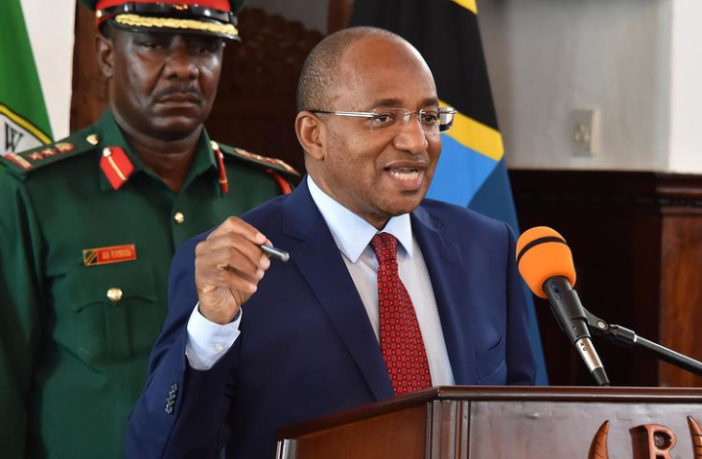
ZANZIBAR: SIXTY-TWO years after the Zanzibar Revolution reshaped the islands’ political and social landscape, its meaning continues to evolve.
For many Zanzibaris today, the Revolution is no longer only a historical event remembered through speeches and parades, but a living promise, measured in jobs created, schools built, hospitals modernised and opportunities expanded.
As Zanzibar marks the 62nd anniversary of the 1964 Revolution, sweeping transformations across key sectors are increasingly being associated with the leadership of President Hussein Ali Mwinyi, who many say has translated the spirit of the Revolution into practical, results-driven governance.
Under President Mwinyi’s Eighth Phase Government, Zanzibar’s economy has undergone a notable turnaround.
Tourism, investment and improved revenue collection have emerged as the main drivers of growth, reinforcing the islands’ role as a regional economic and tourism hub.
The Minister for Economy and Labour, Mr Sharif Ali Sharif, says the anniversary is being celebrated at a time when Zanzibar is enjoying steady economic expansion.
“Economic growth is no longer abstract. It is visible through rising investments, job creation for young people and growing markets for entrepreneurs, including small traders,” he explains.
Tourism remains a cornerstone of this growth, with visitor numbers rebounding strongly in recent years, while government-led reforms have improved the business climate and boosted investor confidence.
At the same time, the adoption of digital systems in revenue collection has significantly strengthened domestic resource mobilisation.
According to Minister for Finance and Planning, Dr Juma Malik Akili, improved tax collection has enabled the government to fund a large share of its development projects internally.
“We are witnessing commendable progress in revenue performance. This has reduced reliance on external funding and allowed the government to invest directly in priority sectors,” he says.
Education has long been central to the revolutionary vision. When the late Abeid Amani Karume, Zanzibar’s first President after the Revolution, declared free education for all, he sought to dismantle social barriers that had denied ordinary citizens access to opportunity.
More than six decades later, President Mwinyi is widely seen as reviving and modernising that same philosophy.
Minister for Education and Vocational Training, Ms Lela Mohamed Mussa, says education has been placed at the heart of the government’s agenda.
ALSO READ: Zanzibar Revolution@60: African leaders commend unity and progress
“Under President Mwinyi, education has received unprecedented attention, modern school buildings, reduced classroom congestion, fully equipped laboratories and the expansion of ICT in schools,” she says.
Across Unguja and Pemba, new classrooms, dormitories and multi-storey schools are easing overcrowding, while vocational and technical training institutions are being strengthened to prepare young people for a changing labour market.
Transforming healthcare delivery Healthcare is another sector reflecting the continuity between Zanzibar’s revolutionary past and its present ambitions.
Just as Karume championed free medical care for all, the current administration has invested heavily in modernising health infrastructure and improving service delivery.
Permanent Secretary in the Ministry of Health, Dr Mngereza Miraji, says the sector has undergone a visible transformation.
“We have seen the construction of modern health facilities, procurement of advanced medical equipment and improved working conditions for health workers,” he explains.
From district hospitals to specialised facilities, access to quality healthcare has expanded, reducing the need for patients to seek treatment outside the islands and improving outcomes for ordinary citizens.
Improved housing was another pillar of Karume’s revolutionary agenda, tied closely to dignity and social justice.
Today, that vision is reflected in new public housing schemes and better living conditions for civil servants, teachers, police officers and medical staff, groups essential to service delivery.
Combined with broader economic reforms, these investments are helping raise living standards while reinforcing social stability.
What distinguishes President Mwinyi’s leadership, observers say, is not only the scale of development projects but the philosophy behind them, one that links economic growth directly to social welfare.
By strengthening revenue collection, promoting investment and prioritising human development, the government has sought to ensure that growth translates into tangible benefits for citizens.
For many Zanzibaris, this approach echoes the founding ideals of the Revolution: equality, access to basic services and shared prosperity, reinterpreted for a globalised, digital era.
As Zanzibar commemorates 62 years since the Revolution, the conversation is increasingly forward-looking.
The legacy of Karume, free education, free healthcare and improved housing, remains a moral compass, while President Mwinyi’s administration is shaping how those ideals are delivered in practice.
From classrooms and hospitals to markets and tourism corridors, the changes unfolding across the islands suggest that the Revolution’s promise is being renewed, not through rhetoric alone, but through measurable progress in people’s daily lives.
In that sense, the 62nd anniversary is not only a moment of remembrance, but a reminder that the Revolution, as President Mwinyi has interpreted it, is still very much a work in progress.