RDTC’s more than 30 years of providing skin diseases solutions through dermatology education
KILIMANJARO: SKIN health remains a vital yet often under-prioritised component of public health globally. Across East, Central and Southern Africa, skin diseases continue to rank among the leading causes of outpatient visits.
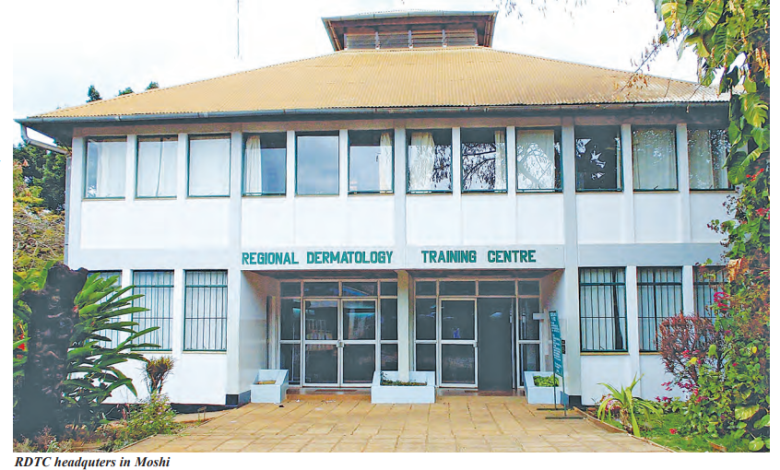
These challenges have led to the establishment of various movements aimed at combating skin diseases that continue to grow rapidly in various parts of the world. One of the fruits of these movements is the establishment of the Moshi based Regional Dermatology Training Centre (RDTC) in Kilimanjaro region.
In his presentation during the 31st Continue Medical Education of the Regional Dermatology Training Centre (the 2026 CME of the RDTC) conference recently, the President of the International League Dermatological Societies (ILDS) Professor Henry Lim, said the RDTC was founded in 1992, through the joint efforts of ILDS, International Foundation for Dermatology (IFD), Tanzania’s Ministry of Health Kilimanjaro Christian Medical Centre (KCMC) and THE Good Samaritan Foundation (GSF).
“These efforts were strengthened by Alfred Kopf, International-respected cutaneous Oncology, the First US dermatologist to use dermoscopy, Terence Ryan, together with Henning Grossmann and John Masenga; the efforts of these experts funds and attention were mobilised internationally; a landmark effort was Prof Kopf’s establishment of the “500 USD Club” and the Endowment Fund for IFD/ILDS, which enabled the construction of the RDTC’s main building”, he noted.
He added: “There are 231 dermatology related member societies, with over 170,000 dermatologists in 110 countries including those from African countries; RDTC has trained more than 90 per cent of dermatologists from 17 African countries”.
For his part, the Director General of the East, Central and Southern Africa Health Community (ECSA-HC), Dr Ntuli Kapologwe says you cannot separate the success in the dermatology sector from the RDTC establishment, which he says apart from providing dermatology education it (RDTC) also focused on manufacturing products that are important when it comes to treating skin diseases.
He continues to say that in addition to these successes, the RDTC management has also come up with the idea of establishing the CME of the RDTC conference which he says in one way or another contributes annually to skin disease treatment experts meeting together and exchanging experiences and even expertise related to their profession.
“On behalf of the ECSAHC and on my own behalf, I wish to extend my sincere appreciation to the RDTC, the KCMC Zonal Referral Hospital and International Dermatology community for hosting this important scientific gathering and for your sustained contribution to strengthening dermatology and dermatopathology training across the ECSA region.
“I commend RDTC and KCMC Zonal Referral Hospital for its leadership in advancing the skin health agenda, including efforts toward local manufacturing of skin ointments or sun screen for people with albinism,” he said.
Dr Kapologwe continues to say that RDTC’s efforts in collaboration with other stakeholders is a powerful example of how innovation aligns with Africa’s broader agenda on local production, self-reliance and health sovereignty which are agendas at the centre of ECSA health community core business.
“I also commend the organisers for bringing together dermatologists, public and global health experts, subspecialists, researchers and trainees from across Africa and beyond; this multidisciplinary and multinational engagement reflects the very spirit upon which ECSAHC was founded about 52 years ago.”, he says, adding, ECSA–HC will continue to work closely with RDTC and other stakeholders to advance the skin health agenda.
Dr Kapologwe said there were needs to establish a dedicated youth wing to champion skin health advocacy, whereby he says, young people must be placed at the centre of dermatology profession’s related conversations, solutions, a move which he says will help to achieve sustainable impact in the dermatology health sector.
“Furthermore, I wish to underscore the urgency of expediting the establishment of the ECSA College of Dermatology. I am aware that discussions toward this goal commenced over two years ago but have yet to reach fruition; under my leadership, I am determined to see this important initiative take off. “I therefore call upon your support in convening the curriculum development process, following the proven model adopted by the eleven existing ECSA colleges; together, we can transform this long-held aspiration into a lasting institutional legacy for skin health in our region,” he noted.
In her presentation, the Vice-Chair of the International Foundation for Dermatology, Prof Ether Freeman said, there were more than 4 billion people living with skin disease around the world and that, less than half have access to healthcare for their skin diseases.
“According to the World Health Organisation, over 2 billion people globally (one third of the population), do not have regular access to essential medicines; in some of the lowest-income countries in Africa, more than half of the populations have no regular access to essential medicines. “We need a framework that captures the complexity of delivering care in dermatology; it is important to know the number of dermatologists, paediatric dermatologists, dermatopathologists as well as the number of surgically oriented dermatologists,” she said.
ALSO READ: Access to capital drives development journey
Prof Esther continued to say that, having a full range of dermatology providers will help monitor the ongoing efforts to treat this disease, which is one of the biggest health challenges and thus address challenges that will appear to be hampering efforts to treat skin diseases.
For his part the coordinator of the conference who is also the Principal of the RDTC Prof Daudi Mavura, said that the conference was aimed at bringing together former RDTC alumni and other dermatology related experts to among other things, exchange experiences and knowledge related to dermatology.
“In the past we used to meet with a few participants not exceeding 60; last year, we expanded the scope of participation whereby there were more than 500 participants as is the case this year; this helps skin disease treatment experts to meet and gain additional knowledge”, he said.
Prof Mavura continued by saying that the conference enables skin care experts to see through the gathering skin treatment in its diversity due to the real fact that skin diseases are not treated in a conventional manner as seen in the treatment of other diseases.