Why Kwimba DC advocates embracing of Universal Health Insurance Act

MWANZA: THE Kwimba District Commissioner (DC) in Mwanza region, Mr Ng’wilabuzu Ludigija, has urged residents of the district, particularly food vendors, motorcycle (bodaboda) riders, and the general public to fully embrace the Universal Health Insurance (UHI) scheme, describing it as a critical social protection mechanism that will help citizens cope with health-related challenges and unexpected medical expenses.
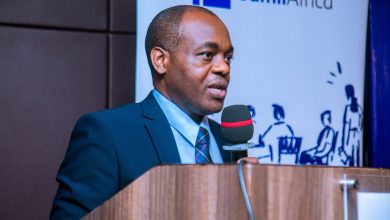
Mr Ludigija made the remarks recently while speaking at a special meeting held in the district that brought together officials from the National Health Insurance Fund (NHIF). The meeting aimed to discuss in depth the implementation of the Universal Health Insurance Act, provide education to leaders and the community, receive feedback from stakeholders and strengthen public understanding of the importance of having health insurance coverage.
The meeting brought together a broad spectrum of stakeholders, including healthcare professionals from both government and private health facilities, religious leaders, ward and village executive officers, heads of public and private institutions, representatives of ‘mama lishe’ groups, bodaboda riders and members of the general public.
Addressing the gathering, the District Commissioner emphasised that UHI is not merely a government policy but a life-changing initiative aimed at ensuring equitable access to healthcare services for all Tanzanians, regardless of income level or employment status.
He stressed that public servants at all levels bear a significant responsibility in ensuring that the scheme is well understood and effectively implemented, especially for vulnerable and economically disadvantaged groups.
“We must prepare ourselves as public servants who will be responsible for supervising and implementing this programme. It is crucial that citizens clearly understand the importance of health insurance for all so that when the implementation officially begins particularly for low-income and vulnerable groups, they can access services easily and without unnecessary challenges,” Ludigija said.
He further explained that Kwimba District has already started mapping and identifying various occupational and social groups, including bodaboda, small-scale traders and other self-employed individuals. This approach, he said, will makes it easier for the district authorities to reach these groups, provide targeted education and ensure their inclusion in the insurance system.
Mr Ludigija revealed that he has instructed the Officer Commanding District (OCD), in collaboration with the District Transport Officer (DTO), to establish a structured mechanism for mobilising bodaboda riders across all five divisions of the district.
”The meetings will not only focus on health insurance education, but will also cover road safety, legal compliance, entrepreneurship skills and other social and economic issues affecting the group.
“These platforms will allow various institutions to reach bodaboda riders directly with important messages, including entrepreneurship education, financial literacy, disaster preparedness and community development initiatives,” he said.
Mr Ludigija pointed out that bodaboda riders remain among the groups mostly affected by road crashes, often facing high medical costs that push families into financial hardships. He noted that UHI will provide a safety net, ensuring timely and affordable access to treatment and rehabilitation services.
ALSO READ: Small risks, big vision behind a young entrepreneur
He further said that the initiative aligns with the broader vision of President Samia Suluhu Hassan, whose administration is committed to strengthening social services and ensuring that all citizens including those in the informal and self-employed sectors enjoy good health and improved quality of life.
On his side Kwimba District Medical Officer (DMO), Dr Fredrick John, described the education campaign on UHI as a major reform that will positively impact every Tanzanian household.
Dr John explained that the government has established clear mechanisms to identify poor and vulnerable households, enabling them to receive targeted support and ensuring that no citizen is left behind due to financial constraints.
He said that residents are encouraged to contribute 150,000/- per household of up to six members, an amount that will allow beneficiaries to access comprehensive medical services from the lowest level of care at dispensaries, through health centres and up to regional, zonal, and national referral hospitals.
“This is a historic opportunity for the people of Kwimba District. With a relatively small contribution, an entire family can access a full range of healthcare services without fear of catastrophic medical expenses,” said Dr John.
He added that the UHI scheme is expected to be officially launched in this January 2026 by the President. Following the launch, registration and service delivery will begin immediately after official guidelines and operational directives are issued by the relevant authorities.
Dr John also called on community leaders, religious institutions and civil society organisations to actively participate in sensitising the public so that enrolment rates are high when the programme starts. Meanwhile, the Chairperson of Bodaboda Transport Officers in Ngudu Ward, Mr John Masele, welcomed the initiative and pledged to act as an ambassador for the scheme among bodaboda riders and the wider community.
“This health insurance scheme will be a major lifeline for us bodaboda riders. Our work exposes us to many risks, especially road accidents. We fully support this initiative and commend President Samia Suluhu Hassan for her vision and commitment to improving the welfare of ordinary citizens,” he said.
On his part, the Mwanza Acting Regional Manager of the NHIF, Dr Obed Kabinza, provided a detailed explanation of how the UHI scheme will operate. He said the scheme will include a community insurance package costing 150,000/- per household, covering up to six family members and offering access to 372 healthcare services available at NHIFaccredited health facilities nationwide.
Dr Kabinza added that NHIF will continue to offer complementary insurance packages to cater to different population groups. These include a student health insurance package costing 50,400/- per student per year, as well as the Toto Afya package designed for children who are not enrolled in school.
He further mentioned additional NHIF packages such as Ngorongoro Afya, Mikumi, Serengeti and Tanzanite, noting that the Tanzanite package provides the most extensive range of additional benefits.
He explained that recent system improvements now allow these packages to be registered using a household model of up to six members, making enrolment more flexible and accessible. Dr Kabinza concluded by urging citizens to seek accurate information from NHIF offices and authorised officials, warning against misinformation and emphasising that early preparation and understanding will ensure smooth implementation once the programme officially begins.