

Kagera records significant development gains over five years

BUKOBA: KAGERA Region has recorded significant economic and social development between 2020 and 2025 following a government allocation of 1.131tri/- for development projects.
The region’s Gross Domestic Product (GDP) increased from 3.7tri/- in 2020 to 4.9tri/- in 2025, reflecting sustained growth across key sectors.
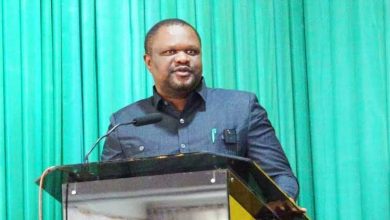
In his New Year message, Kagera Regional CCM Chairman, Dr Nazir Karamagi, said the investments had brought remarkable improvements in health, education, infrastructure, water, energy, agriculture, livestock and fisheries.
“On behalf of Kagera residents, I thank the government for the significant socio-economic transformation experienced over the past four years under the leadership of President Samia Suluhu Hassan, during which more than 1.131tri/- was disbursed for development projects between November 2020 and April 2025,” Dr Karamagi said.
He added that within a short period, the region had undergone a historic transformation that positively impacted people’s lives.
“In line with President Samia’s commitment to saving lives, the government has worked tirelessly to strengthen health services and these efforts deserve continued support,” he said.
Dr Karamagi noted that the health sector recorded notable progress, with 146.3bn/- invested, increasing the number of health facilities from 249 to 336.
The number of hospitals rose from three to 11, following the construction of seven new district hospitals in Bukoba District Council, Biharamulo, Ngara, Karagwe, Kyerwa, Missenyi and Bukoba Municipal Council.
Construction of a district hospital in Muleba District has reached 40 per cent completion.
Health centres increased from 29 to 42, while dispensaries rose from 217 to 283. Availability of medicines improved from 85 to 93 per cent, while the health budget grew from 100.6bn/- to 146.3bn/-.
The education sector also registered major improvements, with the budget rising from 96.7bn/- in 2020 to 128.1bn/- in 2025.
The number of primary schools increased from 942 to 1,058, while secondary schools rose from 224 to 292. Classrooms in primary schools expanded from 7,074 to 9,815, while secondary school classrooms increased from 2,522 to 4,480.
He further highlighted growth in student enrolment and an increase in government-employed teachers from 11,564 to 13,021.
ALSO READ: Year Ender: Geological conservation drives sustainable development
Access to clean water also improved, with rural coverage rising from 76 to 83 per cent, while urban coverage increased from 85 to 93 per cent.
In the energy sector, all 662 villages in Kagera Region have been connected to electricity, while 1,763 out of 3,665 hamlets, equivalent to 48.1 per cent have been electrified through the Rural Energy Agency (REA).
Biharamulo and Ngara districts, which previously depended on electricity from Uganda, are now connected to the national grid.
Transport infrastructure also improved, with roads linking regional and district centres expanding from 783.1 kilometres to 800.76 kilometres, while urban roads increased from 34.17 kilometres to 40.87 kilometres.
Port development was prioritised, with 26.2bn/- allocated for upgrades.
Kemondo and Bukoba ports have both reached 100 per cent completion. Economically, revenue from minerals increased from 1.66 million US dollars (about 4.1bn/-) to 2.25 million US dollars (about 5.6bn/-), while the number of licensed small-scale miners rose from 198 to 1,555.
Under the Tanzania Social Action Fund (TASAF), 380,035 poor households received 34.858bn/- to improve their livelihoods.
“These achievements demonstrate the government’s commitment to improving the welfare of the people of Kagera and accelerating regional development,” Dr Karamagi said.


Здесь портале вы сможете получить интересную информацию.
https://1-mk.ru/detail/268-taynye-signaly-v-khudozhestvennom-skandale-kak-predosterezheniya-zheny-ernsta-neizvestnogo-predvoskhitili-falsifikatsii/
Флеш-накопитель объёмом 2 ГБ и оригинальные флешки для мужчин в Новокузнецке. Сладкий сувенир с фирменным знаком стоимость и пакеты оптом в Нижневартовске. USB-флешка 128 ГБ и нанесение с флешки рядом со мной в Томске.
https://usb-flashki-optom-24.ru/