TZ at centre of shaping Africa’s energy ambitions
DAR ES SALAAM: THE year 2025 stands out as a defining moment that ignited renewed hope for a resilient energy future in Africa, with Tanzania firmly at the centre of efforts to shape and realise the continent’s energy ambitions.
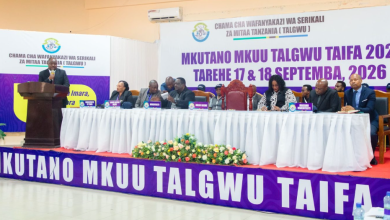
An iconic year in Africa’s energy history, 2025 saw Tanzania host the Mission 300 Africa Energy Summit in Dar es Salaam from January 27 to 28, bringing together key stakeholders committed to expanding electricity access to millions of homes and businesses while bridging the continent’s persistent energy gap.
The summit was hosted by the Government of Tanzania in partnership with three major institutions: The African Union (AU), the African Development Bank (AfDB) Group and the World Bank Group.
The two-day event attracted more than 2,000 participants, including Heads of State from 10 African countries, senior government officials, development partners and private-sector stakeholders.
Deliberations focused on practical strategies to help African countries achieve the ambitious goal of providing electricity to more than 300 million people by 2030.
Tanzania used the platform to demonstrate its leadership in Africa’s energy transformation, highlighting efforts to expand electricity access in both rural and urban areas while positioning itself to generate surplus power for export, an approach aimed at strengthening regional integration and economic diplomacy.
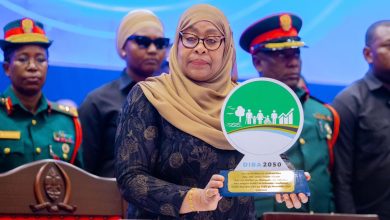
The summit was presided over by President Samia Suluhu Hassan, who in her opening address reaffirmed Tanzania’s commitment to increasing electricity access from current levels to over 75 per cent, with the ultimate goal of achieving universal access by 2035.
ALSO READ: Tanzania boosts youth skills for market demands
In her role as Africa’s Champion for Clean Cooking Energy, President Samia emphasised the critical importance of access to electricity and clean cooking solutions in improving the lives of women and girls, while ensuring inclusive development that leaves no one behind.
She informed the summit that Tanzania’s current power generation capacity is sufficient to meet demand, supported by a well-diversified energy mix comprising hydropower, natural gas and geothermal energy.
To realise the country’s energy targets over the next five years, President Samia said an estimated 13 billion US dollars (approximately 32.8tri/-) will be required, with 5 billion US dollars (about 12.5tri/-) expected to come from the private sector.
She noted that Tanzania’s energy priorities will focus on increasing generation capacity, strengthening regional interconnections, expanding rural electrification and promoting clean cooking energy. On power generation, the President said Tanzania’s installed capacity currently stands at 3,431.2 megawatts (MW), with 58 per cent from hydropower, 35 per cent from natural gas and 7 per cent from other sources.
“Our target is to add 2,463 MW from solar, natural gas, wind, geothermal and other sources by 2030,” she said.
“Our target is to add 2,463 MW from solar, natural gas, wind, geothermal and other sources by 2030,” she said. In terms of regional integration, Tanzania is currently interconnected with four of its eight neighbouring countries.
To further enhance connectivity, the Tanzania–Zambia interconnector, part of the Zambia–Tanzania–Kenya (ZTK) project, is under development. Once commissioned, the ZTK interconnector will enable electricity trade between the Southern African Power Pool (SAPP) and the East African Power Pool (EAPP), allowing power to flow along the longest continental corridor from Cape Town, South Africa, to Cairo, Egypt and vice versa.
As part of the broader initiative to expand electricity access and clean cooking solutions, major financial commitments were announced.
The World Bank Group pledged 30–40 billion US dollars, the African Development Bank Group committed 10–15 billion US dollars, while the Rockefeller Foundation pledged 20 billion US dollars towards connecting half of the 600 million people without electricity in sub-Saharan Africa.
Additional support came from other multilateral and financial institutions, including the Islamic Development Bank (2.65 billion US dollars), the Asian Infrastructure Investment Bank (1.5 billion US dollars), the OPEC Fund (1 billion US dollars, with additional financing expected) and the Agence Française de Développement (AFD) (1 billion US dollars).
In a historic moment, Heads of State adopted the Dar es Salaam Declaration, a landmark commitment to accelerating electricity access across the continent and unlocking Africa’s vast energy potential. The declaration sets an ambitious target of providing affordable electricity to 300 million people within the next five years, while outlining strategies to lower electricity costs, reduce reliance on firewood and scale.
up clean energy production offering renewed hope for a sustainable future for millions of Africans. As a key member of the East African Power Pool, Tanzania plans to increase electricity generation by 2,463 MW by 2030, requiring investment of 13 billion US dollars.
The initiative has received strong backing, with approximately 40 billion US dollars committed by the African Development Bank and the World Bank. AfDB President Dr Akinwumi Adesina stressed that achieving universal access to electricity is essential for Africa’s economic transformation.