Coffee production set for new chapter
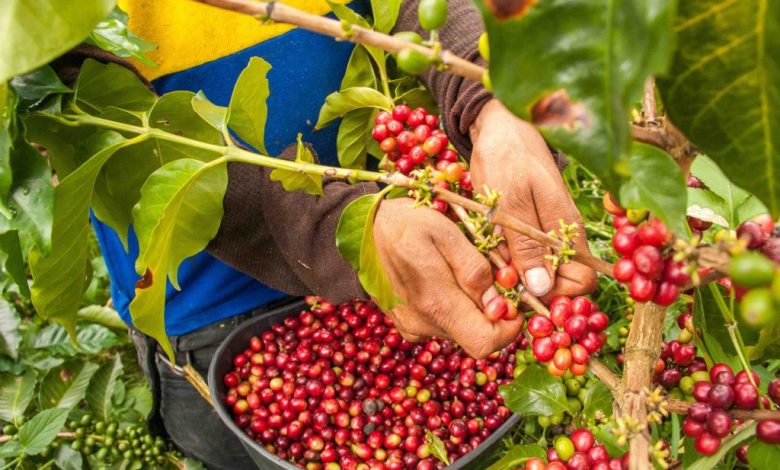
DAR ES SALAAM: THE year 2025 marked a renewed spotlight on coffee, with producing countries converging in Tanzania to chart a new path towards transforming the industry across the continent.
Leaders from 25 African coffee-producing countries resolved to overhaul Africa’s coffee sector by prioritising value addition, youth employment, regional trade and innovation during the 3rd G25 African Coffee Summit, held in Dar es Salaam early this year.
Held under the theme ‘Unlocking Employment Opportunities for Youth Through Regeneration of the African Coffee Industry,’ the two-day summit brought together Heads of State, ministers, ambassadors, farmers, private sector stakeholders and development partners to map out a new direction for Africa’s coffee value chain.
Opening the summit, Government Chief Spokesperson and Permanent Secretary in the Ministry of Information, Culture, Arts and Sports, Mr Gerson Msigwa, said the meeting aimed to provide Tanzanian and African coffee producers with an opportunity to forge partnerships and networks with counterparts from other countries, thereby opening new markets and investment opportunities.
Mr Msigwa underscored the importance of the summit, noting that Tanzania’s coffee industry has registered notable growth, with production increasing from 55,000 tonnes to 85,000 tonnes, while export earnings have expanded to about 240 million US dollars (over 621bn/-).
He said Africa’s share of the global coffee market remains small relative to its vast potential, but the summit offered a platform to drive meaningful transformation of the sector.
In his address to delegates, the then Minister for Agriculture, Mr Hussein Bashe, reiterated the need for a fundamental shift in how Africa conducts its coffee business.
“Tanzania produces some of the world’s finest coffee beans, but as African producers, we continue to trade raw materials rather than final products,” he said, urging African nations to embrace value addition to boost incomes, create jobs and shield farmers from global price volatility.
“We must embed coffee in our daily culture and create more opportunities within the value chain,” he added.
Mr Bashe observed that Africa exports raw coffee beans while importing finished coffee products at significantly higher costs, a practice that denies the continent much-needed revenue and employment opportunities.
“The transformation of this sector cannot be successful in isolation. We must work together,” he stressed.
Ministers and industry representatives agreed that expanding processing capacity and diversifying coffee products would significantly increase returns for farmers and producers.
ALSO READ: HRNS inaugurates coffee, climate programme to boost coffee production
Deliberations focused on strengthening policy frameworks, improving access to affordable financing and promoting public-private partnerships across the coffee value chain.
A major outcome of the summit was the unanimous adoption of the Dar es Salaam Declaration, which commits member states to ambitious targets aimed at revitalising Africa’s coffee industry.
Under the declaration, member states pledged to increase coffee value addition and domestic consumption, while investing in research and innovation, including the development of high yielding and climate-resilient coffee varieties.
Reading out the provisions of the declaration, Mr Bashe said at least 50 per cent of Africa’s coffee production should be roasted and traded within or outside the continent by 2035, a move intended to retain more value in Africa and create jobs along the value chain.
Member states also resolved to support research in coffee value addition, foster innovation and adopt modern technologies to improve production, processing and market delivery.
The declaration further calls for the establishment of Centres of Excellence for Coffee and an African Centre for Coffee Research to enhance knowledge sharing and skills development.
In addition, summit participants requested the African Union (AU) to represent the Inter-African Coffee Organisation (IACO) in negotiations with international regulatory frameworks affecting coffee trade, including the European Union Deforestation Regulation (EUDR) and other emerging standards.
Youth and women engagement featured prominently throughout the summit.
Ministers acknowledged that an ageing farming population and limited youth participation pose a threat to the future of the sector.
They called for targeted training programmes, improved access to credit and the promotion of innovation and entrepreneurship to attract young people into coffee production, processing and marketing.
Regional integration under the African Continental Free Trade Area (AfCFTA) was identified as a key driver for boosting intra-African coffee trade.
Delegates urged the harmonisation of coffee standards and the removal of trade barriers to enhance competitiveness and market access across the continent.
IACO Secretary-General, Ambassador Solomon Rutega, emphasised the importance of collective negotiation and coordinated support for value addition initiatives.
He said the recognition of coffee as a strategic commodity under the AU Agenda 2063 has paved the way for stronger policy alignment, increased investment and enhanced cooperation among African producer nations.
As the summit concluded, delegates agreed that the next G25 African Coffee Summit will be held in 2027 in Addis Ababa, Ethiopia, signalling continuity in continental efforts to upscale the coffee sector.