Unemployed but undeterred, turning survival into success
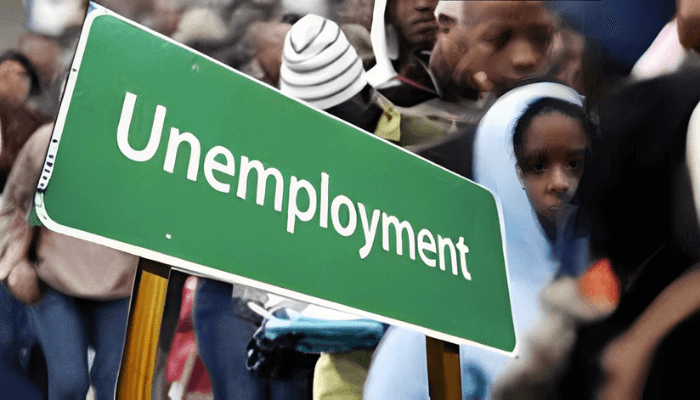
DAR ES SALAM: AT just 32 years old, Halary Msoka embodies a powerful truth often overlooked in conventional success stories: life’s unexpected detours can sometimes lead to the most fulfilling destinations.
Today, he is a thriving businessman in Dar es Salaam, owning and operating multiple shops in some of the city’s most competitive trading hubs.
Yet his journey to entrepreneurship did not begin behind a counter or in a bustling market. It began in lecture halls, laboratories and hospital corridors, shaped by years of medical training and a dream of professional service in the health sector.
Msoka currently runs businesses in Kariakoo, Kimara Mwisho and Kimara Korogwe in Dar es Salaam, areas well known for intense competition, fast-moving goods and demanding customers.
These locations are not for the faint-hearted. Success there requires resilience, adaptability and constant learning. For Msoka, these traits were not born overnight; they were forged through an unexpected transition that began shortly after graduation.
In 2020, he completed his studies at Kilimanjaro Christian Medical College (KCMC) Hospital in Kilimanjaro, earning a Degree in Medical Laboratory Sciences. With solid training in health sciences and pharmacy-related disciplines, his ambition was clear and straightforward: to secure formal employment in the medical field and contribute directly to patient care.
Like many graduates, he stepped into the job market with optimism, believing education would naturally lead to opportunity. Reality, however, told a different story. Job openings were scarce, competition was fierce and months passed without success. Speaking in an interview with Daily News, Msoka recalled the frustration of that period.
“After completing my studies, I searched for employment for a long time,” he said. “Opportunities were limited and competition was high. I realised I could not afford to sit and wait.” Faced with prolonged unemployment, Msoka made a difficult but decisive choice.
ALSO READ: Academics told to turn research into action
Instead of waiting indefinitely for a job that might never come, he turned to business. What initially began as a survival strategy gradually evolved into a genuine passion and a long-term career path. With small personal savings and modest support from close family members, he took his first steps into trade.
Unlike his academic training, entrepreneurship offered no textbooks or structured lectures. His classroom became Kariakoo Dar es Salaam’s commercial nerve centre and one of East Africa’s busiest trading zones.
There, amid crowded streets and relentless bargaining, Msoka learned the fundamentals of business the hard way. He mastered price negotiations, stock management, customer relations and the art of staying afloat in a highly competitive environment. The work was demanding.
Days often began early in the morning and stretched late into the night. The pressure was constant and mistakes were inevitable. Yet every challenge brought a lesson.
Over time, persistence began to pay off. The small business stabilised, profits improved and confidence grew. Gradually, Msoka expanded. From his initial shop in Kariakoo, he opened another outlet in Kimara Mwisho, followed later by Kimara Korogwe, strategically positioning himself in fast-growing residential areas with strong consumer demand.
Each new shop represented not just growth, but proof that consistency and patience could yield tangible results. “Business rewards consistency,” Msoka said. “If you show up every day, listen to customers and reinvest your profits, growth comes.” This simple philosophy has guided his expansion and continues to shape his management style.
The journey, however, has not been without serious obstacles. Msoka openly acknowledges the challenges he faces as a small and medium-sized entrepreneur. Limited capital has often restricted expansion plans.
Fluctuating prices of goods make planning difficult, while high rental costs cut into profits. Unreliable suppliers can disrupt operations without warning and security concerns remain a constant worry. Managing staff has also tested his leadership skills. Finding trustworthy employees, preventing losses and maintaining discipline require constant attention.
“There are losses that don’t show on paper,” he admits. “Stress, fatigue and mistakes. But they shape you.” These unseen costs, he believes, are part of the price of independence.
Despite the difficulties, the rewards of entrepreneurship have been substantial. Business has given Msoka financial independence and the ability to support his family. Perhaps more importantly, it has enabled him to create employment opportunities for other young people, many of whom face challenges similar to those he once experienced.
Unlike formal employment, entrepreneurship has allowed him to grow at his own pace, set his own goals and dream without rigid limits. It has transformed his outlook on success, shifting it from job titles to impact and sustainability.
To unemployed graduates and young people who feel stuck after completing their studies, Msoka offers a clear and practical message: start small, but start. He firmly rejects the notion that pursuing business means education has been wasted.
“Your degree is not wasted,” he emphasises. “Education gives you discipline and thinking skills. Even in business, what I learned in science accuracy, record-keeping, ethics helps me every day.” His academic background, he believes, continues to influence how he runs his enterprises, from inventory control to customer trust.
Looking ahead, Msoka hopes to reconnect his health sciences training with entrepreneurship. His longterm vision includes investing in health-related businesses such as pharmaceutical outlets and diagnostic services, while continuing to expand his presence in Kariakoo.
By combining scientific knowledge with business experience, he aims to create ventures that are both profitable and socially valuable. For Msoka, the white coat may no longer be his daily uniform, but it remains an integral part of his identity.
His journey reflects the reality facing many young people today where education does not always lead directly to employment, but can still serve as a foundation for innovation and resilience.
In a country where countless youths struggle to translate academic qualifications into opportunity, Halary Msoka’s story stands as both realistic and inspiring. It is a reminder that when one door closes, determination, adaptability and creativity can open many others and sometimes lead to destinations richer than originally imagined.