Journalists safeguard Tanzania’s unity, enduring Union
ZANZIBAR: FOR more than six decades, the Union between Tanganyika and Zanzibar has stood as one of Africa’s most remarkable political achievements, an enduring voluntary partnership between two formerly sovereign states.
Its survival amid shifting political winds, regional tensions and global change is no accident.
It rests on shared history, strong constitutional foundations, visionary leadership and, increasingly, the role of the media in shaping public understanding.
Today, as misinformation spreads faster than facts and younger generations grow further removed from the Union’s formative moments, journalists are being called upon to assume a renewed responsibility: To educate, inform and inspire patriotism while safeguarding national unity.
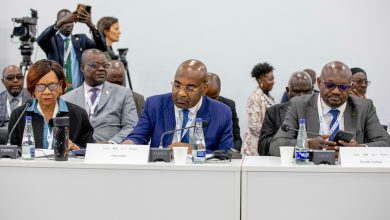
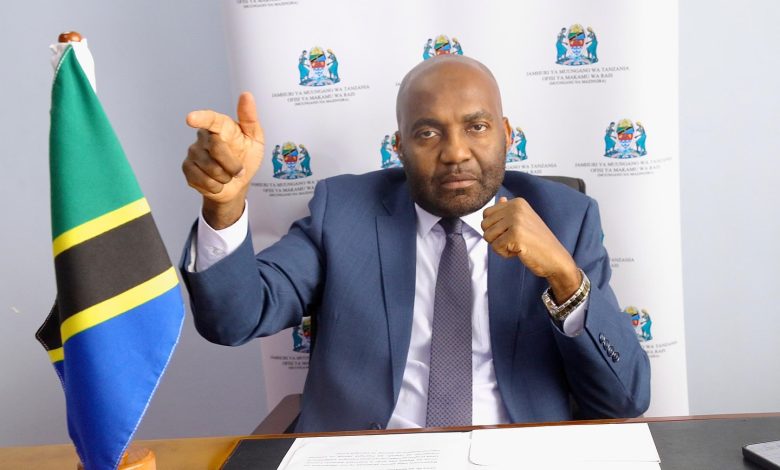
This call was forcefully articulated last Friday (December 19, 2025) during a seminar for Zanzibar-based media editors on Union affairs, opened by the Minister of State in the Vice-President’s Office (Union and Environment), Engineer Hamad Yussuf Masauni. His message was clear: “Peace, stability and national cohesion in Tanzania are inseparable from the Union, and the media are among its most important custodians.”
At the heart of this responsibility lies the Constitution of the United Republic of Tanzania; and same in Zanzibar Constitution. Article 18 guarantees every citizen the right to seek, receive and impart information regardless of national boundaries.
Yet, as Eng Masauni cautioned, constitutional freedoms are not absolute in isolation. Proper interpretation requires reading each provision in harmony with others, including obligations to protect public order, unity and the rights of fellow citizens.
This principle mirrors Article 19 of the International Covenant on Civil and Political Rights (ICCPR), which Tanzania has ratified, and which underscores the need to avoid reporting that fuels hatred, discrimination, fanaticism or misinformation. In practical terms, this places journalists at a critical intersection between freedom and responsibility.
The media must remain free, independent and courageous but also ethical, accurate and nationally conscious. Minister Masauni argues “In an era dominated by social media, where rumours and propaganda can easily masquerade as news, it is important to think twice.” The stakes are particularly high because of Tanzania’s demographic reality.
According to the 2022 Population and Housing Census, young people account for 34.5 per cent of the population, while more than 70 per cent of Tanzanians were born after the Union was formed in 1964.
ALSO READ: How women coffee farmers are transforming Songwe’s economy, society
For many, the Union is a lived reality but not a deeply understood history. Without deliberate efforts to explain how it came into being, why it matters and how it benefits citizens on both sides, misinformation can fill the vacuum. This is where journalism transcends daily reporting and enters the realm of civic education.
As Eng Masauni and other leaders emphasised, the media are uniquely positioned to tell the Union’s story where the nation came from, where it stands today and where it is heading.
This includes explaining constitutional provisions, laws and governance arrangements in accessible language, while highlighting tangible and intangible benefits such as peace, security, economic integration, shared resources and strengthened international standing. Importantly, promoting the Union does not mean ignoring its challenges.
Rather, it calls for responsible framing. Of the 25 identified Union-related challenges or matter of dispute, 22 have already been resolved, with only three remaining under active consideration.
Reporting this progress alongside ongoing debates provides citizens with a balBy ISSA YUSSUF FOR more than six decades, the Union between Tanganyika and Zanzibar has stood as one of Africa’s most remarkable political achievements, an enduring voluntary partnership between two formerly sovereign states. Its survival amid shifting political winds, regional tensions and global change is no accident.
It rests on shared history, strong constitutional foundations, visionary leadership and, increasingly, the role of the media in shaping public understanding.
Today, as misinformation spreads faster than facts and younger generations grow further removed from the Union’s formative moments, journalists are being called upon to assume a renewed responsibility: To educate, inform and inspire patriotism while safeguarding national unity.
This call was forcefully articulated last Friday (December 19, 2025) during a seminar for Zanzibar-based media editors on Union affairs, opened by the Minister of State in the Vice-President’s Office (Union and Environment), Engineer Hamad Yussuf Masauni.
His message was clear: “Peace, stability and national cohesion in Tanzania are inseparable from the Union, and the media are among its most important custodians.” At the heart of this responsibility lies the Constitution of the United Republic of Tanzania; and same in Zanzibar Constitution. Article 18 guarantees every citizen the right to seek, receive and impart information regardless of national boundaries. happens again,” he said.
The Pentecostal Assemblies of God Tanzania (PAG) Church Bishop for Bariadi, Simiyu Region, Marco Maduhu said that what happened in the country on October 29, this year should serve as a major lesson to all Tanzanians.
“Now everyone has seen when peace disappears, its consequences affect everyone. This is a powerful lesson that peace is everything and toying with peace is more dangerous than anything else,” he said.
ALSO READ: Street vendors, bajaji, bodaboda unite for peace, reject unrest
Earlier, the Prime Minister Dr Mwigulu Nchemba called on Tanzanians to unite and ensure that the violence and unrest experienced during and after the October 29th General Election will “never happen again.” Dr Nchemba also reaffirmed the government’s commitment to safeguarding Tanzania and its natural resources, warning that the nation must remain alert to groups seeking to destabilise the country.
Dr Mwigulu was speaking in a meeting with media editors on November 25, this year at the Julius Nyerere International Convention Centre (JNICC) in Dar es Salaam.
He condemned the incidents, which led to the loss of lives and destruction of public property, labelling them as ‘economic sabotage.’
The Premier reflected on the tragic events that unfolded during and after the election period, saying it has left deep scars on the nation. He highlighted the significant costs, both human and material that Tanzanians had to bear.
“My plea is for all of us, each with our own conscience, to declare that such an event should never happen again in our land. It is not a blessing; it creates wounds that will not heal and it costs us dearly,” Dr Nchemba said.
He pointed out that the damage caused by the unrest had extended beyond just lives lost and infrastructure destroyed. anced picture, one that builds confidence rather than cynicism.
Eng Masauni outlined practical guidelines to support this mission: Ensure Union-related information is accurate and sourced from credible authorities; facilitate constructive debates free from incitement and highlight achievements alongside challenges.
The Zanzibar Minister of State- Second Vice-President (Policy, Coordination and House of Representatives), Mr Hamza Hassan Juma, who is also responsible for Union Affairs, called on Journalists to educate the public on history, the Constitution and the benefits of the Union and provide balanced platforms that accommodate diverse views without fostering hostility.
He said these principles do not constrain journalism, they strengthen it, and asked Journalists and media to act responsibly. Scholars and elders who addressed the seminar reinforced this message.
Dr Abdallah Mkumbukwa traced the Union’s uniqueness to a shared history of brotherhood and joint liberation struggles, anchored in the close cooperation between the late Mwalimu Julius Kambarage Nyerere and the late Sheikh Abeid Amani Karume. Dr Saleh Yussuf Mnemo stressed that safeguarding this legacy is not optional; it is a duty owed to future generations.
Elders Hamad Rashid and Ali Mzee warned that the digital age has magnified distortions, making integrity in journalism more vital than ever.
Beyond history and law, patriotism emerged as a central theme. Patriotism, in this context, is not blind praise or the silencing of dissent. It is an informed love of country rooted in truth, fairness and a commitment to the common good.
They say that Journalists, as shapers of public discourse, help define what patriotism looks like in daily life. By choosing accuracy over sensationalism, dialogue over hostility and context over speculation, they nurture a sense of shared national identity.
And that Leadership commitment also matters. The continued prioritisation of Union preservation by President Samia Suluhu Hassan and Zanzibar President Dr Hussein Ali Mwinyi signals political will at the highest level. But leadership alone is not enough.
The sustainability of the Union ultimately depends on citizens who understand and value it and journalists who help cultivate that understanding. Tanzania’s Union remains a symbol of unity and solidarity, not only at home but across Africa, where many similar experiments failed to endure.
Preserving this national treasure requires vigilance, professionalism and a deep sense of responsibility from the media. In educating the public, countering misinformation and promoting informed patriotism, journalists do more than report the news, they help hold the nation together.
As Tanzania looks to the future, the Journalism tools/pen remains one of the Union’s strongest defenders.