Mavunde announces gold processing plant for small-scale miners

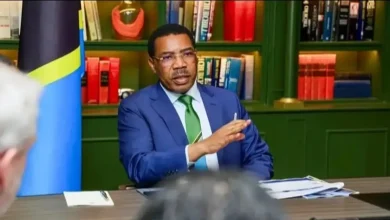
SHINYANGA: MINERALS Minister Anthony Mavunde said President Samia Suluhu Hassan has directed the construction of a gold processing plant for small-scale miners in Mwakitolyo, citing limited processing capacity as one of the biggest challenges facing mining areas and a critical barrier to value addition.
Mr Mavunde made the remarks during a public meeting with small-scale miners in Mwakitolyo, where he listened to a range of concerns, including licensing delays, multiple levies, boundary disputes and shortages of equipment.
Following the engagement, he issued a series of directives aimed at formalising small-scale mining and boosting productivity, particularly for youth and women.
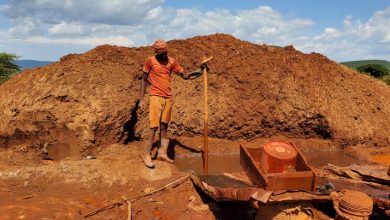
He said the lack of modern processing facilities continues to deny miners the full benefits of their labour, forcing many to sell unprocessed ore at low prices.
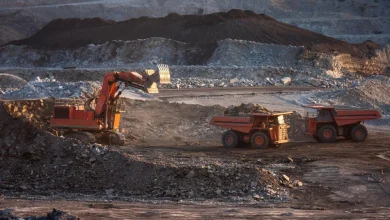
He stressed that government interventions must increasingly focus on value addition, safety and efficiency to move miners away from informal, low-return practices. The planned Carbon-inPulp gold processing plant will have a daily capacity of between 100 and 120 tonnes and is expected to serve more than 7,900 small-scale miners in Mwakitolyo and surrounding mining areas.
Mr Mavunde said the facility will significantly ease one of the biggest bottlenecks in the sector by improving gold recovery and incomes for miners. In parallel, the minister announced a productivity support package centred on subsidised geological services and drilling.
He said the government has procured 15 drilling rigs, with two reserved specifically for youth and women miners. One rig from the second batch is expected to be deployed to Mwakitolyo and will be capable of drilling depths of up to 400 metres.
ALSO READ: Why Tanzania’s minerals hold key to 2050 vision
He explained that drilling support is essential to help miners and authorities understand ore potential before committing resources. Commercial drilling, he said, can cost about 26m/- per 100 metres, while the government-subsidised programme reduces the cost to about 10.8m/-.
“This support helps miners move from guesswork to informed mining. It is the difference between survival digging and building a mining industry that can grow,” he said.
On governance and licensing, Mr Mavunde warned that the system intended to empower small-scale miners has, in some cases, been manipulated by brokers and speculators who acquire licences without undertaking mining activities. He said this practice often forces genuine miners into informal arrangements that later result in disputes and eviction.
To address the problem, he said the Mining Commission will clean up its database to remove non-performing licence holders and unlock opportunities for active miners. He also announced a push to revoke idle exploration licences, noting that 74 exploration permits covering about 700,000 acres have already been cancelled.
In Shinyanga Region, the minister directed that all exploration licences be compiled and submitted for action before December 31, 2025, to free up land for productive mining in line with the President’s directive to help smallscale miners grow into medium- and large-scale operators.
Mr Mavunde also addressed concerns over technical service agreements, which he said have been misused in some areas to allow foreigners to control small-scale mining licences indirectly.
He said regulations have been clarified to define the scope of such contracts and ensure they are used strictly to provide specific technical support where licence holders lack capacity. Mr Mavunde also directed the Mining Commission to organise on-site licence issuance in Mwakitolyo, ordered additional jaw crushers for women and youth miners and urged miners to operate safely and within the law.
He said the government is committed to transforming small-scale mining into a structured and productive industry capable of delivering higher incomes, stronger local economies and sustainable development. During the meeting, youth miners said gold had been discovered at Mlima Namba 6, an area currently designated as village land, and appealed for it to be included in the licensing process.
Women miners also raised concerns over limited access to licences and equipment. Regional Commissioner Mboni Mhita ordered the speedy resolution of boundary disputes and called for women to be prioritised in mining opportunities while District Commissioner Julius Mtatiro directed local authorities to review levies imposed on miners and remove those that undermine productivity