PM orders efficient services
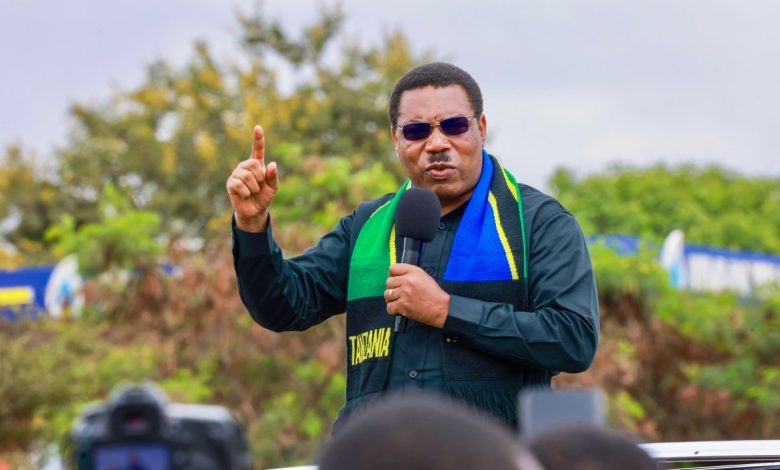
LINDI: PRIME Minister Dr Mwigulu Nchemba has warned government executives and officials against operating on “business as usual,” syndrome particularly in public institutions that provide direct services to citizens.
He issued the warning on Sunday during a surprise visit to Nachingwea District Hospital in Lindi Region, where he inspected the quality of healthcare services offered over the weekend.
Dr Nchemba, who was in the district to inspect the construction of the Nachingwea District Council offices, chose to begin his visit at the hospital immediately after arriving from Ruangwa District, stressing that frontline service institutions must always be given priority.
At the hospital, the Prime Minister went straight to the on-duty doctor’s room to understand patient-handling procedures.
He was informed that patients are required to report first to the reception desk to obtain a consultation card before seeing a doctor.
However, he found two patients waiting outside doctors’ rooms, one with a consultation card and another without despite both having passed through reception.
At the same time, doctors were present in their rooms but were not attending to any patient.
“Put in place clear procedures to guide patients on where to go immediately upon arriving at the hospital. This is not a place for leisure; anyone who comes here needs to be served,” Dr Nchemba said while addressing the District Medical Officer, Dr Ramadhani Mahiga.
Addressing the Deputy Minister for Health, Dr Florence Samizi, who accompanied him on the visit, the Prime Minister directed her to issue instructions to all hospitals to ensure patients are promptly listened to and properly guided.
“If a patient reaches a doctor and there is no other patient waiting, there is no justification for delaying them, as we have witnessed here,” he said.
Dr Nchemba further cautioned against normalising inefficiencies in public service delivery.
ALSO READ: TZ–Türkiye partnership boosts specialised healthcare services
“If there is no patient in the doctor’s room or any other service area, we should not make patients wait unnecessarily. Delaying people does not make us bosses. These are service institutions and we must correct ourselves,” he stressed.
The Prime Minister also visited the laboratory section, where he spoke with patients waiting for test results to assess any delays.
He was briefed on laboratory procedures and turnaround times for various tests. At the maternity ward, he visited 12 mothers and received an overview of services provided.
The ward’s midwife and supervisor, Mr Dennis Namwembe, said the hospital records between six and 10 deliveries daily, averaging about 200 births per month, while caesarean section deliveries average around 50 per month.
Dr Nchemba also inspected the stalled construction of the Nachingwea Nursing and Midwifery College near the hospital.
Dr Samizi explained that the project is funded by the Ministry of Health at a cost of 2.2bn/-, of which 900m/- has already been released and utilised in the first phase.
“In the second phase, the ministry has allocated 1.2bn/-. Once completed, the college is expected to admit between 300 and 400 students starting in October 2026,” she said.
Earlier, the Prime Minister inspected Lindi Port in the Barazani area of Lindi Municipality and directed the Tanzania Ports Authority (TPA) to finalise outstanding technical issues to improve port operations.
Lindi Regional Commissioner Ms Zainab Tellack said the region is eager to see the port rehabilitated and dredged to accommodate larger vessels, noting that it is increasingly attracting traders, including those from neighbouring countries importing food and livestock from Tanzania.
“Cargo passing through this port averages about 1,000 tonnes per month. Livestock transported from the Lake Zone often stays here for long periods, leading to weight loss and financial losses for traders,” she said.
On road infrastructure, Dr Nchemba directed regional managers of TANROADS and TARURA in Lindi to meet within seven days and present solutions to the deteriorating bridge and road sections at the Congo area along the Nachingwea–Masasi road.
“This road was temporarily repaired, but it now poses safety risks to citizens. Sit together and come up with a solution. People need to pass and transport their produce. While we await permanent tarmac works, this road must remain passable,that is why you are here,” he said.
He was responding to concerns raised by Nachingwea MP Mr Fadhili Liwaka, who warned that the Congo area and the Stesheni section of Nachingwea town risk severe damage and flooding if urgent interventions, including the installation of culverts, are not undertaken ahead of the rainy season.
Dr Nchemba directed the Regional Commissioner to submit a detailed report outlining agreed interventions, costs and implementation timelines, underscoring the government’s commitment to improving service delivery and infrastructure for citizens.