Historic shift in education sector
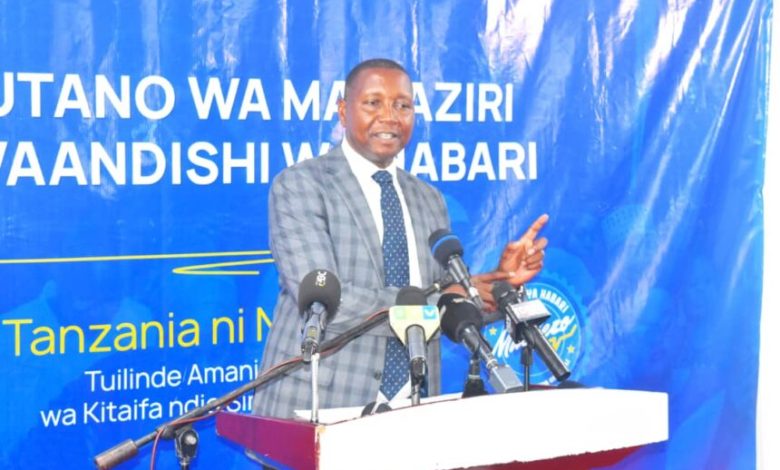
DAR ES SALAAM: MINISTER for Education, Science and Technology, Prof Adolf Mkenda has expressed optimism that major reforms underway in the education sector will help students meet the demands of a modern, skills-based and industrial economy.
He told reporters in Dar es Salaam on Wednesday that ongoing reforms are designed to boost the competitiveness of Tanzanian graduates in both domestic and global job markets, particularly in an era shaped by rapid technological change, including artificial intelligence (AI), virtual reality (VR) and coding.
“The new great education reforms will make youth view the entire world as their employment arena,” Prof Mkenda said.
Under the reforms the Standard Four and Five pupils are expected to complete primary school in 2027, he said.
He said under the reforms the government will introduce a compulsory 10-year basic education that will have six years of primary education and four years of lower secondary education.
He said the motives behind the changes is to make sure at least all children have access to 10-year compulsory basic education which automatically will produce Form Four graduates at around the age of 16 years old unlike the old system where a pupil could finish Standard Seven with 13 years, still too young to integrate their knowledge in real life.
“By providing a seven year-compulsory education, we remain far behind. We must catch up with the global education changes,” Prof Mkenda told reporters.
Detailing the introduction of the double-stream system in secondary schools, he said the arrangement will allow new students to choose between majoring in general education or technical and vocational education.
He explained that the general education pathway will remain knowledge-centred, enabling students to proceed with their studies and join high school as usual.
In contrast, those opting for the technical and vocational stream will be equipped primarily with practical skills such as electricity installation.
Prof Mkenda noted that technical and vocational education will be offered in polytechnic schools, including those already constructed in Dodoma and Kagera.
More than 100 additional polytechnic schools will be built in Mwanza, Kigoma, Mtwara, Morogoro and Zanzibar.
Polytechnic graduates will earn both a NACTVET diploma and the Certificate of Secondary Education Examination (CSEE), and will still have the option of joining Form Five.
ALSO READ: Tanzania tables 12,000 new jobs in health, education sectors
In a related development, he said the government will introduce compulsory business studies from Form One to Form Four aiming at imparting entrepreneurship skills to students in enriching their capacities to create own jobs after their studies. Prof Mkenda said the government also will emphasise digital education including programming.
Other key reforms include government funding for top-performing Form Six science students to pursue studies abroad; a move aimed at strengthening employability and driving national innovation.
Regarding scholarships, he said the Ministry, under the Samia Scholarship, has already selected 50 top science students who have been undergoing orientation training, including computer basics, at the Nelson Mandela African Institution of Science and Technology (NM-AIST) in Arusha.
He noted that after completing their orientation, the students will be sent to science universities abroad, including the University of Johannesburg in South Africa, as well as institutions in Ireland, China and the United States of America (USA), to pursue studies in fields such as Engineering and Doctor of Medicine (MD).
He said the initiative will enable Tanzanian science students to acquire industrial experience that they can later apply in their home country or elsewhere as they progress both locally and globally.
He said Tanzania will also leverage the India Institute of Technology in Zanzibar in ensuring in the East African country’s young talents in science explore knowledge.
Prof Mkenda said the Ministry has also introduced the Samia Extended Scholarship for Master Degree students in science programmes such as Atomic Physics.
In promoting science subjects including Mathematics, Physics, Biology and Chemistry, he said the sixth phase government under President Dr Samia Suluhu Hassan has built girl science secondary schools in every region of Tanzania Mainland.
He said that that plans are ongoing to construct other science schools for boys only across the country.
On financing of the entire education sector, he said the government increased fund allocation to the ministry by 40 per cent from 5.3tri/- in the 2020/2021 Fiscal Year (FY) when President Samia ascended to the helm to 7.4tri/- in the ongoing FY (2025/2026).
He hinted that plans are ongoing to construct other science schools for boys only across the country.
On enhancing access to university education, he said the government is set to build residence campuses to all regions without public universities with exception of the Open University of Tanzania (OUT) which has the branches across the countries.
He said the financial resources have played critical role in improving teaching and learning infrastructures among others, with addition of class rooms which significantly boosted students’ enrolment and academic performance at large.
Meanwhile, he said loan provision to high learning students has risen from 464bn/- to 916.7bn/- in the corresponding period.
The loans have been also disbursed to college’s students.
On supporting start-ups in innovations, he said the government has come up with the Samia Innovation Fund with about 2.3bn/- to support youth’s innovations so as to reach the markets.
Understanding the importance of talents in writing, he said the government has introduced the National Mwalimu Nyerere Awards to decorate authors in the country.
He said through the award initiative, the best author will be awarded some 10m/- while the government supporting publication and distribution of the intellectual works to reach readers.
The National Mwalimu Nyerere Awards will be marked on April 13 every year.