Why 4Rs matter yesterday, today and tomorrow
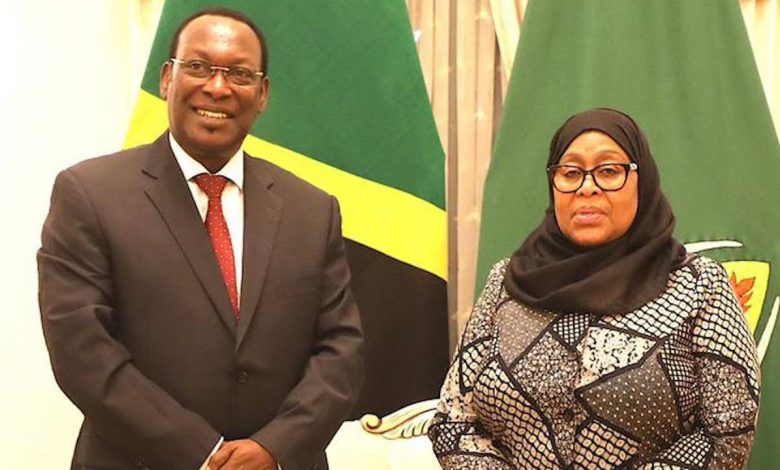
DODOMA: TANZANIA marks 64 years of independence today with much to celebrate, thanks to the solid foundation laid by the Father of the Nation, Mwalimu Julius Nyerere and further strengthened by his successors.
To sustain the country’s strong socio-economic and political progress amid emerging challenges, embracing the philosophy of the 4Rs (Reconciliation, Resilience, Reform and Rebuilding) remains essential.
Since she assumed the country’s highest office in 2021, President Samia Suluhu Hassan has piloted the nation through a period of profound transformation, ushering in an era defined by hope, inclusivity and progress through the 4Rs.
To her, the 4Rs are the “North” direction of her vision, which she explained: “We aim at creating a modern, competitive, vibrant and inclusive economy that provides opportunities for all.”
The Head of State insisted that the 4Rs are essential for addressing the current social, political and economic issues in the country.
Despite celebrating over six decades of independence, the country still needs the four components of the 4Rs reconciliation, resilience, reform and rebuilding to promote national cohesion and stability.
Building reconciliation In this component, President Samia has reiterated her intention to build a better Tanzania, in which its people live harmoniously, united and empathetically.
“I wish to foster unity regardless of our political, religious or ethnic differences,” she said, arguing that this would be possible if everyone enjoyed equal rights before the law, if there were no discrimination and if there were equal economic opportunities for all.
President Samia has kept her word by embracing political pluralism, upholding tenets of democracy and the rule of law, after lifting the long-standing ban on political rallies.
The President directed the police and other security forces to allow parties to hold rallies without undue hassles, albeit reminding politicians to uphold civilised and constructive politics and observe the country’s laws.
Through such gestures of goodwill and acts of forgiveness, she has succeeded in bridging the gap between opposing factions, fostering a sense of unity and solidarity among Tanzanian citizens.
Addressing the 13th National Assembly in Dodoma recently, President Samia reminded the newly elected lawmakers that in the first term of the Sixth Phase Government, she introduced the philosophy of the 4Rs with the aim of uniting the nation.
With the purpose of forging ahead, the Head of State said, the Government consistently demonstrated its readiness to foster reconciliation so that, together, we could build and safeguard our country.
“The Government extended a hand to political parties, civil society organisations, the private sector and even the international community, so that collectively we could build Tanzania. Honourable Members of Parliament, that gesture of goodwill brought hope to the nation before some stakeholders chose to withdraw from or let go of that extended hand,” she told the lawmakers.
Even after post-election violence occurred, the President still believes that reconciliation is the way to go, as she promised to continue extending the hand of reconciliation.
“It is my hope that political stakeholders will sincerely embrace this hand of understanding so that, together, we can create a conducive environment for our nation’s development.”
Despite the fact that Tanzania has decades of experience in democracy and peace, she admitted, the country’s democracy is mature, though there is room to continue improving it based on circumstances and the demands of the time.
ALSO READ: Book on President Samia’s 4Rs philosophy set for launch
She urged that it was everyone’s responsibility to commit to these reforms out of our own political will, without any external pressure.
Resilience Tanzania, like other countries in the world, has been experiencing ups and downs since attaining its independence 64 years ago.
Having strong foundations to absorb shocks has been one of the important factors that has enabled the country to remain resilient for decades.
Resilience is an important aspect not only in Tanzania but also globally.
For instance, the UN’s commitment to building resilient societies is reflected in its guidance on helping countries achieve the Sustainable Development Goals (SDGs).
The UN Common Guidance on Helping Build Resilient Societies aims to strengthen coherence in UN resilience-building efforts at the country level in support of governments’ sustainable development objectives.
This guidance promotes a common understanding of resilience based on shared principles and unpacks the process for building resilience together for the UN System and its partners.
As far as the 4Rs philosophy is concerned, President Samia has continuously inspired Tanzanians to stand strong and united in pursuing national development goals, leading her people steadfastly towards achieving socio-economic growth.
“Throughout our journey, we will encounter challenges and obstacles in various aspects such as economics, politics, society and the environment. However, it is crucial to remain resilient as we have no alternative country to turn to,” she says in her 4Rs philosophy.
She led the way in this by becoming the first President in Tanzania to participate in a Royal Tour documentary in an effort to revive the tourism sector, which had been adversely affected by Covid-19.
Reforms Since Tanzania is not an island, it cannot lag behind in benefiting from global shared prosperity.
This means that even after launching the 4Rs philosophy and other initiatives implemented since independence, Tanzania must continue implementing reforms in politics, the economy and electoral legislation.
On this, President Samia says: “Electoral law reforms will level the political playing field, empowering the electorate to choose their desired leaders. Economic reforms will broaden access to economic opportunities, benefiting a larger segment of the population.”
This is why she has already assented to three electoral reform Acts passed by Parliament in February 2024, aimed at reshaping the country’s political and electoral landscape.
These are the National Electoral Commission (NEC) Act, 2023; the Presidential, Parliamentary and Local Government Elections Act, 2023; and the Political Parties Affairs Laws (Amendment) Act, 2023.
The Head of State has also reiterated her Government’s intention to continue reforming state-owned enterprises (SOEs) and public corporations, with the goal of boosting efficiency, transparency and financial performance while ensuring that these institutions contribute at least 10 per cent of non-tax revenue by 2030.
From 2021 to 2023, Tanzania experienced robust economic growth, with investments soaring to record levels due to ongoing reforms to improve the business climate.
This subsequently resulted in Gross Domestic Product (GDP) growth rising from 4.7 per cent in 2022 to 5.0 per cent in 2023, according to the Bank of Tanzania (BoT), placing the country among the top 10 fastest-growing economies in Africa in 2023.
As Tanzania celebrates its 64th anniversary, reforms should not stop if the country wants to sustain its relevance globally.
History has proven that the nation’s readiness to reform its social, political and fiscal policies has enabled it to weather various socio-economic and political turbulences and sustain its development trajectory.
Rebuild From the First Phase Government to the Sixth, Tanzania has continued implementing various flagship projects in infrastructure, energy and mining as part of its efforts to attain sustainable and inclusive economic growth.
After attaining independence and subsequently helping other African countries to regain theirs the next step was to implement policies geared toward achieving economic independence. Rebuilding remains one of the country’s enduring development priorities.
This is why, across different administrations, the nation has accomplished numerous projects, including the construction of roads, bridges and ferries in various regions.
“I am aware that people cannot eat reconciliation, resilience or reforms. At the end of the day as did my predecessors Benjamin Mkapa, Jakaya Kikwete and John Magufuli our main goal should be economic growth