How Nyerere’s vision shaped modern Tanzania
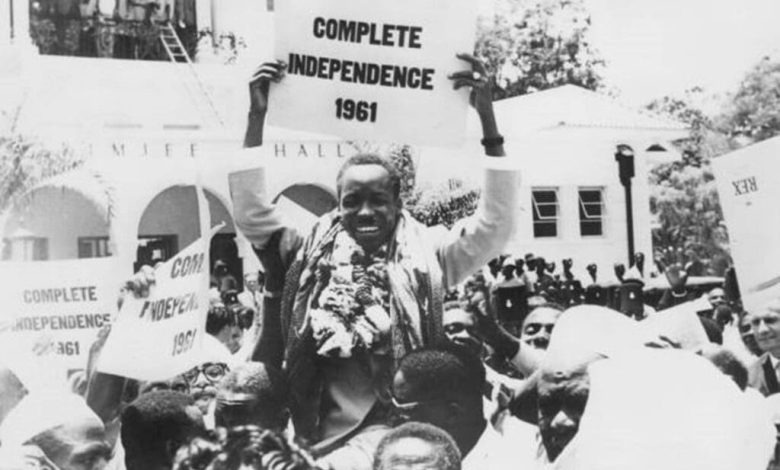
TANZANIA: WHEN Tanzania emerged from colonial rule in 1961, it inherited an economy that was fragile and narrowly based.
Per capita income stood at roughly 281 US dollars in nominal terms, among the lowest globally, while real output per person barely reached 820 US dollars.
The population was expanding rapidly, at more than 3 per cent per year, meaning that any economic progress was quickly absorbed by demographic pressure.
Infrastructure development was minimal, industrial capacity was extremely limited and production systems remained aligned to colonial priorities rather than the needs of ordinary citizens.
Amid these uncertainties, a leader with extraordinary clarity of purpose began shaping the young nation’s economic direction.
Mwalimu Julius Kambarage Nyerere, the Father of the Nation, believed that independence meant more than replacing foreign rule; it required dismantling the economic dependency that had defined colonial Tanzania.
For the first two decades of independence, the country’s economic path reflected Nyerere’s conviction that true freedom demanded political sovereignty alongside economic self-determination.
Dr Aleck Che-Mponda, in his paper Aspects of Nyerere’s Economic Thought: A Study in the Dynamics of African Leaders’ Aspirations in Directing Their Countries’ Economic Growth after Independence, observed that Tanzania’s early development experience was shaped profoundly by Nyerere’s leadership.
He wrote that Nyerere used both State institutions, the government and the ruling party, to guide the country through the complexities of global economic change.
Through the authority of government, Nyerere assumed responsibility for steering all socio-economic activity towards the establishment of a socialist economy rooted in national ownership and equality.
Dr Che-Mponda quoted Aga Khan, who once remarked, “Struggle is the meaning of life. Defeat or victory is in the hands of God, but struggle itself is man’s duty and should be his joy.”
This sentiment reflected the mood of the young nation. Tanzania was among the poorest countries under United Nations classification, yet its leaders and citizens were determined to build a self-reliant society.
Dr Che-Mponda noted that Tanzanians of the era recognised their role in a demanding national project.
They viewed the challenges they faced as necessary sacrifices for the wellbeing of future generations and believed strongly in the foundation set by Nyerere.
“There is every hope that ‘we shall overcome’,” he wrote, adding that the world was listening to Tanzania’s aspirations and responding not only to the country but to the broader struggle of poor nations.
To realise his vision, Nyerere reorganised the economy through both the Government and the ruling TANU, later CCM.
ALSO READ: Nyerere’s vision lives on
He believed that without State-led direction, Tanzania risked remaining trapped in the economic structures it had inherited from colonial rule.
His leadership emerged at a time of intense ideological competition, as newly independent African countries navigated pressures from global powers.
Tanzania, however, pursued its own course guided by ujamaa, self-reliance and collective responsibility. The Arusha Declaration of 1967 became the defining anchor of this economic strategy.
By nationalising major banks, industries, plantations and utilities, Nyerere sought to align production with the needs of Tanzanians rather than the demands of export markets.
This shift required widespread mobilisation. Villages were reorganised to ensure access to schools, dispensaries and clean water.
Citizens were encouraged to view development as a collective duty, not an individual pursuit.
The spirit of struggle characterised the period. Infrastructure, institutions and industries were not inherited; they had to be built.
Ordinary citizens faced real hardships, including shortages, slow economic growth and long hours of work. Yet these sacrifices were widely accepted as the price of constructing a stronger, fairer nation.
Despite limited economic resources, Tanzania earned respect on the global stage. Its principled stance on liberation struggles, non-alignment and human dignity won admiration and support from development partners such as the Nordic countries and China.
These relationships were grounded in mutual respect rather than dependency. Nyerere’s ideals were sometimes labelled unrealistic, given Tanzania’s economic challenges.
Yet his leadership achieved something rare: Unity, social cohesion and a strong national identity at a time when many post-colonial nations fractured along ethnic or regional lines.
Although the economy faced significant obstacles, ranging from global shocks to inefficiencies in State-run enterprises, the foundations of national dignity, equality and solidarity remained firm.
Population growth continued to outpace per capita income, which rose modestly by around 0.7 per cent annually, but the national vision endured.
Successive presidents built upon and adapted Nyerere’s legacy. President Ali Hassan Mwinyi (1985–1995) initiated economic opening, eased State control, liberalised trade and exchange systems and began the privatisation of State enterprises.
His reforms laid the groundwork for macroeconomic stabilisation, although per capita GDP remained modest, rising from around 477 US dollars in 1985 to about 509 US dollars by 1995.
President Benjamin Mkapa (1995–2005) deepened governance reforms and championed anti-corruption efforts.
His administration accelerated privatisation, promoted foreign investment and strengthened institutions, while enhancing relations with international partners.
These strategies helped secure debt relief and resources for priority sectors. Under his leadership, real GDP per capita increased from roughly 509 US dollars in 1995 to around 680 US dollars by 2005.
President Jakaya Kikwete (2005–2015) expanded investment in education, health and infrastructure, notably improving primary school enrolment and rural access to services.
His government oversaw strong GDP growth and increased private-sector participation, while playing an active role in regional diplomacy, including chairing the African Union.
By 2015, per capita GDP had reached approximately 939 US dollars.
President John Magufuli (2015–2021) prioritised rapid infrastructure development, including roads, bridges, ports and energy projects.
His administration pursued austerity measures and anti-corruption campaigns, earning public support for visible fiscal discipline.
By 2020, real GDP per capita had risen to about 1,041 US dollars. President Samia Suluhu Hassan, who assumed office in 2021, has overseen a recalibration of policy, restoring cooperation with development partners, reopening political space and promoting vaccination during the Covid-19 pandemic.
Her government continues to invest heavily in major infrastructure projects and to strengthen engagement with international investors.
Real GDP per capita was around 1,054 US dollars in 2021, reflecting steady recovery and expansion.
More than sixty years after independence, Tanzania’s economy has grown broader and more diversified.
Market reforms, private-sector expansion, industrialisation and regional integration have driven significant progress.
In 2020, Tanzania achieved a major milestone when it entered lower-middle-income status, with per capita income now hovering around 1,200 US dollars nearly five times the level at independence.
This transformation reflects structural improvements across agriculture, manufacturing, services and public investment.
Population growth, now about 3.2 per cent per year, continues to influence the pace at which living standards rise.
Even so, compared to the scarcity and dependence of the early years, Tanzania’s evolution is unmistakable.
From an economy of 281 US dollars per capita in 1961 to today’s more diversified and dynamic landscape, the country’s journey is a testament to resilience, reform and long-term national vision